
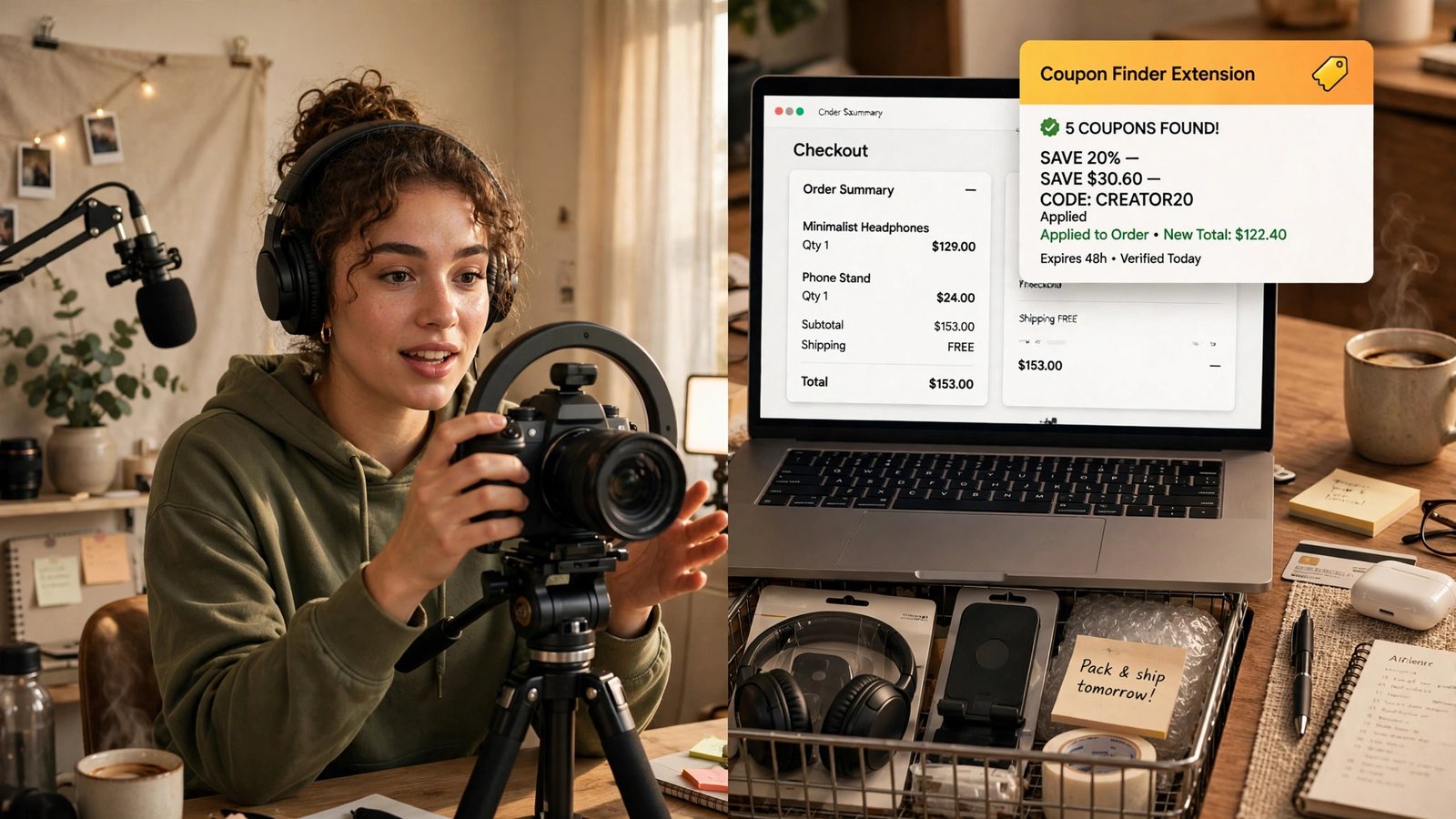
A federal judge has let creators sue PayPal over Honey. On June 22, 2026, Judge Beth Labson Freeman denied PayPal’s motion to dismiss the second amended complaint in In re PayPal Honey Browser Extension Litigation, No. 5:24-cv-09470, in the U.S. District Court for the Northern District of California. Every claim survived, and the case now moves to discovery.
That is not a finding that PayPal did anything wrong. No liability has been found, no class has been certified, and there is no settlement. It means the creators’ core allegation — that Honey took affiliate commissions they had earned — was strong enough, on paper, to go forward. If you earn from affiliate links, this case matters even if you never installed Honey yourself.
What Creators Say Honey Did
Affiliate marketing runs on a simple promise. You recommend a product, a reader clicks your link, and if they buy, the retailer pays you a commission. A cookie or link ID tells the retailer whose recommendation led to the sale.
The lawsuit says Honey broke that chain at checkout. When a shopper with Honey installed reached checkout and clicked “apply discounts,” Honey briefly opened a hidden tab, the complaint alleges. That tab acted like a simulated referral click and replaced the creator’s affiliate cookie with Honey’s own ID. The shopper often got no discount, or only a small one, but Honey still took the commission.
Most retailers use last-click attribution: the last affiliate ID recorded before purchase gets paid. So if your link brought the buyer to the store, but Honey’s ID was recorded last, Honey got paid and you got nothing. You did the work — finding the product, explaining it, building trust — and Honey, the plaintiffs argue, showed up at checkout and took the credit.
The second amended complaint, filed January 5, 2026, names 10 plaintiffs, including Wendover Productions, LegalEagle’s Devin Stone, and Ali Spagnola. It runs 101 pages and attaches real affiliate contracts. That matters because the first version was dismissed in part because the plaintiffs had not shown a contractual right to the commissions they said they lost.
The $35.60 Test That Started It All
Most people first heard this story from a YouTube investigation, not a court filing. On December 21, 2024, MegaLag published a 23-minute video, “Exposing the Honey Influencer Scam.” Watch it here: MegaLag’s “Exposing the Honey Influencer Scam”
MegaLag tested the same purchase twice. First, he bought a NordVPN subscription through his own affiliate link without Honey running. He earned a $35.60 commission. Then he ran the same test with Honey — now branded in places as PayPal Rewards — active. This time he got 89 points worth $0.89, about 2.5% of the commission. He lost $34.71 on one sale, and the shopper got no better deal to make up for it.
The video spread fast because it matched what many creators had suspected: earnings felt soft, and sales they expected to track never showed up. PayPal has pushed back on the scope and timeline, saying the code at issue predated its 2020 acquisition of Honey ($4 billion) and affected less than 0.1% of traffic. MegaLag disputes that timeline and scope. Discovery is meant to sort out who is right.
The “Defeat Device” Allegation
The most striking claim is not just that Honey overwrote affiliate IDs. It is that Honey allegedly knew how to behave when someone was watching.
Affiliate networks use stand-down rules: if a shopper already arrived through another affiliate’s link, do not overwrite that affiliate’s ID. Network testers check whether extensions follow those rules.
The plaintiffs allege Honey used a “defeat device” — a Selective StandDown system — that respected those rules only when it detected an auditor or tester. With a regular shopper, it allegedly overwrote the ID anyway. PayPal says the code has been deactivated and predated the Honey acquisition. The plaintiffs say the conduct went on longer and touched more traffic than PayPal admits.
Treat this as an allegation, not a proven fact. The June 2026 ruling did not decide whether a defeat device existed. It decided the plaintiffs had pleaded enough, with contracts attached, to keep litigating. If the claim is true, it would mean the normal checks did not work, because the extension behaved differently during tests than in real use. That is why the networks reacted so fast.
Timeline: From a YouTube Video to a Federal Court Ruling
| Date | What happened |
|---|---|
| Dec 21, 2024 | MegaLag publishes “Exposing the Honey Influencer Scam,” including the NordVPN $35.60 vs. $0.89 test. |
| Late 2024 – early 2025 | Creators file suit in the Northern District of California, alleging Honey diverted affiliate commissions at checkout. |
| Nov 21, 2025 | Judge Freeman dismisses the first amended complaint; plaintiffs had not shown a contractual entitlement to the commissions. |
| Jan 5, 2026 | Plaintiffs file a 101-page second amended complaint with 10 named plaintiffs, attaching real affiliate contracts. |
| Jan 12, 2026 | Rakuten Advertising terminates Honey, cutting access to about 2,000 retailers including Walmart, Sephora, Dyson, and Lego. |
| Jan 2026 | Impact.com suspends Honey; Awin confirms breaches of its publisher policies. PayPal says the code predated the 2020 acquisition, affected less than 0.1% of traffic, and has been deactivated. |
| June 22, 2026 | Judge Freeman denies PayPal’s motion to dismiss. Every claim survives; the case proceeds to discovery. |
| Nov 2, 2026 | Honey announces the extension will no longer be available on Firefox beginning December 30, 2026. It stays on Chrome, Safari, Edge, and Opera. |
| Dec 30, 2026 | Firefox exit takes effect, per Honey’s announcement. |
Two dates deserve a second look. On November 21, 2025, the judge dismissed the first complaint because the plaintiffs had not tied their claim to a contract that actually gave them the commissions. You cannot just say “that money should have been mine.” You have to show a contract that says so. The January 5, 2026, complaint fixed that gap, and that is what changed the outcome in June.
On January 12, 2026, Rakuten Advertising did not wait for a court ruling. It terminated Honey and cut off about 2,000 retailers. Impact.com suspended Honey around the same time, and Awin confirmed breaches of its publisher policies. Losing Rakuten was a serious blow for an extension that lives or dies by retailer partnerships.
What the June 22, 2026 Ruling Actually Means
Judge Freeman denied a motion to dismiss. In that kind of motion, the judge assumes the plaintiffs’ factual claims are true for the sake of argument and asks whether, even if true, they add up to a valid legal claim. Denying the motion means yes — at least enough to proceed. It does not mean the judge believes the claims, that PayPal is liable, that a class has been certified, or that any creator will get paid.
What happens next is discovery. Both sides exchange documents, emails, messages, and code. They take depositions. Experts weigh in. That can take months, and it is often where cases like this are won, lost, or settled.
If you see a headline saying “PayPal found guilty” or “creators win $X million,” it is wrong. As of the June 2026 ruling, there is no finding of liability and no settlement fund. There is no claim form and no official website where you can file for your share, because there is no settlement. Any site that asks you to enter personal information or pay a fee to claim Honey money is a scam. If a real settlement ever happens, it will be announced through the court, not through a random link in your inbox.
You can read the ruling itself here:
How Big Was the Fallout for Honey?
Honey fell from about 20 million users on the Chrome Web Store to roughly 12 to 13 million — a loss of about 7 million users. Some likely left after the MegaLag video; some left after the network bans made the extension less useful. The number does not prove why each person uninstalled it, but the direction is clear.
Its coupon database also shrank, reportedly from about 90,000 codes to about 50,000, with at least 10,000 reportedly expired. Fewer working codes means fewer reasons to keep the extension installed, and a weaker core promise at the same time trust was falling.
Google also tightened the rules. In 2025, the Chrome Web Store began requiring extensions to disclose affiliate re-attribution — to tell users clearly when an extension will change who gets credit for a purchase. That rule does not decide the Honey case, but it shows where the platform is heading.
Firefox Exit: December 30, 2026
Honey announced on November 2, 2026, that the extension will no longer be available on Firefox beginning December 30, 2026. It will stay available on Chrome, Safari, Edge, and Opera. Read that date carefully: Firefox support has not already ended. The exit is scheduled for December 30, 2026.
Honey’s help page is here:
Honey has not tied the exit directly to the lawsuit, and you should not assume a single cause. Extensions leave browsers for many reasons — maintenance costs, low usage, platform changes. For creators, the practical point is simpler: one fewer browser where a reader’s Honey install can sit between your link and your commission. Do not tell Firefox users Honey is already gone. Give them the date and link to Honey’s help page.
What PayPal Says
PayPal disputes liability. The company says the code predated its 2020 acquisition of Honey, affected less than 0.1% of traffic, and has been deactivated. MegaLag disputes the timeline and scope, and the plaintiffs dispute the idea that the conduct was narrow or historical.
Hold both sides in your head at once. PayPal’s statements are its defense; the plaintiffs’ claims are allegations. The court has not decided which account is closer to the truth. Be careful repeating numbers from either side as settled fact: “less than 0.1%” is PayPal’s figure, and “about 7 million users lost” is a reported user-count change, not a court finding about diverted commissions.
What This Means If You Earn From Affiliate Links
First, it may be about money you already lost. If a reader clicked your link, then ran Honey at checkout, and Honey replaced your ID, you may have lost commissions you never knew about. There is no error message — just a sale that never tracked, or a conversion rate that looked lower than it should have.
Second, it is about trust. Your audience trusts your opinion and that the link supports your work. If an extension can step in at checkout and take the commission, that model gets shakier, and neither you nor your audience may know it is running.
Third, it is about the rules going forward. Google’s 2025 disclosure rule, the network bans, and the court ruling all push the same way: clearer rules about who gets paid and when. That is good for creators long-term, even if it does not recover past commissions.
None of this means you should stop using affiliate links. It means you should treat attribution as something to check, not assume. For a broader look at creator payouts, see from in-stream ads to Facebook content monetization, and for building your ad base, the Google AdSense approval requirements for 2026.
What Creators Should Do Now
You cannot file a claim yet — there is no settlement and no claim form. You can protect future earnings and preserve evidence now.
Check your affiliate network’s publisher rules
Log in to each network you use — Rakuten Advertising, Impact.com, Awin, Amazon Associates, or any other — and read the current rules on extensions and attribution. Look for language about last-click attribution, stand-down rules, and whether extensions may overwrite an existing affiliate ID. Note any rule changes since 2024 and any bans. If you work directly with a brand, check your direct agreement too; its attribution clause may differ from network defaults.
Audit whether your links lose attribution when readers run Honey
Open a clean browser profile, click your own affiliate link, and go to checkout with Honey installed and active. Does Honey prompt to apply discounts? Does it open a new tab? Does your affiliate ID survive, or does it change? Run the same test without Honey and compare, documenting what you see with screenshots and dates. Do not click your own links repeatedly to generate commissions — that violates most affiliate terms. Test the tracking path, not the payout.
Document suspected lost commissions with dates and amounts
Start a simple log now. For each suspected loss, record the date, retailer, product or post, network, expected commission rate, and amount you think you lost. Add links to the post or video and dashboard screenshots showing clicks without matching conversions. Mark entries “suspected” unless you have proof, and do not inflate numbers. Twenty well-documented entries beat 2,000 guesses. Keep the log somewhere you control and back it up.
Decide whether to tell your audience — and how
Your audience may run Honey without knowing how it interacts with affiliate links. If you talk about it, stick to verified facts: a judge let the case proceed, no liability has been found, and PayPal disputes the claims. Link to the MegaLag video and the court order. Explain last-click attribution in plain language. Do not say Honey stole from them personally or that they are owed money, and do not present uninstalling Honey as a legal conclusion. Explain the trade-off and let them decide. A short note in a video description or newsletter postscript is often enough.
Review your own disclosures
Check your affiliate disclosures while you are at it. Are they clear, near the link, and in plain language — “I may earn a commission if you buy through this link”? Good disclosure protects you, helps your audience, and puts you on firmer ground if you ever raise a tracking problem with a network or brand.
Separate Cases You Should Not Confuse With This One
A UK shoppers’ case against Honey was dismissed — the third strike for that case. It is separate from the US creators’ case, so do not cite it as if it decided the US case. A separate US consumers’ case is also pending, alleging Honey did not find the best coupons for shoppers. A motion to dismiss there was argued, with a decision expected around August 2026. Keep them separate: one is creators saying “you took our commissions,” the other is shoppers saying “you did not find us the best deals.”
The Bottom Line for Creators
This case is still early. A judge has said the creators’ claims are strong enough to proceed to discovery. That is a real step, not a verdict. Check your network rules, test your own links, keep a careful log if you suspect losses, and talk to your audience honestly if you choose to talk about it at all. Watch for scams: there is no settlement fund and no claim form. Affiliate income depends on trust that the person who did the work gets paid. Discovery will show what the internal records say. Until then, stay informed, document what you can, and keep building content your audience trusts.
Frequently Asked Questions
Did a judge rule that PayPal Honey stole affiliate commissions?
No. On June 22, 2026, Judge Beth Labson Freeman denied PayPal’s motion to dismiss the second amended complaint, so the case proceeds to discovery. It is not a finding of liability, class certification, or a settlement. PayPal disputes liability.
Can I file a claim for lost Honey affiliate commissions now?
No. There is no settlement fund and no claim form. Any site offering a “Honey claim form” or charging a fee to recover commissions is a scam. Document suspected losses with dates, retailers, and amounts in your own log for now.
What did Honey allegedly do at checkout?
When a shopper clicked “apply discounts,” Honey allegedly opened a hidden tab that acted as a simulated referral click, replacing the creator’s affiliate ID with Honey’s own. With last-click attribution, Honey then got the commission even when it found no discount. The complaint also alleges a Selective StandDown system that respected stand-down rules only for auditors. These are allegations, not proven facts.
How much did MegaLag lose in his test?
He bought a NordVPN subscription through his own link. Without Honey he earned a $35.60 commission; with Honey active he got 89 points worth $0.89, about 2.5%. That one test does not prove what any other creator lost, but it showed the mechanism in concrete numbers.
Is Honey still available on Firefox?
Honey announced on November 2, 2026, that it will no longer be available on Firefox beginning December 30, 2026. It has not already ended. Honey stays on Chrome, Safari, Edge, and Opera. Check Honey’s help page before telling your audience it is gone.
What should I do if I think Honey cost me commissions?
Check your network’s publisher rules, test your own links with and without Honey, keep a dated log of suspected losses, and decide carefully whether and how to tell your audience, sticking to verified facts. Do not file anything with a third-party “claim” site.