
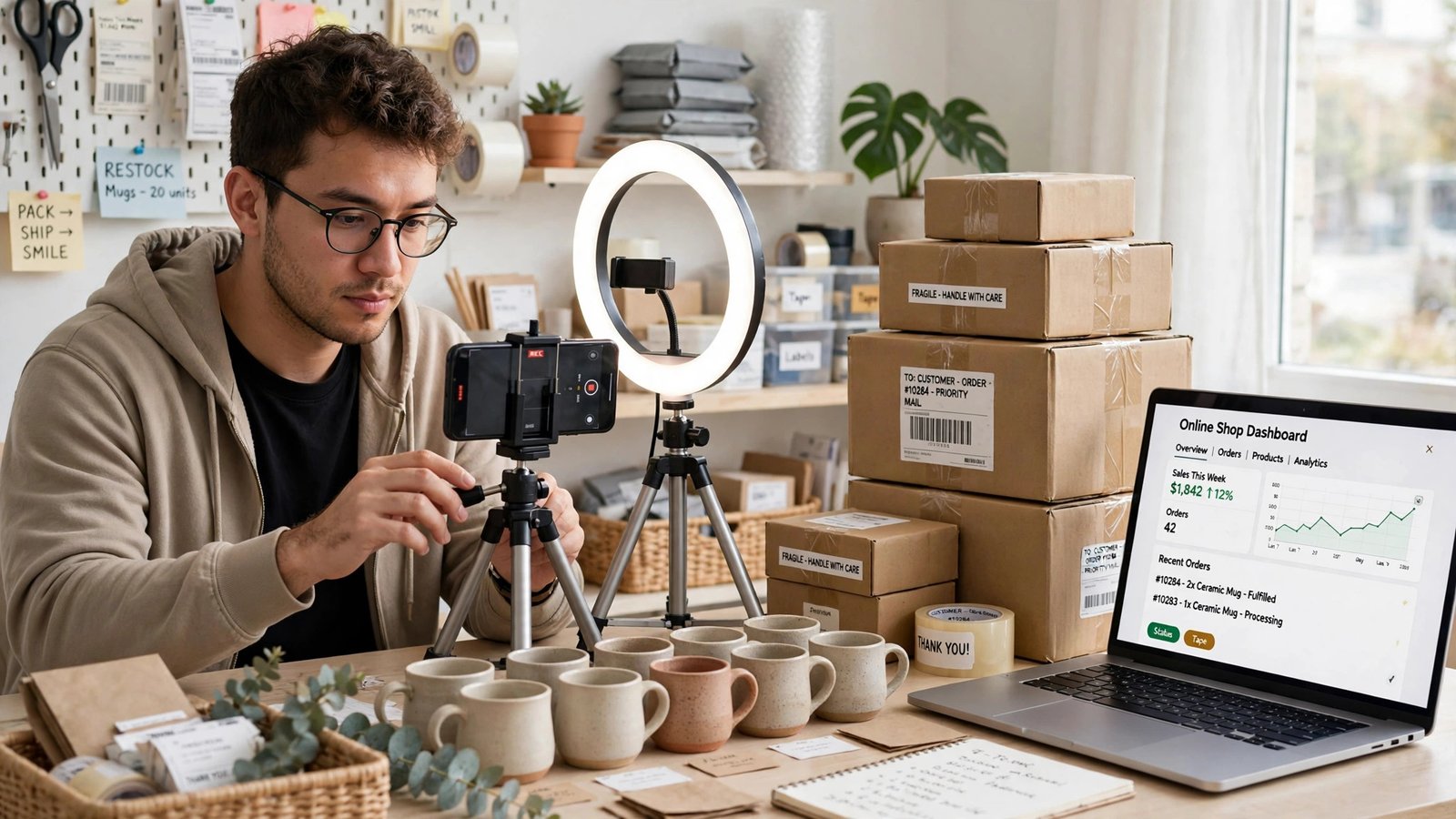
TikTok Shop’s Black Friday and Cyber Monday campaign opens tomorrow — Wednesday, November 11, 2026 — and it runs through Cyber Monday, November 30. If you sell on TikTok Shop, or you earn affiliate commissions promoting other people’s products there, the next 24 hours decide most of your holiday result. Campaign prices go live at the open, the holiday return window starts, and every shop that waited until the last minute discovers the same thing at the same time: registration takes 5 to 14 business days to review, so a shop applying today may only get in partway through the sale.
Here is the short version. The campaign runs November 11–30, 2026, Pacific Time. Black Friday itself is Friday, November 27, and Cyber Monday is Monday, November 30. To join as a seller you need a Shop Performance Score of 3.5 or higher (or fewer than 3 serious violations in the last 30 days if your shop is too new to have a score), a late dispatch rate of 20% or lower, and an account health rating ideally above 150. You register in Seller Center under Marketing, then Campaigns. Eligible items sold between November 11 and December 31 can be returned until February 10, 2027 — plan your cash flow around that, not around the sale dates. And the reason all of this is worth doing: TikTok Shop did more than $500 million in the four days from Black Friday to Cyber Monday last year, sellers who went live grew 84%, and creators posted nearly 10 million shoppable videos that weekend.
The rest of this article is the 24-hour checklist — what to do today, what to do the hour the campaign opens, and the mistakes that cost sellers money every year.
First, the dates that actually matter
Most sellers get the dates wrong because they plan around Black Friday the day, not the campaign. TikTok Shop’s campaign is twenty days long, and the money is spread across it unevenly.
| Date | What happens |
|---|---|
| Nov 10 (today) | Last full day to register, fix scores, film hero videos, set stock |
| Nov 11 | Campaign opens (Pacific Time); campaign prices, co-funded coupons and discounts go live; holiday return window begins |
| Nov 27 | Black Friday — the highest-traffic day of the campaign |
| Nov 30 | Cyber Monday — last campaign day and last day to register |
| Dec 31 | Last day of the extended holiday return window for purchases |
| Feb 10, 2027 | Last day shoppers can return eligible items bought Nov 11–Dec 31 |
Two dates in that table surprise people every year. The first is November 11: the sale starts more than two weeks before Black Friday, and TikTok’s own guidance says to list campaign products at least two weeks before the campaign starts — which means the ideal listing date was October 28. If your listings are not live yet, list them today; late is better than never, but every day you wait is a day of campaign traffic you miss. The second is February 10, 2027. Items sold from November 11 at 4 p.m. Pacific through December 31 can be returned until that date. That is a ten-week return window on your biggest sales month. Keep a cash reserve for refunds instead of spending every dollar of November revenue in December.
Step 1: Check whether your shop can even get in (15 minutes)
Before you film anything or set a single price, open Seller Center and check the four numbers TikTok scores you on. The Campaign Details page tells you whether your shop qualifies; the Shop Criteria page shows your current Shop Performance Score.
- Shop Performance Score: 3.5 or higher. This is the headline bar. If your score drops below 3.0 during the campaign, TikTok can revoke your campaign benefits mid-flight. Shops at 4.0 or higher may get extra perks and visibility on key products. Your score is built from ratings, response times and after-sales handling — the things you can still improve this week are response time and clearing open after-sales cases.
- New shops without a score: you can still qualify if you have fewer than 3 serious violations in the last 30 days. Check your policy notifications in Seller Center before you assume you are in.
- Late Dispatch Rate: 20% or lower over the last 30 days. This is a rolling window, so a bad October follows you into November. If you are over the line, the fastest fix is not a new policy — it is clearing your dispatch backlog today and making sure every order in the queue ships on time this week.
- Account Health Rating: ideally above 150. At or below 150, your account may be under temporary enforcement that blocks campaign registration at the moment you try. Open violations and appeals are the first thing to clear.
- Holiday Mode: off. A shop in Holiday Mode cannot join the campaign, and your warehouse must be set to available.
If any of those numbers fails, you have a decision to make: fix it today and register anyway, knowing the 5-to-14-business-day review may land mid-campaign, or sit this one out and sell through your regular listings. A partial-window entry beats no entry — but only if your scores are actually fixable. A shop sitting at 2.8 with a 35% late dispatch rate is not going to fix both numbers in a day, and a rejected application costs you nothing but time you could spend filming.
Step 2: Register — and understand what the review clock means
Registration happens in Seller Center, under Marketing, then Campaigns. There is no rep to call and no form to email. TikTok says most campaign applications are reviewed within 5 to 14 business days, and it keeps checking eligibility during the campaign, so a shop whose scores drop can lose its place after being accepted.
Do the math on that clock honestly. If you register today, November 10, a 5-business-day review lands around November 17 and a 14-business-day review lands around November 30 — Cyber Monday itself. That means registering today is not a guarantee of being in for Black Friday on November 27. Register anyway: even a mid-campaign entry gets you the last week, the Cyber Monday peak, and the co-funded coupons. But do not build your whole plan on being live November 11 if you have not registered yet. Your regular listings, your videos and your LIVE schedule still sell without campaign status — the campaign badge amplifies a shop that is already selling, it does not create one.
Step 3: Set your prices with the margin math, not the discount
This is where sellers lose money. A 30% discount on a product with a 25% margin is not a promotion, it is a donation. Before you set a single campaign price, work the numbers on your hero product — the one item you expect to carry the campaign.
Take a $25 product as an example. Say your landed cost is $12, your TikTok Shop referral fee runs around 8% on most non-food categories (TikTok’s own public table still says 6%, and seller resources report 8% since August — check your settlement statement, not the public table), and payment processing takes roughly another 3%. At full price you keep about $25 − $12 − $2.00 − $0.75 = $10.25. At 20% off, the price is $20 and you keep about $20 − $12 − $1.60 − $0.60 = $5.80. At 30% off, the price is $17.50 and you keep about $17.50 − $12 − $1.40 − $0.53 = $3.57. Now subtract the refund rate: if 10% of holiday orders come back, and you eat the return shipping, that $3.57 shrinks further. And remember the returns window runs to February 10, 2027, so the refunds arrive in January, after you have already counted the money.
The point is not to avoid discounts — the campaign is a discount event, and shoppers filter by price. The point is to discount the products whose margin can take it, and to put your thinnest-margin items at smaller discounts or leave them out of the campaign entirely. Put your offer behind the products that have already shown they can sell. One seller playbook from this season puts it well: “Discounts amplify momentum. They don’t create it.” A good sale takes content that is already working and pushes it further. It cannot manufacture a winner from a product nobody wanted in October.
Step 4: Line up your hero videos today
TikTok Shop is a video-first marketplace, and the campaign rewards the sellers who arrive with content already posted. Creators posted nearly 10 million shoppable videos over last year’s Black Friday weekend, and the sellers who won were not the ones who filmed on the day — they were the ones whose videos were already live, already tested, and already converting when the traffic arrived.
Your job today is not to film twenty videos. It is to pick your three to five best-performing TikTok Shop videos so far and make them your holiday lineup, then film one fresh video per hero product with the campaign price in it. The checklist:
- Lead with the price. The first three seconds should say what it costs and why that is a deal. Shoppers in a sale scroll past anything that makes them wait for the number.
- Show the product in use, not on a shelf. A thirty-second demo beats a ninety-second feature list. If it is a kitchen tool, cook with it. If it is a jacket, wear it outside.
- Tag the product in every video. An untagged video during the campaign is a missed sale. Check the tag before you post, not after.
- Post your best video again. Reposting a proven video with a fresh caption and the campaign price is not lazy — it is how the algorithm finds the audience that missed it the first time.
- Pin your hero video to the top of your profile for the whole campaign window.
If you work with affiliate creators, today is also the day to message them — not on November 27. Creators with locked-in products and agreed commissions post earlier and post more. Confirm the commission in writing, confirm which products are in the campaign, and ask them what they need from you: samples, a discount code, a talking point. The site’s earlier piece on TikTok Shop’s commission lock for creators covers the affiliate side in detail — read it before you promise a rate you cannot hold.
Step 5: Schedule your LIVEs — and go long
Last year, sellers who went live saw 84% sales growth across more than 760,000 sessions and 1.6 billion views. The biggest events ran for hours. That is exhausting, and it works, because a live is the only format where a shopper can ask a question and get an answer before buying.
Plan two anchor sessions: one on Black Friday night, November 27, and one on Cyber Monday night, November 30. Those are the highest-leverage hours of your year. Around them, schedule shorter daily sessions through the campaign — even thirty minutes at the same time each day builds a returning audience. A few practical notes:
- Go live from the product, not from a desk. Have the hero products in your hands, not in a box behind you.
- Answer the three questions every shopper asks: how much, when will it arrive, and can I return it. The return answer is easy this year — eligible purchases can be returned until February 10, 2027 — and saying it out loud builds trust.
- Use the campaign’s co-funded coupons on air. If TikTok is co-funding a coupon on your product, say so. Free money from the platform is a selling point, not a secret.
- Keep a runner. If you sell alone, a second person handling orders and comments while you present is the difference between a live that sells and a live that stalls.
Step 6: Stock, dispatch and the returns trap
The campaign gives you one extra business day on dispatch, auto-cancellation and deliver-by deadlines for local shipping — a small cushion, not a holiday. Your late dispatch rate is scored on a rolling 30-day window, and it is checked during the campaign. A shop that ships late in the first week can lose campaign benefits in the second.
Count your stock against twenty days of promotional pricing, not against a normal month. If your hero product sells 20 units a day normally and the campaign triples that, you need 1,200 units for the window, not 400. Running out on November 20 is worse than never joining — the listing goes dark, the videos keep sending traffic to a dead product, and the algorithm notices. If you cannot cover the full window, cover Black Friday weekend properly and say so in your shop announcement, rather than pretending the stock will last.
And the returns. Eligible items sold between November 11 and December 31 can be returned until February 10, 2027. That means January will bring a wave of returns on your biggest month. Set aside a refund reserve — 10% of campaign revenue is a reasonable planning number for most categories — and do not spend November’s revenue as if all of it is yours. The sellers who get hurt by the holidays are not the ones with low sales. They are the ones who spent the gross in December and met the returns in January with an empty account.
If you are an affiliate creator, not a seller
Everything above is written for sellers, but the campaign is also the biggest affiliate window of the year, and the rules are different for you. You do not register a shop. You pick products, you make videos, and you earn commission on the sales your content drives. The checklist for you is shorter and sharper:
- Confirm the commission in writing with the shop before you post. TikTok Shop’s affiliate commissions vary by product and by shop, and a rate that was 15% in October can be 10% in November.
- Register the products you plan to promote — the campaign prices and the co-funded coupons only apply to products the shop registered.
- Film the deal, not the product. Your audience already knows the product from your earlier videos. What they need on November 27 is the price, the deadline and the link.
- Post all day on Black Friday. Creators who cover the holiday seriously say there is no such thing as too much content on November 27. The feed is in buying mode and the algorithm is drowning in demand. If you make shoppable content, share the deals non-stop.
- Remember the cookie window. If you are an affiliate, stop thinking about the margin on one product and think about the whole site — a viewer who clicks your link and buys something else still earns you commission under the program’s attribution rules.
One honest limit: the campaign’s commission structure for creators is set shop by shop, and TikTok has not published a single campaign-wide affiliate rate. If a “guru” quotes you one number for the whole platform, they are guessing.
The 24-hour checklist, in order
Today, November 10 — the last full prep day:
- Open Seller Center. Check your Shop Performance Score, late dispatch rate, account health rating and Holiday Mode. Fix what you can fix today.
- Register for the campaign under Marketing, then Campaigns — even if the review lands mid-campaign.
- Do the margin math on your hero products. Set campaign prices that leave you money after fees, processing and a 10% refund reserve.
- Pick your three to five best-performing videos and make them the holiday lineup. Film one fresh video per hero product with the campaign price in the first three seconds.
- Message your affiliate creators with confirmed products, confirmed commissions and samples if you have them.
- Count stock for twenty days at campaign volume. Order or reallocate now.
- Schedule your two anchor LIVEs — Black Friday night and Cyber Monday night — and daily short sessions between them.
Tomorrow, November 11 — launch day:
- Check that campaign prices, coupons and discounts are live on your registered products. If a price did not go live, fix it before you post anything.
- Post your hero videos with product tags and the campaign price. Pin the best one.
- Post your shop announcement with the campaign dates and the February 10 return date — shoppers trust a seller who states the return policy upfront.
- Go live, even briefly. A launch-day live tells the algorithm your shop is active for the campaign.
- Watch your dispatch queue like a hawk. The first week’s late dispatch rate decides the second week’s campaign status.
What to do if you missed all of this
If you are reading this on November 20, or your shop was rejected, or your scores will not clear in time — you are not out of the holiday. Your regular listings still sell. Your videos still convert. Your LIVEs still work. Run your own sale with your own prices, film the same hero videos, and go live on Black Friday night anyway. The campaign badge is worth having, but the traffic is in the feed, not in the badge. And set a calendar reminder for October 2027: list campaign products two weeks early, register in the first week of November, and film your hero videos before Halloween. Next year’s checklist starts then.
Campaign dates, thresholds and the return window come from TikTok Shop’s 2026 BFCM Seller Campaign Guide and TikTok’s October 19, 2026 campaign announcement. TikTok can change campaign rules during the season — check the live campaign card in your Seller Center before planning around any threshold.
Frequently Asked Questions
When does TikTok Shop’s Black Friday campaign start and end in 2026?
The campaign runs November 11–30, 2026, Pacific Time. Black Friday itself is Friday, November 27, and Cyber Monday — the last campaign day — is Monday, November 30. Campaign prices, co-funded coupons and discounts go live when the campaign opens on November 11.
What score does my shop need to join TikTok Shop Black Friday 2026?
You need a Shop Performance Score of 3.5 or higher, a late dispatch rate of 20% or lower over the last 30 days, and an account health rating ideally above 150, with Holiday Mode turned off. New shops without a score can still qualify with fewer than 3 serious violations in the last 30 days. If your score drops below 3.0 during the campaign, TikTok can revoke your campaign benefits.
How long do I have to return a TikTok Shop Black Friday purchase?
Eligible items sold between November 11 and December 31, 2026 can be returned until February 10, 2027. Sellers should keep a refund reserve — around 10% of campaign revenue is a reasonable planning number — because the returns arrive in January, after the sale month is over.
How long does TikTok Shop take to approve a Black Friday campaign application?
TikTok says most campaign applications are reviewed within 5 to 14 business days. If you register on November 10, approval could land anywhere from around November 17 to November 30. Register anyway — a mid-campaign entry still gets you the last week and the Cyber Monday peak — but do not build your whole plan on being live for the November 11 open if you have not registered yet.
Do I need to be a seller to earn from TikTok Shop Black Friday?
No. Affiliate creators earn commission by posting shoppable videos for other sellers’ products — no shop, no inventory and no registration needed. Confirm the commission rate in writing with the shop before you post, because rates vary by product and by shop, and register the products you plan to promote so the campaign prices and coupons apply.
How much did TikTok Shop sell last Black Friday?
TikTok Shop did more than $500 million in the four days from Black Friday to Cyber Monday in 2025, with almost 50% more buyers than the year before. Sellers who went live grew 84% across more than 760,000 sessions and 1.6 billion views, and creators posted nearly 10 million shoppable videos that weekend.