
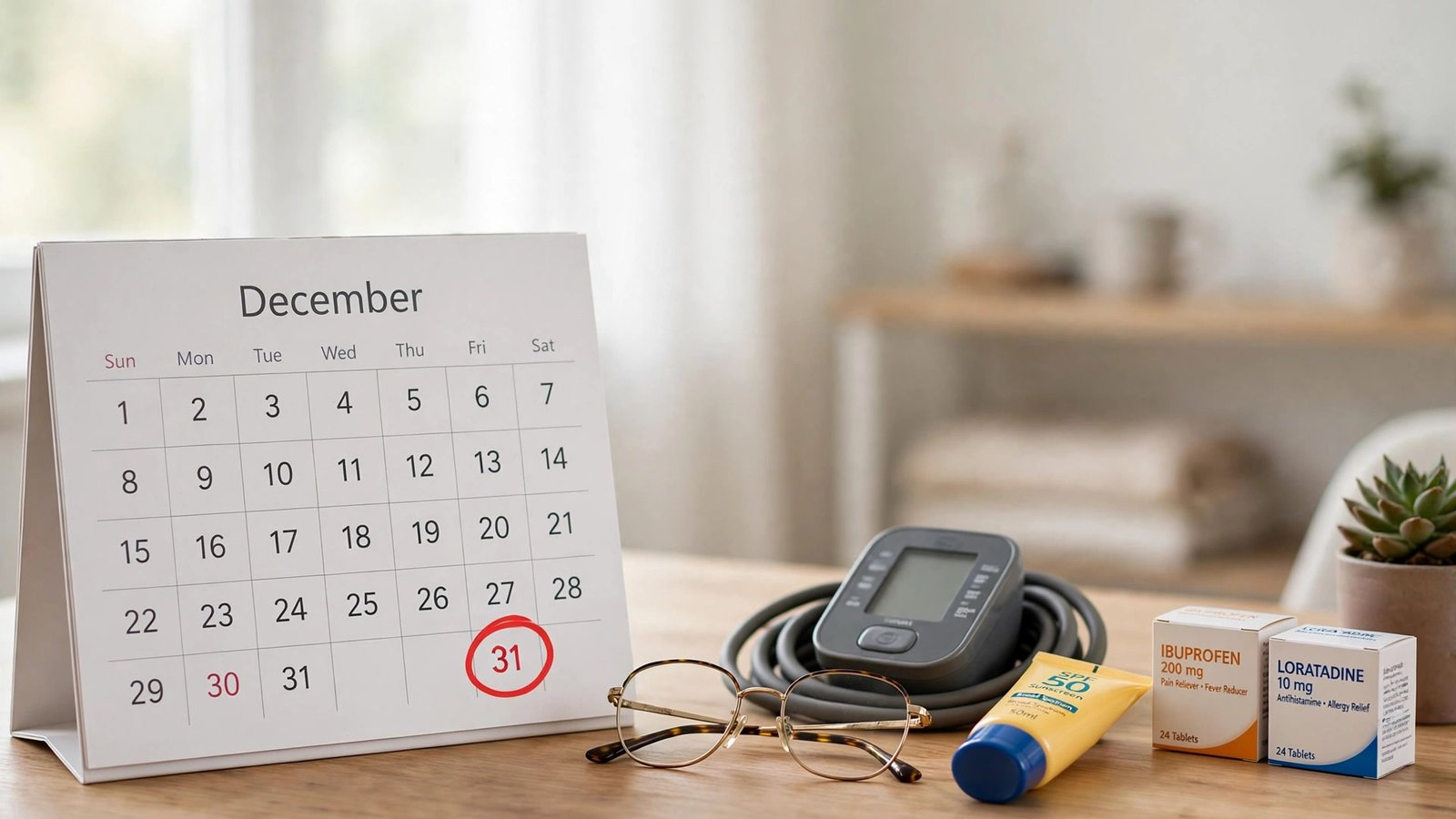
If you have a flexible spending account through your employer, there is a date you need on your calendar right now: December 31, 2026. For most calendar-year plans, that is the day your health FSA spending window closes — and any money left over after your plan’s safety net has done its work goes back to your employer. Not to you. Not to next year. Gone.
Here is the part most people get wrong: the safety net is narrower than it sounds, and it is different from what your coworker has. Your employer may offer a grace period, or a carryover, or neither — but never both. If your plan offers a carryover, at most $680 of your 2026 funds rolls into 2027. If it offers a grace period, you get until March 15, 2027 to incur new expenses, with no dollar cap — but that window closes fast. And if it offers neither, December 31 is a hard wall.
This guide walks through the rules as they stand for 2026, the two dates that actually decide whether your money survives, the spend-down math for common balances, and a practical checklist for the next eight weeks. It is general information, not professional tax or benefits advice — your plan’s own documents always win over any article, including this one.
The use-it-or-lose-it rule, in plain English
A health FSA lets you set aside pre-tax dollars from your paycheck to pay for qualified medical expenses: copays, deductibles, dental work, vision care, prescriptions, and a long list of over-the-counter products. For 2026, the IRS contribution limit is $3,400 per employee, up from $3,300 in 2025.
The catch is the deal you made when you enrolled. Under IRS rules, FSA funds must be used for expenses incurred during the plan year, or they are forfeited. The IRS calls this the use-it-or-lose-it rule, and it is the default. Forfeited money goes back to the plan — your employer — and you cannot appeal it or get it back later.
Three things about that default surprise people every year:
- It is your plan year, not necessarily the calendar year. Most employers run calendar-year plans ending December 31, but some run on a fiscal year or match their health plan year. Before you build a December plan, confirm your plan’s actual end date in your benefits portal.
- The date that matters is when the expense is incurred, not when you pay or file. A doctor visit on December 30 counts for 2026 even if you submit the claim in February. A visit on January 2 belongs to the new plan year, even if you are still spending down old money under a grace period.
- Your employer’s choices decide everything. The IRS gives employers two optional safety valves. Each employer picks one, or none. Your plan’s choice is not your choice, and it is not your coworker at another company’s choice either.
Grace period vs carryover: the trap in the middle
This is the single most misunderstood part of FSA rules, so let us lay it out as a table.
| Your plan’s feature | What it does | 2026 limit | Deadline |
|---|---|---|---|
| Grace period | Extra time to incur new expenses against last year’s balance | No dollar cap — your full remaining balance | March 15, 2027 (2.5 months after year-end) |
| Carryover | Unused dollars roll into the next plan year | Up to $680 | No separate deadline — the money merges with your new year’s funds |
| Neither | Nothing carries over | $0 | December 31, 2026 |
The IRS forbids combining the two. A plan that adopts the carryover provision cannot also offer a grace period for health FSAs, and vice versa. That rule comes straight from IRS Notice 2013-71, which created the carryover, and it is the reason you cannot assume you get both protections. A clear walkthrough of how the carryover works is available at LegalClarity’s FSA carryover guide.
Which one is better depends entirely on your balance:
- A grace period wins when your leftover balance is large. If you have $1,500 left and a grace period, you can spend all $1,500 on expenses incurred by March 15, 2027. Under a carryover, you would keep $680 and lose $820.
- A carryover wins when your balance is small and your spending is slow. If you have $400 left, the full $400 rolls over under a carryover, and you have the entire next year to spend it. Under a grace period, you would have to find $400 of eligible expenses by mid-March or lose the rest.
- Neither wins for anyone. If your plan offers no safety valve, every unspent dollar is forfeited on December 31. This is the scenario that catches people who assume “something rolls over” without checking.
The carryover cap itself moves with inflation. For 2026 it is $680, set by Revenue Procedure 2025-32 — it is 20% of the $3,400 contribution limit. Note the direction of the math: the carryover is capped at $680 even if you contributed the full $3,400, so a big unspent balance is never fully protected by a carryover alone.
One more detail worth knowing: carried-over funds do not reduce what you can contribute next year. You can carry over $680 and still elect the full 2026 contribution amount for the new plan year, giving you up to $4,080 in available funds. That is useful for planning, not a reason to over-contribute — the goal is to spend what you set aside, not to stockpile it.
The two-date checklist that saves your money
Most FSA losses come from confusing two different dates. Write both of yours down before you spend anything:
Date 1: The last day to incur an expense
This is your plan year’s end date — December 31, 2026 for calendar-year plans — or March 15, 2027 if your plan offers a grace period. Only expenses with a date of service on or before this date can be paid from that year’s funds. Booking an appointment is not enough; the visit, the purchase, or the service must actually happen by this date.
Date 2: The last day to file the claim
This is the run-out period, and it is separate from the spending deadline. Most plans give you around 90 days after the plan year ends to submit claims for expenses you already incurred — often until March 31, 2027, though some plans set April 30 or another date. A run-out period can sit alongside either a grace period or a carryover; it is not the same thing as either one.
The failure mode here is painfully common: you see the dentist on December 28, you mean to file the claim, life gets busy, and you file it in May — after your plan’s run-out deadline. The expense was perfectly valid. The money is still lost, because the claim arrived late.
So the checklist is short:
- Log into your FSA portal today and write down your balance, your plan year end date, whether you have a grace period or a carryover, and your claim filing deadline.
- Put the incur-by date and the file-by date on your calendar as two separate reminders.
- Keep every receipt until the claim is paid, not just until you file it.
The spend-down math for common balances
Let us make this concrete. Here is what happens to four typical leftover balances under each plan type:
| Balance on Dec 31 | No safety net | Carryover plan ($680 cap) | Grace period plan (to Mar 15) |
|---|---|---|---|
| $250 | Lose $250 | Keep $250, lose $0 | Spend $250 by Mar 15 or lose it |
| $680 | Lose $680 | Keep $680, lose $0 | Spend $680 by Mar 15 or lose it |
| $1,200 | Lose $1,200 | Keep $680, lose $520 | Spend $1,200 by Mar 15 or lose the rest |
| $2,000 | Lose $2,000 | Keep $680, lose $1,320 | Spend $2,000 by Mar 15 or lose the rest |
The $1,200 row is the one I see people misjudge most. “I have a carryover, so I am fine” is wrong — a $1,200 balance on a carryover plan still loses $520. And on a grace-period plan, $1,200 is only safe if you genuinely incur $1,200 of eligible expenses by March 15. Buying things you do not need just to hit the number is not saving money; it is converting a forfeiture into waste. The smart move is to pull forward expenses you would pay for anyway.
What to spend it on: pull forward, don’t stockpile
The best year-end FSA spending is money you were going to spend in the next few months anyway, moved into December. That is real savings, because FSA dollars are pre-tax — spending $500 from your FSA instead of after-tax income saves you the income and payroll tax on that $500.
Start with appointments you have been putting off:
- The eye exam and new glasses. Prescription glasses, prescription sunglasses, contact lenses, contact solution, and eye exams all qualify. If you need a backup pair of glasses, this is the moment.
- The dental work. Cleanings, fillings, X-rays, and orthodontia payments qualify. If your dentist has been telling you about a filling, December is cheaper than January when the money is pre-tax and expiring.
- Prescription refills and copays. Refill maintenance prescriptions before year-end if your plan and pharmacist allow it, and pay any outstanding copays or deductibles.
- The health screenings. Annual physicals, lab work, and preventive screenings qualify, and December appointments are often easier to book than January ones.
Then the drugstore and home-health items, which qualify under IRS Publication 502 and have been broader since 2020, when over-the-counter medicines became eligible without a prescription:
- Pain relievers, allergy medicine, cold and flu medicine, antacids
- Sunscreen with SPF 15 or higher
- Menstrual products, including tampons, pads, and cups
- First-aid supplies, bandages, thermometers, blood pressure monitors
- Contact lens supplies and reading glasses
A blood pressure monitor or a well-stocked first-aid kit is a genuinely useful buy for a larger balance — the kind of thing that keeps paying off for years. A medicine cabinet restock is the right move for a small balance. What is not a good move is buying ten tubes of sunscreen you will never use. The IRS does not care, but your wallet should.
Two things that do not qualify, and trip people up every year: health insurance premiums are not an eligible FSA expense, and neither are purely cosmetic procedures. If you are unsure about an item, check your plan’s eligible expense list before you buy — your employer’s administrator makes the final call on specific items.
Dependent care FSAs play by stricter rules
If you also have a dependent care FSA — the account for child care and dependent care costs so you can work — the rules are tighter. For 2026, the dependent care contribution limit jumped to $7,500 per household ($3,750 if married filing separately), up from $5,000, thanks to last year’s tax law changes.
But dependent care FSAs do not get the carryover at all. Your employer may offer a grace period for a dependent care account, but if it does not, December 31 is a firm deadline for those funds too. Dependent care money is also only available as it is deducted from payroll — unlike a health FSA, where your full annual election is available from day one. So check a dependent care balance separately, and do not assume the health FSA rules you just learned apply to it.
Three traps that cost people money every December
The HSA trap
If you are switching to a high-deductible health plan with a health savings account (HSA) next year, a leftover general-purpose FSA balance can block you. IRS rules say you generally cannot contribute to an HSA while you have disqualifying coverage — and a general-purpose FSA grace period that carries a balance into the new year counts as coverage. If an HSA is in your 2027 plans, check whether your FSA balance will be zero by December 31, or whether your employer offers a limited-purpose FSA (dental and vision only) that keeps you HSA-eligible. This is the trap that turns a small leftover balance into a year of lost HSA contributions.
The job-change trap
FSA funds generally expire when you leave a job. You can usually still submit claims during a run-out period (typically 90 days) for expenses incurred while you were employed, but you cannot incur new expenses after your last day. If you are changing jobs in December or January, your FSA timeline just got much shorter — check it before you resign, not after.
The “I’ll spend it in January” trap
This one is simple: January spending only counts against last year’s money if your plan has a grace period. Under a carryover plan, January expenses come out of your new year’s funds plus whatever carried over — which is fine, but it does not rescue anything above the $680 cap. Under a plan with neither feature, January spending does nothing for last year’s balance at all. If your plan ends December 31 with no grace period, January is already too late.
Your 8-week action plan
With about eight weeks left in the year, here is a realistic sequence:
This week: Log into your FSA portal. Write down your balance, your plan year end date, your grace period or carryover status, and your claim filing deadline. Put both dates on your calendar.
Weeks 2–3: Book the appointments — dentist, eye doctor, any specialist visit you have been delaying. December schedules fill up, and an appointment you cannot get does not count.
Weeks 4–6: Pay outstanding copays and deductibles, refill prescriptions, and order the vision and dental items you need. File claims as you go rather than saving them all for January.
Weeks 7–8: Do the final drugstore and home-health sweep for whatever balance remains, matched to things you will actually use. File every remaining claim before the run-out deadline, and keep copies of everything until the money lands.
During open enrollment: Set next year’s election based on what you actually spent this year, not what you hoped to spend. If you forfeited money in 2026, elect less for 2027. If you ran out by October, elect more. The best FSA strategy is boring: elect what you will spend, spend what you elect, and check your balance quarterly instead of discovering the problem in December.
One last honest note: the FSA is a good deal — pre-tax money for expenses you would pay anyway — but only if you treat the deadline as real. Every December, millions of dollars in FSA balances are forfeited by people who meant to deal with it and ran out of year. You are reading this on November 1. You still have time. Use it.
For related year-end money moves, see our guide to AdSense tax info expiring December 31, 2026 and freelancer health insurance and the subsidy cliff for 2026.
Frequently Asked Questions
Does my FSA money really expire on December 31, 2026?
For most calendar-year plans, the spending deadline is December 31, 2026. But your plan may offer a grace period (spending until March 15, 2027) or a carryover (up to $680 into 2027) — never both — and some plans offer neither. Check your plan documents for your actual dates.
What is the FSA carryover limit for 2026?
Up to $680, set by IRS Revenue Procedure 2025-32. The carryover applies only to health FSAs, only if your employer adopted it, and any balance above $680 is forfeited. Carried-over funds do not reduce how much you can contribute the next year.
Can my plan offer both a grace period and a carryover?
No. IRS rules prohibit a health FSA from offering both at the same time. Your employer must choose one or offer neither.
What is the difference between the grace period and the run-out period?
The grace period is extra time to incur new expenses — up to 2.5 months after year-end. The run-out period is extra time to file claims for expenses you already incurred, typically around 90 days. A run-out period can exist alongside either a grace period or a carryover.
Do dependent care FSAs have a carryover?
No. Dependent care FSAs do not qualify for the carryover provision. Your employer may offer a grace period for a dependent care account, but otherwise December 31 is the deadline. The 2026 dependent care contribution limit is $7,500 per household.
Can I spend my FSA on over-the-counter medicine?
Yes. Since 2020, over-the-counter medicines qualify without a prescription, along with items like sunscreen (SPF 15+), menstrual products, first-aid supplies, and blood pressure monitors. Health insurance premiums and purely cosmetic procedures do not qualify.
This article is general information, not professional tax, benefits, or medical advice. Check your plan documents and consult a qualified professional for your situation. Figures verified against IRS Revenue Procedure 2025-32, IRS Publication 969, and IRS Publication 502 on November 1, 2026, with the deadline rules cross-checked against TriplApp’s FSA deadline guide.