
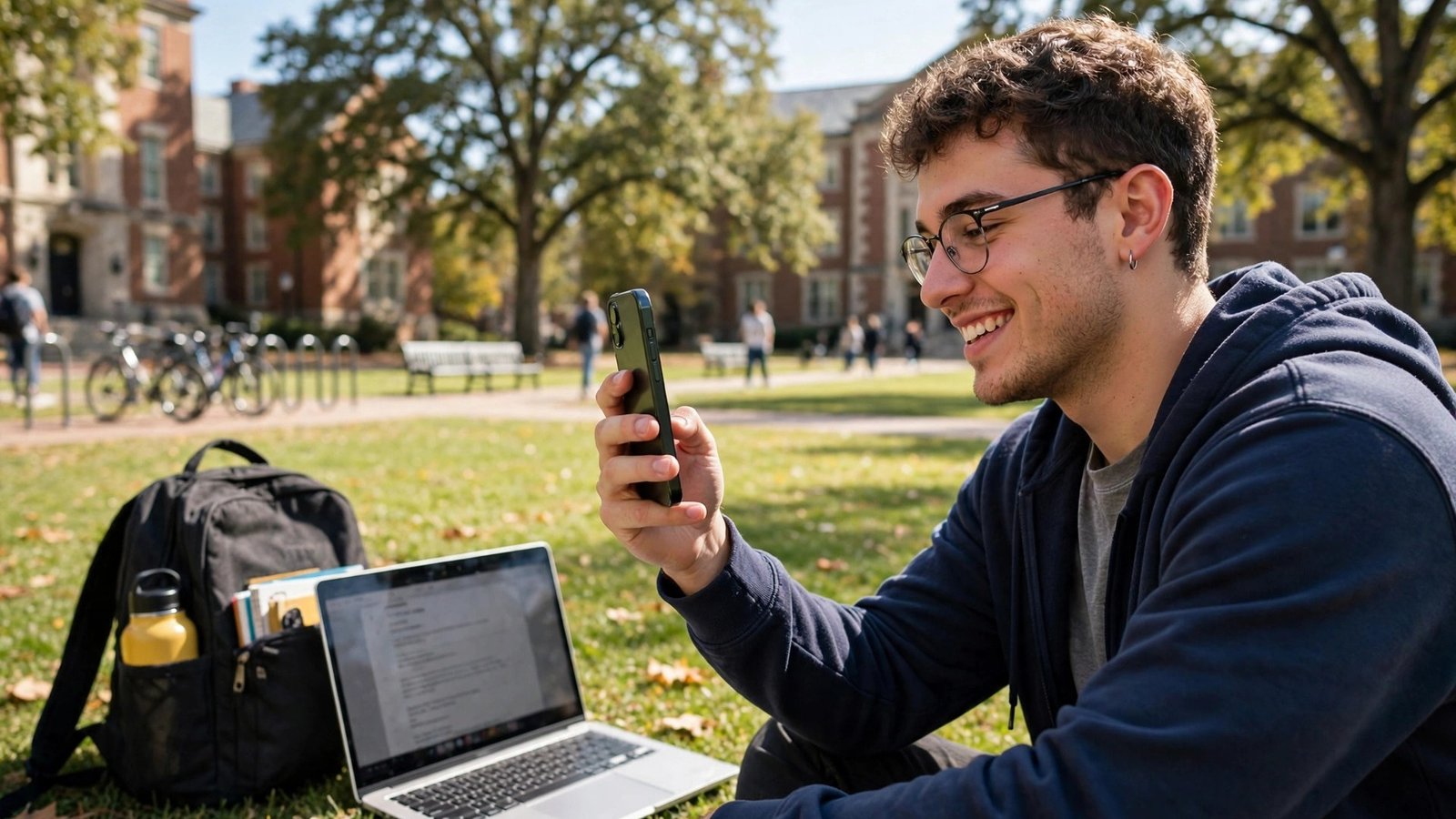
Facebook just lowered the bar for getting paid to post Reels — a lot. If you’re a US college student with at least 1,000 followers on Instagram, TikTok, or YouTube, you can now apply for Facebook’s Creator Fast Track College Edition, a program that hands you immediate access to Facebook Content Monetization and, if your following is bigger, three months of guaranteed pay.
That’s the short version. The longer version matters more, because the headline number — 1,000 followers — buys you access, not cash. The guaranteed money starts at 20,000 followers. This article walks through exactly what each tier pays, what you have to do to keep it, and how to decide whether it’s worth your time before the three-month clock starts ticking.
What Changed on November 13, 2026
Meta updated its Creator Fast Track announcement on November 13, 2026, adding a College Edition for US college creators. The original Creator Fast Track launched back on March 18, 2026, aimed at established creators who had built an audience somewhere else — Instagram, TikTok, or YouTube — and had never really posted on Facebook. The deal was simple: come post Reels on Facebook, get a bigger reach boost, and get paid a guaranteed monthly amount for three months.
The original program’s entry bar was steep. The guaranteed pay tiers started at 100,000 followers ($1,000 a month) and topped out at $3,000 a month for creators with more than a million followers. If you had 50,000 followers and a great niche, you were out of luck.
The College Edition changes that in two ways. First, the application threshold drops to 1,000 followers on Instagram, TikTok, or YouTube — a hundred times lower than the original program’s first pay tier. Second, it adds a new guaranteed-pay band at 20,000 followers, paying $100 to $450 a month. The catch, and it’s an important one: at 1,000 to 19,999 followers, you get into the program and get the monetization access, but there’s no guaranteed dollar amount attached. Your earnings come from ordinary Facebook Content Monetization performance pay.
Meta’s own words on the update are short and worth quoting directly: “College creators residing in the US with 1,000 or more followers on Instagram, TikTok, or YouTube are eligible to be a part of Creator Fast Track if they apply with a valid .edu email address.” That’s the whole eligibility test in one sentence — US residence, 1,000-plus followers on one of the three named platforms, and a valid .edu email to apply with.
The Pay Tiers, Worked Out in Real Numbers
Here’s the tier table, straight from Meta’s announcement, with the three-month totals added so you can see what the guarantee is actually worth:
| Followers (Instagram, TikTok, or YouTube) | Guaranteed pay per month | Total over 3 months |
|---|---|---|
| 1,000 – 19,999 (College Edition only) | $0 guaranteed — monetization access only | $0 guaranteed |
| 20,000 – 99,999 | $100 – $450 | $300 – $1,350 |
| 100,000 – 999,999 | $1,000 | $3,000 |
| 1,000,000+ | $3,000 | $9,000 |
A few things jump out when you run the math. First, the $100–$450 range at the 20,000 tier is wide — Meta sets the exact amount during its review, and the announcement doesn’t say what moves you from the bottom of the range to the top. Treat $100 as the planning number and anything above it as a bonus. Second, the jump from the 20,000 tier to the 100,000 tier is enormous: $450 a month at best becomes $1,000 a month guaranteed. If you’re sitting at 60,000 or 70,000 followers, growing to 100,000 before you apply could be worth $1,650 or more over the three months — assuming the follower count Meta verifies is the one that counts, which is the count on the outside platform you apply with.
Third, and this is the number most coverage skips: the 1,000-follower tier pays $0 in guaranteed money. That doesn’t make it worthless — skipping the normal wait for a Content Monetization invite is genuinely valuable, as I’ll explain below — but if someone tells you Facebook will pay you just for having 1,000 followers, they’re overselling it. You get paid for performance, same as any other monetized creator. The guarantee is a separate thing, and it starts at 20,000.
What You Actually Get at 1,000 Followers
So why bother applying at 1,000 followers if there’s no guaranteed check? Because of the two things that come with acceptance, and both of them are hard to get on your own.
The first is immediate access to Facebook Content Monetization. Normally that program is invite-only. Creators who want in have to go to their Professional Dashboard on the Facebook mobile app, open the Monetization tab, tap Content Monetization, and fill out an interest form — then wait. Fast Track College Edition skips the queue. Once you’re accepted, you can earn from eligible Reels, Stories, and photo and text posts right away, and keep earning after the Fast Track period ends.
That “photo and text posts” part is easy to overlook, and it’s worth a second look. Facebook’s monetization isn’t video-only anymore. The Content Monetization program pays across formats — Reels, Stories, photos, text posts — and last year 60% of Facebook’s total creator payout went to Reels, with the rest spread across Stories, photos, and text. If you’re a student who posts a mix — a Reel from the dining hall, a photo carousel from a club event, a text post that takes off — all of it can count.
The second benefit is increased reach on eligible Reels. Meta says the reach boost helps more people discover your content and supports audience growth. That’s vague, and you should treat it as vague — Meta doesn’t publish a number for it. But the logic is straightforward: Facebook is paying to borrow your audience from another platform, and the reach boost is how it makes the move worth your while. Your first Facebook Reels get shown to more people than a brand-new Facebook account normally would.
Who Qualifies — and the Fine Print to Read First
The eligibility checklist, as Meta states it and as coverage of the program’s terms fills it in:
- You must reside in the United States. This edition is US-only. The standard Creator Fast Track covers the US, Canada, the UK, and Australia, but the College Edition is described only for the United States.
- You need 1,000 or more followers on Instagram, TikTok, or YouTube. The count is on one of those three platforms — not on Facebook. Your Facebook following doesn’t matter for entry.
- You apply with a valid .edu email address. That’s the verification mechanism for the “college” part. No .edu email, no College Edition.
- Your application is subject to the program’s eligibility requirements and terms. Meta’s announcement repeats this phrase, and it does real work — it means acceptance isn’t automatic at 1,000 followers. Account age, content history, and other conditions apply, so read the terms on the Creator Fast Track page before you count on anything.
- You’re expected to be 18 or older. Guides covering the program’s terms list 18 as the age floor.
- Watch your recent Facebook activity. Coverage of the program’s terms flags a strict rule that catches people off guard: you must not have posted a Facebook Reel in the last six months. The program is built to recruit creators who aren’t already posting on Facebook, so if you uploaded even one Reel to Facebook recently just to test the waters, you may be disqualified until a full 180 days have passed. Meta’s announcement itself doesn’t spell this rule out in the update text, so confirm it in the current program terms before you apply — but don’t ignore it, because it’s the single most common reason applications get rejected.
One more thing to check before you apply: the posting requirement. According to guides covering Meta’s program page, the guaranteed pay is tied to sharing 15 eligible Reels per month, spread across at least 10 separate days. That’s a real commitment — roughly a Reel every other day, and you can’t batch them all on a Sunday. If you’re in the middle of finals, plan around it. The exact requirement lives in the program terms, so verify the current number when you apply; the point is that the guaranteed money is pay for posting, not pay for existing.
What Happens After the Three Months
Here’s the honest part, and it’s the part that decides whether this program is actually good for you. The guaranteed pay lasts three months. After that, it’s gone, and your earnings depend entirely on Facebook Content Monetization — performance pay based on how your content does.
Meta has been moving Content Monetization toward rewarding original content that drives deeper engagement, longer watch time, and qualified views. It’s also rolling out new metrics to help creators understand their earnings: Qualified View (views that may be eligible to earn money), Earnings Rate (approximate earnings per 1,000 qualified views), and Non-Qualified Views (a breakdown of why some views don’t qualify). Those metrics are your best friend in month four, because they’ll tell you whether your Facebook audience is actually worth anything on its own.
The smart way to use the three guaranteed months is as a paid test. You’re getting a fixed check while you learn what Facebook’s audience responds to, which of your TikTok or Instagram formats translate, and whether your content earns anything once the guarantee ends. If by month three your Content Monetization earnings are climbing toward the guaranteed amount, you’ve built something real. If they’re near zero and the guaranteed check was the only money, you have your answer — and you haven’t lost anything except the time you spent cross-posting.
That framing matters because the alternative — treating the guarantee as income you can count on — is how students get burned. Three months of $450 is $1,350. That’s real money, especially on a student budget. But it’s a one-time onboarding bonus, not a salary. Budget it like a bonus.
How to Apply, Step by Step
- Check your follower count on your strongest platform. Pick the platform where you’re over the threshold — Instagram, TikTok, or YouTube. Remember, the guaranteed tiers are based on that outside-platform count, so apply with your biggest one.
- Check your Facebook Reel history. If you’ve posted a Reel to Facebook in the last six months, wait until you’re past the 180-day mark. Don’t waste an application on a disqualifying detail.
- Make sure your .edu email is active and accessible. You’ll apply with it, and it’s how Meta verifies you’re a college creator. If your school email forwards to a personal inbox, that’s fine — just make sure you can receive mail there.
- Go to Meta’s Creator Fast Track page and apply. The announcement links to the program page with the eligibility requirements, terms, and application. Apply with the .edu email and the platform account that carries your follower count.
- If accepted, set up Content Monetization right away. Don’t wait for the first Reel. Get the monetization side live so every eligible post from day one can earn.
- Plan your 15 Reels a month across at least 10 days. Repurposing is your friend here — your existing TikTok or Instagram Reels, re-uploaded to Facebook, count as eligible Reels as long as they meet the program’s rules. But don’t just dump your backlog on day one; spread them out, watch which ones get qualified views, and double down on what works.
Is It Worth It? A Quick Decision Framework
Apply now if: you’re a US college student with 1,000-plus followers somewhere, you haven’t posted Facebook Reels in the last six months, and you can commit to roughly 15 Reels a month for three months. At 20,000-plus followers, the guaranteed money alone justifies it. At 1,000 to 19,999, the value is the monetization access and the reach boost — worth it if you were going to post on Facebook eventually anyway.
Wait if: you’re close to the next tier. Going from 19,000 to 20,000 followers turns $0 guaranteed into $100–$450 a month. Going from 90,000 to 100,000 turns $450 into $1,000. A few weeks of growth on your home platform can be worth hundreds of dollars in guaranteed pay. Just don’t wait forever — programs like this can fill up or change terms, and the College Edition is new enough that its long-term shape isn’t settled.
Skip it if: you’ve posted Facebook Reels recently (the six-month rule), you can’t commit to the posting cadence during the semester, or your content depends on formats that don’t translate to Facebook Reels. The guarantee isn’t free money; it’s pay for three months of consistent posting.
Why Facebook Is Paying Students at All
Some context helps explain why this program exists. Facebook paid creators nearly $3 billion in 2025, up 35% from the year before — its highest annual total ever. The number of creators earning more than $10,000 a year on Facebook grew by over 30% year over year. Facebook is spending heavily to pull creators onto its platform, and the College Edition is the cheapest version of that bet: students with small-but-real audiences are exactly the creators who might become big Facebook creators if they start now.
That context cuts both ways. On the one hand, Facebook is genuinely investing, and the money is real. On the other, you’re the product being acquired — Facebook wants your audience, your content, and your posting habit. The College Edition is a good deal for students who understand that trade and use the three months to build something that lasts past the guarantee. It’s a bad deal for anyone who treats the guaranteed check as the whole point.
If you’re already making short-form video for TikTok or Instagram and you’ve got a .edu email, the cost of finding out is an application and a few weeks of cross-posting. The worst case is you learn Facebook’s audience doesn’t care about your content — and you learn it while getting paid. For a college creator, that’s a pretty good worst case.
For the background on the original program — the March 2026 launch, the 100,000 and 1 million follower tiers, and how the standard Fast Track works for non-students — see our earlier explainers: how the Creator Fast Track pay tiers work, which countries the program covers, and the Brazil expansion. The College Edition is the new chapter; those pieces cover the rest of the program. And if you’re new to Facebook monetization generally, our Facebook Content Monetization explainer covers how the underlying program pays across Reels, Stories, photos, and text posts.
Frequently Asked Questions
Who is eligible for Creator Fast Track College Edition?
US college creators residing in the United States with 1,000 or more followers on Instagram, TikTok, or YouTube can apply with a valid .edu email address, subject to the program’s eligibility requirements and terms. Meta announced the College Edition on November 13, 2026.
How much does Facebook pay college creators in the program?
Guaranteed pay starts at 20,000 followers: $100–$450 per month for 20,000-plus followers, $1,000 per month at 100,000-plus, and $3,000 per month above one million followers — each for three months. Creators with 1,000 to 19,999 followers get program access and monetization, but no guaranteed monthly amount.
Do I get paid just for having 1,000 followers?
No. At 1,000 followers you get accepted into the program, increased reach on eligible Reels, and immediate access to Facebook Content Monetization — but your earnings come from how your content performs. The guaranteed monthly pay begins at 20,000 followers.
What do I have to post to keep the guaranteed pay?
According to guides covering Meta’s program terms, the guarantee is tied to sharing 15 eligible Reels per month, spread across at least 10 separate days. Verify the current requirement in the program terms when you apply, since terms can change.
Can I apply if I’ve already posted Reels on Facebook?
Coverage of the program’s terms flags a six-month rule: you must not have posted a Facebook Reel in the last six months. If you have, you may be disqualified until 180 days have passed. Confirm this in the current terms before applying.
What happens when the three months of guaranteed pay end?
The guarantee ends, and your earnings depend on Facebook Content Monetization performance pay — what your Reels, Stories, photos, and text posts earn based on qualified views and engagement. Accepted creators keep their monetization access after Fast Track ends.
Is the College Edition available outside the US?
No — as announced, the College Edition is for college creators residing in the US who apply with a valid .edu email address. The standard Creator Fast Track covers the US, Canada, the UK, and Australia, but the college tier is US-only.