
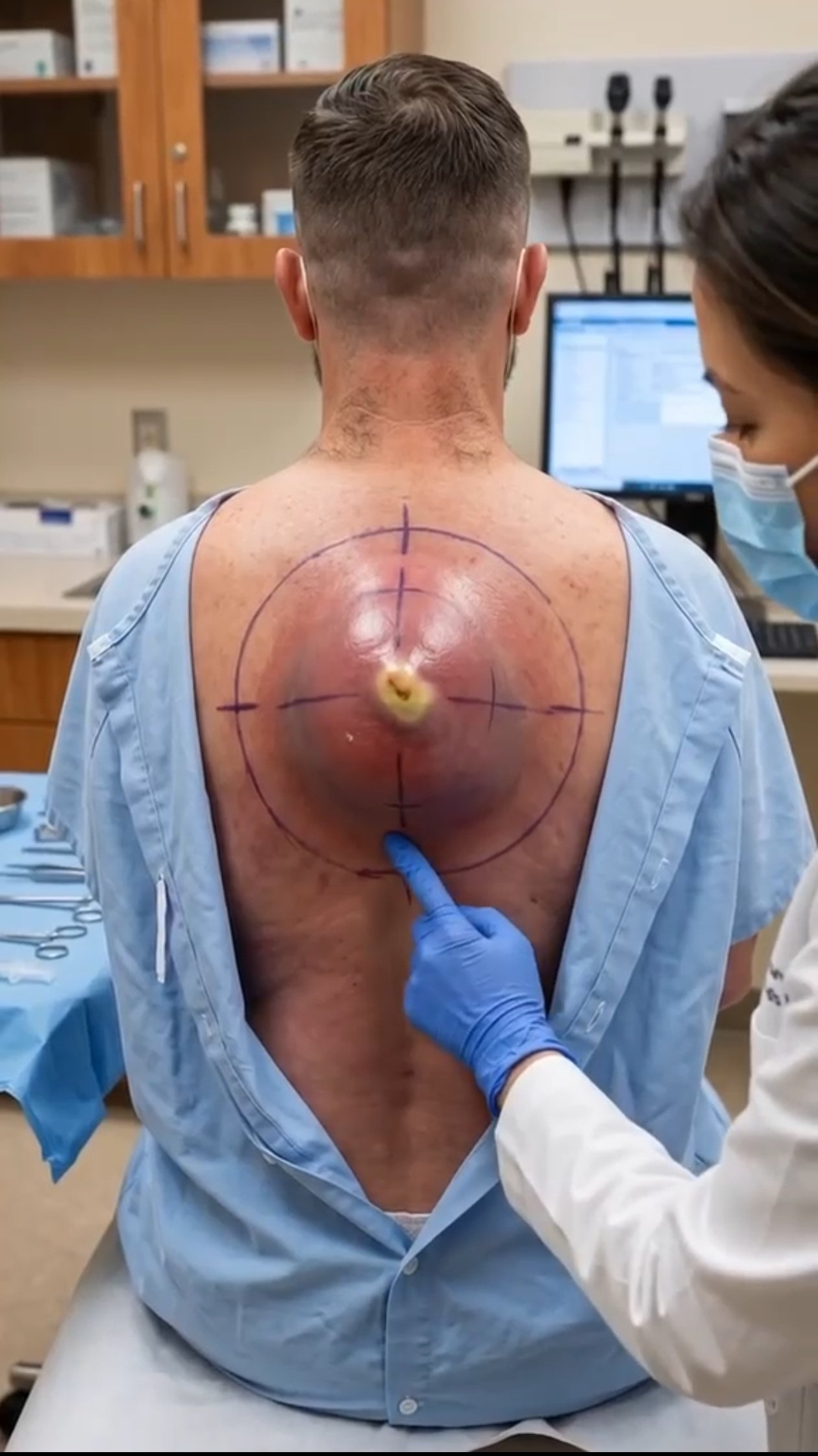
A skin lump can sometimes appear unexpectedly and cause discomfort, concern, or confusion. While many lumps under the skin are harmless, others may require medical attention. A video showing a patient with a large, swollen lump on the upper back highlights why unusual skin changes should always be examined by a qualified healthcare professional.
What Is a Skin Lump?
A skin lump is an abnormal swelling or raised area that develops on or beneath the skin. It can vary in size, shape, color, and texture. Some lumps remain small and painless, while others become swollen, red, tender, or inflamed.
Common causes include cysts, blocked oil glands, infections, inflammation, and other skin conditions. One possible cause of a swollen lump with a central opening is a skin abscess or an infected cyst. However, its exact nature cannot be determined from appearance alone.
What Does the Video Show?
The video shows a patient sitting in a medical examination room while a healthcare professional examines a prominent swollen area on the upper back.
The affected area appears enlarged and inflamed, with a noticeable central opening. The surrounding skin is also discolored and swollen. A medical professional carefully examines the area, using markings on the skin to identify and assess its size.
This type of examination helps healthcare professionals understand the condition, evaluate the surrounding tissue, and determine what treatment may be appropriate.
Possible Causes of a Large Skin Lump
Several conditions can cause a lump to develop on the back.
1. Skin Abscess
A skin abscess is a collection of infected fluid beneath the skin. It can develop when bacteria enter through a small break in the skin. Symptoms may include swelling, redness, warmth, tenderness, and sometimes fever.
2. Epidermoid Cyst
An epidermoid cyst is a common type of skin growth that develops beneath the surface. It may remain small for a long time, but sometimes becomes enlarged or inflamed. If it becomes infected, it may cause discomfort and swelling.
3. Infected Skin Cyst
A previously harmless cyst can become inflamed or infected. When this happens, it may increase in size and become painful. Medical assessment is important to determine whether treatment is needed.
4. Other Skin Conditions
Not every lump is caused by an infection. Some may result from benign growths or other medical conditions. A proper examination helps distinguish between these possibilities.
Why Medical Attention Is Important
A large or changing skin lump should not be ignored, especially when it becomes painful, swollen, warm, or red.
Healthcare professionals may examine the affected area and ask questions about when it first appeared, whether it has changed, and whether the patient has experienced other symptoms.
In some situations, additional testing may be recommended. Depending on the diagnosis, treatment could include medication, professional drainage, or another appropriate medical procedure.
Treatment should always be determined by a qualified healthcare professional.
What Should You Avoid?
People should avoid squeezing, cutting, puncturing, or attempting to drain a lump at home. These actions can worsen irritation, introduce infection, and cause further complications.
Keeping the affected area clean and avoiding unnecessary pressure can help prevent additional irritation while waiting for medical evaluation.
If the lump grows rapidly, becomes increasingly painful, or is accompanied by fever or spreading redness, medical attention should be sought promptly.
When Should You See a Doctor?
It is important to consult a healthcare professional if a skin lump:
– Becomes noticeably larger.
– Causes persistent pain or tenderness.
– Develops redness or warmth.
– Produces unusual discharge.
– Changes in appearance.
– Is accompanied by fever or feeling unwell.
Early assessment can help identify the cause and prevent possible complications.
Final Thoughts
The video demonstrates why unusual skin lumps deserve attention and proper medical evaluation. Although some skin growths are harmless, others may involve infection or inflammation that requires treatment.
Understanding the possible causes, recognizing warning signs, and avoiding unsafe home treatments are important steps toward protecting skin health.
Every skin condition is different, and an accurate diagnosis can only be made through appropriate medical assessment. When something unusual develops on the skin, seeking professional advice is always a sensible decision.
Disclaimer: This article is for educational purposes only and does not replace professional medical advice or diagnosis.