TikTok’s Per-Play Music Payouts: The 2026 Change That Could Finally Pay for Views
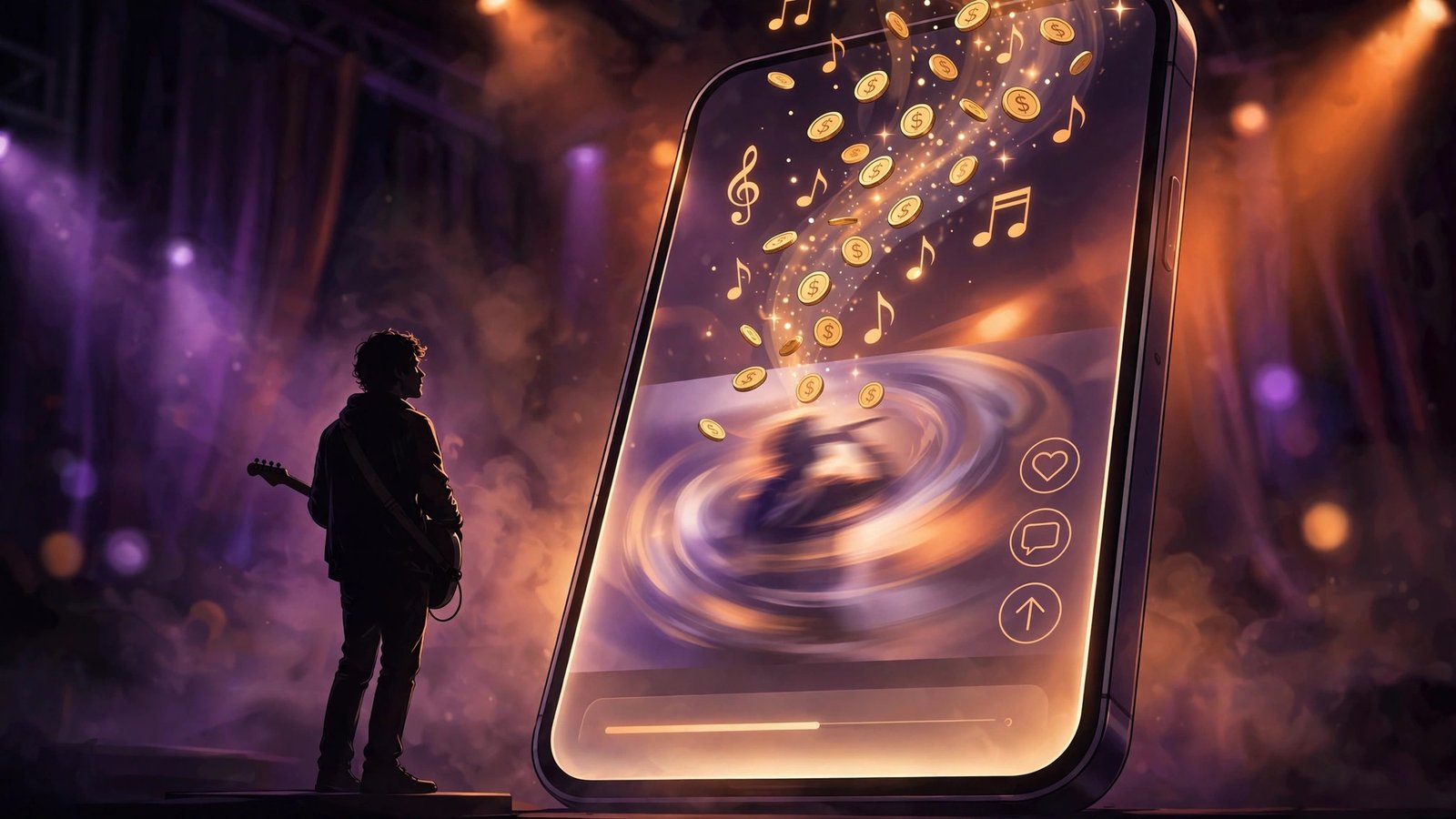
TikTok pays artists differently from every streaming platform, and most musicians learn that the hard way. Here’s the short version: right now TikTok pays for each video that uses your song — not for how many times that video gets watched. But reports say TikTok is about to change that. Industry sources told Digital Music News in February 2026 that TikTok is shifting to a per-play model, where a video with a billion views could generate royalties based on those billion plays instead of a single payment.
That’s a huge deal for anyone building passive income from music. Let’s walk through what’s verified, what’s still a rumor, and the math on both systems — so you can decide what to do with your catalog right now.
Important honesty note: TikTok has never officially confirmed the per-play change. Everything below about the new system comes from industry sources cited by Digital Music News. I’ll clearly label reported vs. confirmed facts throughout.
How TikTok Music Royalties Work Today (Confirmed)
The current system surprises almost everyone. Unlike Spotify or Apple Music, which pay per stream, TikTok’s royalty system is based on the number of videos that use your song. Here’s what that means in practice:
- When someone puts your track in their TikTok video, that first use generates a payment to your distributor.
- If that video then gets 10 views or 10 million views, you don’t earn more. The views don’t add royalties.
- What does add royalties: new videos using your track. If 1,000 videos use your song, that’s 1,000 separate payment events.
Distributors like DistroKid and CD Baby have said this explicitly for years: a video with a billion views triggers a single payment for the initial use. Only when the music is reused in a new video — a challenge entry, a duet, a stitch — does a new “event” generate a new payment.
That quirk is exactly why distributors’ guidance has always been: don’t hope one video goes viral; you want many videos using your sound. Under the current model, one viral clip is nearly worthless as a royalty source, while 1,000 small videos each pay their own small amount.
How much does TikTok actually pay per use?
There’s no single published rate, and TikTok music payments depend on licensing agreements, territories, and usage type — so beware of any article that states a universal “per 1,000 views” number. Estimates from distributor guidance have hovered around $0.03 per new video using a song, meaning 1,000 videos might earn roughly $30 at the distributor level — before your distributor’s cut. These figures come from older distributor guidance, not from TikTok, so treat them as rough ballpark numbers rather than promises.
The Reported Change: Per-Play Payouts (Reported, Not Confirmed)
According to details shared with Digital Music News, TikTok intends to count multiple plays of the same video as royalty-generating events. So if a single clip goes viral with a billion views, that video would now be counted one billion times instead of just once. The same would apply to derivative content — challenges and remixes could independently generate royalties based on their total views.
Sources said the transition was expected during the summer of 2026, with one source suggesting a possible rollout in late July. TikTok declined to comment publicly on the reported changes. As of October 2026, no official confirmation has emerged, and TikTok hasn’t published new royalty terms.
What industry sources have agreed on:
- Why TikTok would do this: the old model drew sustained criticism from artists, labels, and distributors. One rights holder told DMN the current system is “a total mess,” and the overhaul is “an attempt to push things into a new sphere.”
- It wouldn’t touch the majors’ deals. Universal Music Group, Warner Music Group, and Sony have negotiated separate licensing arrangements with TikTok in recent years, so the reported change would mainly affect independent artists and mid-size rights holders.
- It’s unclear whether it applies globally or only in selected markets.
Per-Use vs Per-Play: The Math
Let’s make this concrete. Imagine two scenarios for an independent artist on DistroKid’s Musician plan ($24.99/year, 100% of ordinary DSP royalties passed through):
Scenario A — one viral video. A creator puts your song in a video that reaches 50 million views. Under the current system, that’s one payment event — roughly a few cents. Under a per-play system, those 50 million views become 50 million royalty-generating events, which would be worth dramatically more, depending on the per-play rate TikTok sets.
Scenario B — a moderate challenge. 5,000 creators make their own videos with your sound (total views across them: 50 million). Under the current system, that’s 5,000 payment events — the strategy that actually works today. Under per-play, you’d get both the 5,000 events and the 50 million views counted.
The takeaway: if the change lands, viral moments suddenly become worth real money — while challenges, duets, and stitches keep paying as they do now. If it doesn’t land, the old playbook (maximize the number of videos, not views) stays in force. Smart strategy: play for both.
What to Do With Your Catalog Right Now
Whether or not TikTok confirms the change, there’s no reason to wait. The setup work is the same either way.
1. Get your music properly distributed to TikTok
TikTok doesn’t pay artists directly — it pays through licensing systems via distributors. Sign up with a digital distributor like DistroKid and opt in to TikTok delivery. If your music isn’t delivered to TikTok’s music library, you earn nothing from any usage at all. (If you decide to distribute with DistroKid, you can sign up here — affiliate link — which keeps 100% of your ordinary streaming royalties on their Musician plan.) See our honest breakdown of what AI music income actually looks like month to month for realistic expectations before you start.
2. Register your publishing separately
Your distributor collects royalties for the recording side. The composition side — songwriting/publishing royalties — needs separate registration (for example through Songtrust or your PRO). TikTok’s systems handle both sides differently, and skipping publishing registration is a common reason artists leave money on the table. Our guide on distributor rules and Content ID for AI music walks through how these pieces fit together.
3. Optimize for video count AND views
Under the current system, challenges, duets, and stitches are the only way to multiply payment events. Under a per-play system, raw views also pay. So do both: release loopable tracks with clear hooks, and encourage duets and challenges. A 15-second catchy loop that creators reuse beats a 3-minute ballad for TikTok economics.
4. Watch your distributor reports — don’t assume silence means the change hasn’t hit
DistroKid royalty reporting has its own delays: stores report 30–90 days after the month streams happen, so balances update on roughly a 2–3 month lag. If TikTok flips the switch, you won’t see it in your dashboard the next week — you’d see it in reports covering the months after rollout. Compare your TikTok line items across quarters rather than checking daily.
5. Consider SoundOn too (with eyes open)
TikTok’s own distributor, SoundOn, restructured in February 2026: artists keep 100% on ByteDance-owned platforms (TikTok, CapCut) with no time limit, but on third-party streaming services like Spotify and Apple Music, SoundOn retains 10% starting in month 13. You get direct access to TikTok’s promotional pipeline — but compare the year-two 10% cut against DistroKid’s flat $24.99/year before committing your whole catalog.
The Fine Print Nobody Should Skip
A few things to keep in perspective:
- This is not confirmed. If you read articles stating the per-play system is live, they’re getting ahead of the evidence. The only public statements are DMN’s sourced reporting and TikTok’s refusal to comment.
- Rates will still be TikTok-sized. Even if per-play arrives, TikTok is historically among the worst-paying platforms for music. Don’t project Spotify-style streaming math onto it.
- Music income is a stack, not a single platform. The creators who make real passive income from music combine streaming (Spotify, Apple Music), YouTube Content ID, and social micro-royalties (TikTok, Instagram) over months or years. TikTok is one lane — don’t make it your only one.
Disclaimer: royalty structures and platform policies change. This article reflects reported information as of October 2026 and is not financial or legal advice — always check current terms with your distributor.
Frequently Asked Questions
Is TikTok really switching to per-play music payouts?
Reported, but not confirmed. Digital Music News reported in February 2026 that industry sources said TikTok plans to count multiple plays of the same video as royalty-generating events. TikTok declined to comment, and as of October 2026 has published no official announcement. Treat it as likely direction, not established fact.
How does TikTok pay musicians right now?
By usage, not views. TikTok pays for each new video that uses your song — a single payment per video use regardless of that video’s view count. New videos (including duets, stitches, and challenge entries) each trigger a new payment event.
How much does TikTok pay per video use?
There’s no official universal rate. Older distributor guidance suggested roughly $0.03 per new video using a song, but actual payments vary by licensing agreement, territory, and usage type — and TikTok publishes no rate card. Treat “per 1,000 views” TikTok income calculators as fiction.
Will the per-play change help small independent artists most?
In principle, yes. Under the current system, small artists benefit only when many people create videos with their sound. A per-play system would mean a single breakout video — even with modest creator count — could generate meaningful royalties. The majors already have separate deals, so independents have the most to gain.
Do I need a distributor to get TikTok royalties?
Yes. TikTok pays rights holders through licensing systems via distributors — artists aren’t paid directly. You need your music delivered to TikTok’s music library through a distributor like DistroKid, CD Baby, RouteNote, or SoundOn, plus separate publishing registration to collect the composition side.
When would the change take effect?
Unknown. Sources cited by Digital Music News pointed to summer 2026, possibly late July, but there’s been no confirmation or official announcement since. Monitor your distributor’s TikTok line items quarterly — a reporting uptick would be the first visible evidence.