
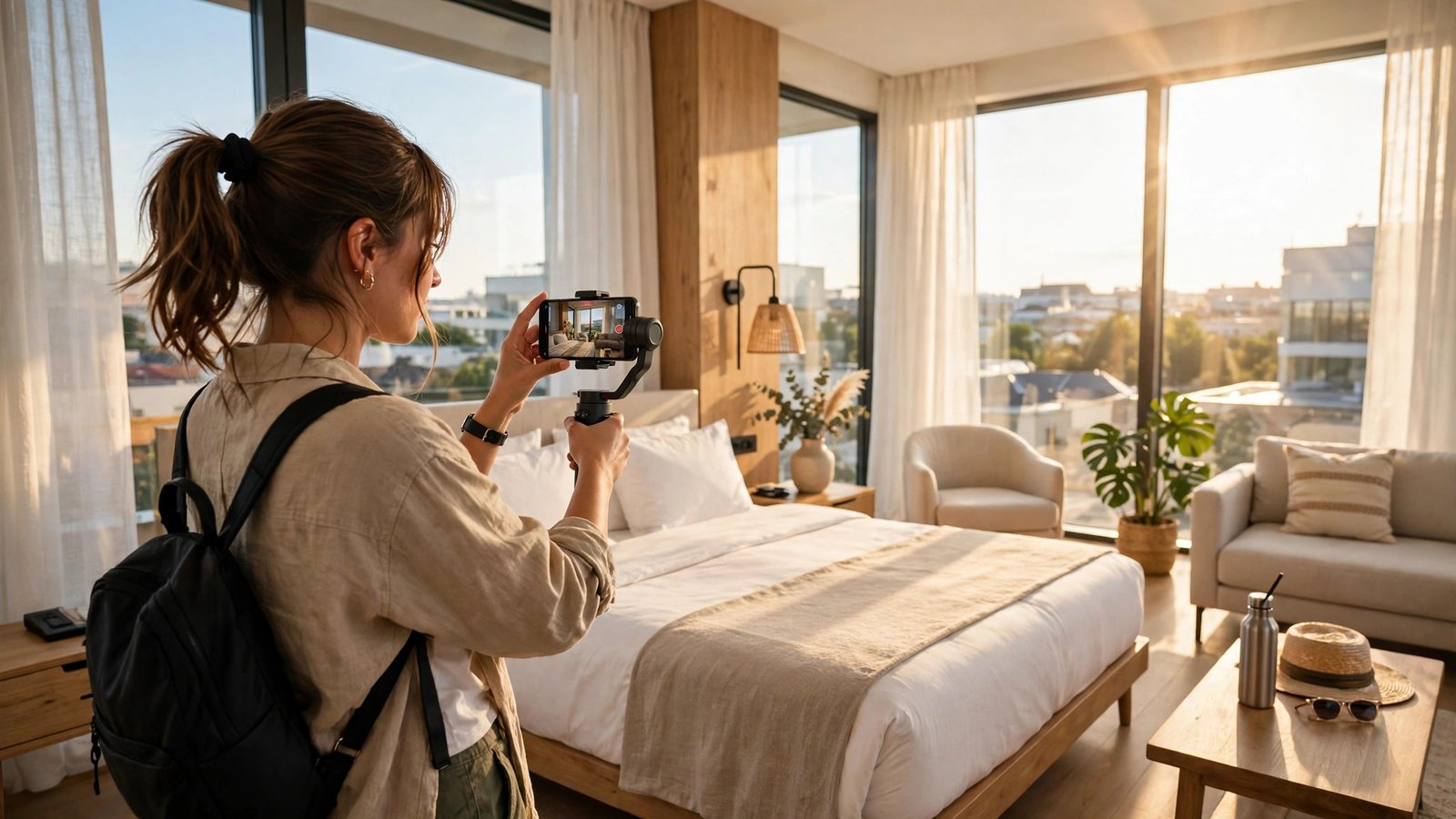
Yes — TikTok GO pays creators a commission when a viewer books a hotel through their video. TikTok launched the feature in the United States on May 12, 2026, and it turns a travel video into a booking button: tag a hotel or experience, and if someone books through it, you earn. But here’s the part the headlines skip — TikTok publishes no fixed commission rate, payouts reported by creators in the program swing from $7.33 to $48.00 per booking, and the program is invite-only, so clearing the 1,000-follower bar doesn’t guarantee you a spot.
That’s the honest picture six months in: a real income stream, and one of the most accessible monetization programs TikTok runs — but a slow, uneven one that pays for completed bookings and nothing else. No booking, no money, no matter how many views the video pulls.
What TikTok GO Actually Is (and What It Isn’t)
TikTok GO is a booking layer built into TikTok, not a separate app. It surfaces hotels, attractions, and things to do through the videos, search results, and location pages people already use — and lets viewers check availability and complete a booking in a few taps without leaving TikTok. That’s straight from TikTok’s own announcement, published on May 12, 2026 (TikTok Newsroom).
Think of it as TikTok Shop, but for travel instead of products: just like TikTok Shop affiliates earn when a viewer buys, TikTok GO creators earn when a viewer books. Views alone pay nothing.
Three things it is not: a views program — Creator Rewards pays for qualified views, while TikTok GO pays only for completed bookings, so a video with 2 million views and zero bookings earns zero dollars from GO; a travel agency — TikTok doesn’t process the payment or run the reservation, the booking is fulfilled by one of six partners (Booking.com, Expedia, Viator, GetYourGuide, Tiqets, Trip.com) and the hotel pays its existing commission terms to that site; or open to everyone — the US launch followed a 2025 test in which Booking.com let a subset of US users book hotels inside TikTok, and the program remains invite-only with no self-serve onboarding. A TikTok spokesperson confirmed that directly: “TikTok GO’s U.S. travel partner model is currently invite-only, and self-serve onboarding is not available.”
What TikTok GO Actually Pays: The Creator-Reported Numbers
TikTok publishes no fixed commission rate for TikTok GO. Its announcement says only that creators can earn “through commissions and creator campaigns.” No percentage, no dollar figure, no rate card. So what do creators actually see? One creator in the program, Salty Vagabonds, published the payout ranges listed for three named hotels in her account — creator-reported figures, not TikTok-published rates. Treat them as a sample, not a promise.
| Property | Listed payout per booking |
|---|---|
| Royal Sonesta Houston Galleria | $8.13 to $23.58 |
| Gaylord Texan Resort | $25.63 to $45.15 |
| Dallas/Fort Worth Airport Marriott | $7.33 to $48.00 |
Read that table twice. Across just three hotels, payouts run from $7.33 to $48.00 — a 6.5x gap — and the spread is just as wide inside a single hotel: the Dallas/Fort Worth Airport Marriott alone lists $7.33 to $48.00, depending on room type, length of stay, dates, and price. Some listings show a percentage instead of dollars (such as 5 percent), so a $300-a-night, two-night stay at 5 percent pays around $30, while a budget room pays a third of that. Any article quoting one flat rate for TikTok GO is guessing.
A hotel commission is a slice of the booking value, so the payout follows the room price, length of stay, and dates. TikTok has also published no attribution rules, and commissions only finalize on completed travel — a cancelled booking pays nothing, so earnings lag your content by weeks or months.
How Much Can You Realistically Make Per Month?
Most coverage quotes the $48 top end and lets you imagine it happening often. Let’s do the math honestly instead.
Important: the scenarios below are my estimates, built from the creator-reported payout range above. There is no published data on how often TikTok GO videos convert views into bookings, so the booking counts are assumptions, clearly labeled as such. Use them to size the opportunity, not to forecast your income.
The key unknown is conversion. Travel is the slowest-converting thing a creator can sell — nobody books a $200 hotel room on impulse the way they buy a $10 gadget from a TikTok Shop video. People plan, save, compare, and wait, and a hotel video often needs several exposures before it turns into a booking. So let’s model three scenarios for a small travel creator whose tagged videos pull a combined 100,000 views a month:
| Scenario | Bookings per 100k views | At $7.33 (low end) | At ~$20 (mid-range) | At $48.00 (high end) |
|---|---|---|---|---|
| Slow month | 1 booking | $7.33 | $20 | $48.00 |
| Steady month | 5 bookings | $36.65 | $100 | $240.00 |
| Strong month | 10 bookings | $73.30 | $200 | $480.00 |
A few things jump out. At realistic volumes, this is side income, not a salary — five bookings a month at mid-range payouts is $100, real money that covers a phone bill, but not rent. And the range within one scenario is enormous: a “strong month” pays $73 or $480 depending on which properties booked. Volume is everything — ten bookings a month takes a lot of views or a lot of videos, and one viral hotel video won’t do it. A library of tagged videos, each pulling a trickle of bookings over months, will.
One third-party dataset tracking restaurant GO posts found only 1.3% of posts carried a sale — most individual posts earn nothing on their own. The income comes from the catalog, not the clip.
For a creator with 5,000 to 20,000 followers posting travel content consistently, a realistic first-year expectation is $0 to $200 a month from TikTok GO, with most months in the low double digits. A creator with a large, travel-intent audience in expensive US cities can do better; a creator filming budget motels in small towns will do worse. Treat it as a slow-burn income line bolted onto content you’d make anyway — not a reason to buy plane tickets.
Who Can Join: Eligibility vs. Admission
This is the part of TikTok GO that trips people up, because the gap between “eligible” and “admitted” is the whole story.
Eligibility vs. admission: the honest box
| On paper (eligibility) | In practice (admission) | |
|---|---|---|
| Age | 18 or older | 18 or older |
| Followers | At least 1,000 | At least 1,000 — and that’s only the entry ticket |
| Account standing | Good standing, no recent guideline violations | Good standing, no recent violations |
| Availability | US creators | Invite-only — no self-serve signup exists |
| How you get in | Meet the requirements | TikTok invites you; eligible creators see a TikTok GO banner inside Creator Tools in TikTok Studio |
The 1,000-follower bar is the most interesting number here, because it puts TikTok GO within reach of a travel creator with a small but real audience. Compare it with the Creator Rewards Program, which requires 10,000 followers and 100,000 views in the last 30 days — TikTok GO’s bar is ten times lower. Our breakdown of TikTok Creator Rewards RPM and qualified views covers what that program pays per thousand views.
But 1,000 followers is one requirement among several, and hitting it does not guarantee admission — the program is invite-only. Eligible creators see a TikTok GO banner inside Creator Tools in TikTok Studio, and tapping it starts the setup. There’s also a community Discord for members, with verification taking 1 to 3 days, and creators pick categories across Hotel, Travel, Food and Drinks, Leisure, and Beauty.
Note: TikTok’s announcement confirms 18 as the minimum age to book, but states no creator-specific age rule — the creator age bar comes from creator guides and program reporting. If the banner hasn’t appeared yet, there’s no application form and no waitlist. Keep posting travel content, keep the account clean, and check Creator Tools regularly.
How a Booking Actually Happens Inside TikTok
The flow has four moves, and you only control the first two.
1. You post a video about a place. It can be a hotel, an attraction, a restaurant, or an experience — and it can use footage from a past trip. You don’t need to be there in real time, so old hotel clips sitting in your camera roll can be tagged and put to work.
2. You tag the exact location. This is the step that decides whether the video can earn. A green location tag marks a monetizable location eligible for TikTok GO commissions; a white tag means it is not. Tag the specific property by name, not the city or state — a video about a non-monetizable location earns nothing however many people watch it, so check the tag before you film.
3. The viewer taps through inside TikTok. TikTok GO surfaces lodging and things to do through videos, search, and location pages, and the viewer can check details and availability and complete a booking in a few steps. The booking itself is fulfilled by one of the six partners — Booking.com, Expedia, Viator, GetYourGuide, Tiqets, or Trip.com.
4. The earning follows the booking. If the viewer completes a booking attributed to your video, the commission lands in your balance — pending until the stay or activity actually happens, then confirmed. A video that gets watched but books nothing pays nothing.
The viewer pays the same price they’d pay booking directly, and US regulators expect a clear in-video disclosure that you earn a commission — say it on screen, don’t bury it in your bio. “I earn a commission if you book through this link” takes three seconds.
Things To Do: The Viator Side of TikTok GO
Hotels get the headlines, but the newer part of the program might be the better earner for most creators: TikTok GO now includes a Things To Do (TTD) section powered by Viator, letting creators earn from travel activities and experiences as well as hotel stays.
Why does that matter? A day tour, a cooking class, or a food tour is a cheaper, quicker decision than a hotel room. A viewer can decide on a $45 walking tour in minutes; a $200-a-night hotel takes days of comparing and planning. Lower-commitment bookings convert faster, and a creator in the program says the food, drink, leisure, and experience categories may offer better short-term returns than hotel content.
GetYourGuide alone lists over 200,000 experiences across 12,000 destinations, per its CEO in TikTok’s announcement. Pair a hotel video with an activities video from the same trip and one itinerary produces two commission streams.
The Content Playbook: Which Travel Videos Actually Drive Bookings
Not all travel content books rooms. A pretty sunset clip gets likes; a useful hotel video gets bookings. Here’s what separates the two.
1. The honest room tour
Walk in, show the actual room — bed, bathroom, view, noise level, the stuff a booking site’s photos hide. Say the price you paid and whether it was worth it. Viewers book rooms, not vibes.
2. The “worth it?” verdict
Pick a well-known hotel and answer one question: is it worth the price? Show what you got for the money, compare it with a cheaper option nearby, and give a clear yes or no. These convert because the viewer is already mid-decision — your video is the last thing they watch before booking.
3. The neighborhood guide
“Where to stay in [city]” beats “my hotel in [city]” because it catches viewers earlier in their planning. Show two or three hotels at different price points, say who each one suits, and tag each property. One video, three booking chances.
4. The price-transparency video
Tell people what you actually paid, what the resort fee added, what parking cost, and what the total came to. Nobody else does this, and it’s the number-one question every traveler has — a video titled “What a weekend at the Gaylord Texan actually costs” will outperform a generic resort tour.
5. The experience video — and the archive
A food tour, a cooking class, a kayaking trip: tag it through the Viator-powered Things To Do section. These are cheaper decisions that convert faster. And don’t forget your back catalog — TikTok GO doesn’t require you to be at the location when you post, so that hotel video from eight months ago can be retagged and put to work.
What to avoid
Don’t film a hotel just because it has a green tag — if you wouldn’t recommend the place to a friend, your audience will feel it. Don’t chase the $48 payouts by featuring resorts you can’t afford to stay in, and don’t build a trip around TikTok GO income: a creator who flies somewhere to chase a $7.33 commission has the math backwards.
Japan’s 270% Growth: Why the US Window Is Still Open
The US launch is only half the story. TikTok GO has operated in Japan since 2025, where bookings grew 270 percent over the most recent six-month period compared with the prior one, according to Revfine. Japan runs on local partners such as Rakuten Travel and Agoda, and a version also operates in Indonesia.
Be precise about what that 270 percent means: it’s bookings growth, not creator earnings growth. But booking volume is the tide that lifts every creator in the program — more people booking through TikTok means more chances a booking traces back to your video.
TikTok GO vs. TikTok Shop vs. Creator Rewards
Creators don’t pick one TikTok income stream — they stack them:
| Program | What you earn for | Entry bar | Payout shape |
|---|---|---|---|
| TikTok GO | Completed hotel/activity bookings | 1,000 followers, invite-only | $7.33–$48.00 per booking (creator-reported) |
| TikTok Shop affiliates | Product purchases | 1,000 followers for most, varies by product | Percentage of sale price, varies by product |
| Creator Rewards | Qualified views on 1-minute-plus original videos | 10,000 followers + 100,000 views in 30 days | RPM-based, varies by video |
Can one video earn from both TikTok GO and Creator Rewards? Unconfirmed — one creator in the program is testing it, but TikTok hasn’t confirmed stacking works, so don’t count on double earnings.
TikTok GO has the lowest entry bar of the three by a wide margin — the same 1,000 followers as TikTok Shop’s affiliate side, against Creator Rewards’ 10,000. If you’re weighing which TikTok income stream to chase first, our guide to TikTok Shop affiliate commission rates breaks down product commissions, and our TikTok monetization requirements checklist covers every program’s entry bar.
The Catches Nobody Puts in the Headline
Let’s be straight about the downsides, because a program this new collects hype faster than it collects payouts.
Travel converts slowly. A hotel booking is a planned purchase, not an impulse buy. Your video might be the first exposure, the fifth, or the twentieth before someone books — and the booking might land months after the video peaked. If you need money this month, TikTok GO isn’t the answer.
Attribution is a black box. TikTok hasn’t published the attribution window or how competing referrals are handled. If a viewer watches your video, then sees three more creators’ videos about the same hotel, then books — who gets paid? Nobody outside TikTok knows. Plan as if some of your bookings won’t credit to you.
The invite wall is real. You can meet every published requirement and still wait months for the banner to appear in TikTok Studio. There’s no application, no appeal, no timeline.
Payouts lag. Commissions sit pending until the traveler completes the stay or activity — a booking made in December for a March trip doesn’t pay until March.
None of these catches makes TikTok GO a bad program. They make it a slow one. The creators who do well with it treat it as a catalog business: film the trips you’d take anyway, tag everything eligible, and check back in six months.
How to Get In (If You Can)
There’s no application form, but there’s a clear checklist for putting yourself in the best position:
- Get to 1,000 followers. It’s the published floor. Below it, you’re not in the pool at all.
- Keep the account clean. Good standing with no recent guideline violations is a stated requirement. One strike can cost you an invite you never knew was coming.
- Post travel content consistently. TikTok invites creators who already make the content the program needs. A feed full of hotel tours, restaurant visits, and trip guides is the application.
- Check Creator Tools in TikTok Studio regularly. Eligible creators see a TikTok GO banner there. Tapping it starts the setup. There’s no email to wait for — the banner is the invitation.
- Join the community Discord after you’re in. Verification takes 1 to 3 days, and it’s where members swap notes on green-tag locations.
- Pick your categories — Hotel, Travel, Food and Drinks, Leisure, Beauty — and the cities you cover. Choose the ones you actually film.
- Check the tag before you film. Green means monetizable, white means it isn’t.
If the banner hasn’t appeared yet, keep going: post the travel content, grow past 1,000 followers, keep the account clean, and check back.
The Bottom Line
TikTok GO is a genuine new income stream for travel creators, and the 1,000-follower entry bar makes it one of the most accessible earning programs TikTok runs. The creator-reported payouts — $7.33 to $48.00 per booking — are real money, and the Japan growth numbers suggest the booking volume behind them is climbing fast. But it’s a monetization program, not a views program, and it pays for conversions in the slowest-converting category a creator can sell. Most videos will earn nothing; the money comes from a library of tagged videos accumulating bookings over months, not from one viral clip. So the verdict is simple: if you already post travel content, get in when the invite comes, tag everything eligible, and let it build. If you don’t post travel content, don’t start traveling to chase it — the math only works when the trips were happening anyway.
Frequently Asked Questions
How much does TikTok GO pay per hotel booking?
TikTok publishes no fixed commission rate. Creator-reported payouts for three named hotels range from $7.33 to $48.00 per booking — Royal Sonesta Houston Galleria at $8.13 to $23.58, Gaylord Texan Resort at $25.63 to $45.15, and Dallas/Fort Worth Airport Marriott at $7.33 to $48.00. Some listings show a percentage (such as 5 percent) instead of dollars.
Do you get paid for views on TikTok GO videos?
No. TikTok GO pays only when a viewer completes a booking through your tagged video. Views alone earn nothing from this program. View-based earnings come from the separate Creator Rewards Program, which requires 10,000 followers and 100,000 views in the last 30 days.
What are the requirements to join TikTok GO?
On paper: 18 or older, at least 1,000 followers, and an account in good standing with no recent guideline violations. In practice, the program is invite-only with no self-serve signup — meeting the requirements does not guarantee admission. Eligible creators see a TikTok GO banner inside Creator Tools in TikTok Studio.
How do I know if a hotel can earn commission before I film it?
Check the color of the location tag. A green tag marks a monetizable location eligible for TikTok GO commissions; a white tag means it is not. Tag the specific property by name, and check before you film — a video about a non-monetizable location earns nothing however many people watch it.
Can I earn from TikTok GO and Creator Rewards on the same video?
Unconfirmed. One creator in the program is testing whether a video over a minute long can qualify under both programs. TikTok has not confirmed that stacking works, so don’t count on double earnings until it does.
Is TikTok GO available outside the United States?
The booking feature launched in the United States on May 12, 2026. It has also operated in Japan since 2025, where bookings grew 270 percent over the most recent six-month period, and a version runs in Indonesia. TikTok has announced no date for other markets.