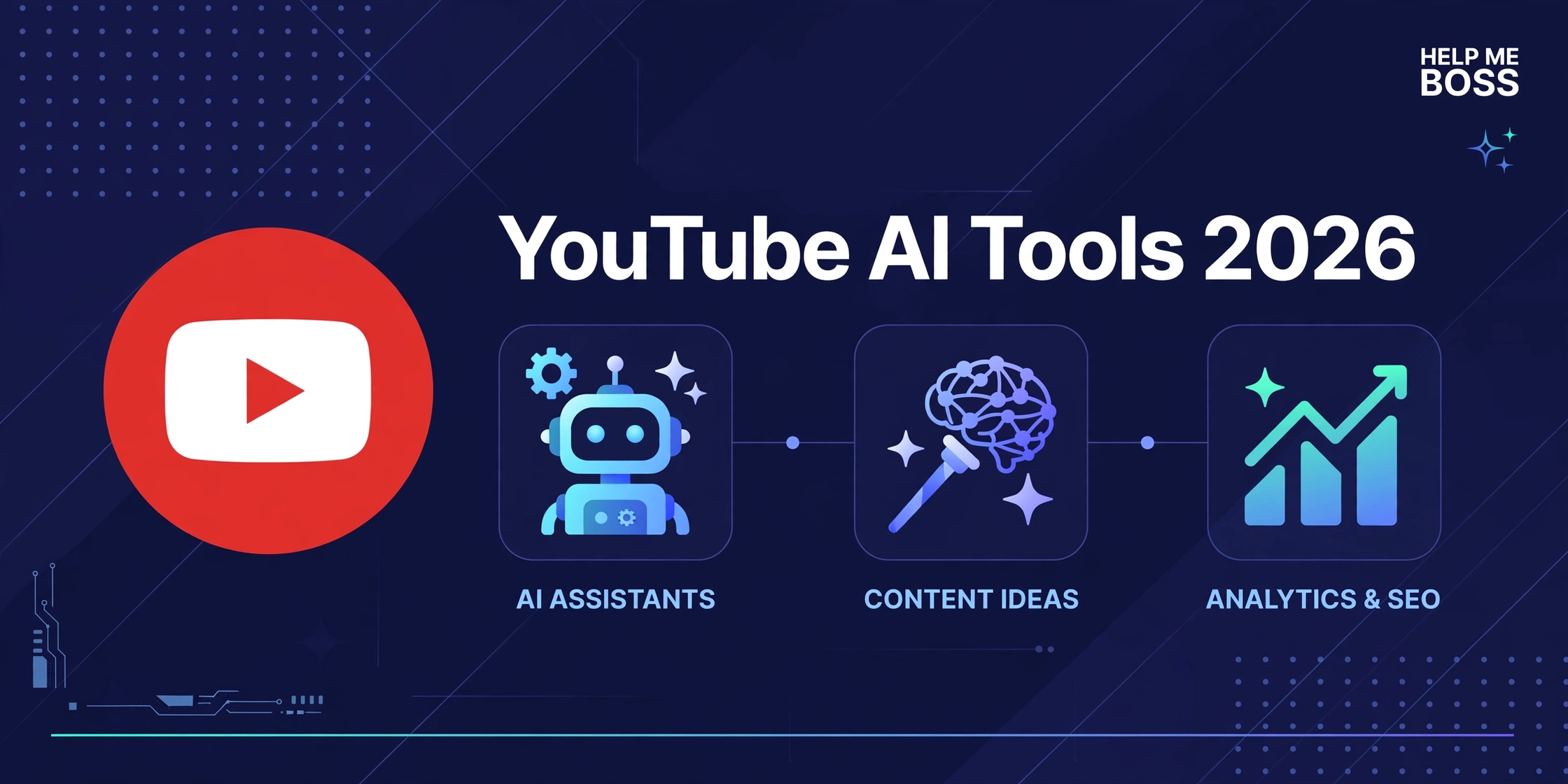
YouTube held its annual Made on YouTube event in New York City on September 23, 2026, and this year’s theme was unmistakable: AI is moving from novelty features into the core creator workflow. Here’s what was announced, what’s actually useful, and what’s still “coming later.”
The Headline: A Conversational AI Editing Assistant
The biggest creator-facing announcement is a Gemini-powered editing assistant built into Shorts and the YouTube Create app. Instead of tapping through timeline controls, you describe the edit in plain language — “trim the pauses,” “rearrange these clips for better pacing,” “sync the music to the cuts” — and get a first draft you can refine conversationally.
YouTube says hundreds of thousands of channels were already using its earlier Gemini editing features daily in August 2026, so this is an expansion of something with proven demand, not a from-scratch experiment. Manual editing stays available — the assistant is a starting point, not a replacement.
For Shorts creators specifically, this matters because editing speed is the bottleneck. The creators winning Shorts right now (see our coverage of YouTube’s crackdown on reuploaded Shorts) are the ones producing original content fast. Anything that cuts editing time without cutting originality is a genuine advantage.
YouTube Studio Gets Smarter
Studio is gaining several AI-assisted tools:
- Draft feedback. Upload a rough cut and get personalized feedback before publishing — pacing notes, retention predictions, suggestions.
- Channel-matched thumbnails. AI-generated thumbnail options designed to fit your channel’s existing visual style.
- Video A/B testing. Test up to three different cuts of a video to see which hook holds viewers best. YouTube hasn’t published the full mechanics (winner selection, rollout timing), so treat the details as provisional until it lands in your Studio account.
- Research tools. Better topic and trend research inside Studio, aimed at answering “what should I make next?” with data instead of guesses.
The A/B testing feature is the sleeper here. Creators have begged for native testing for years; third-party tools filled the gap with clunky workarounds. If YouTube’s implementation is solid, it changes how seriously small channels can optimize.
Likeness Protection Expands
YouTube is expanding its likeness detection system — the tools that help creators find unauthorized AI-generated uses of their face or voice. The updates:
- Detection is coming to mobile, where creators can enroll, receive match alerts, and take action directly
- Voice detection is being combined with facial matching for more accurate identification
- The system is designed to catch AI-generated impersonations, not legitimate transformative content
This is YouTube drawing a line: AI creation tools for you, AI impersonation protection against others. Given how fast AI face/voice cloning improved in 2026, every creator with a recognizable on-camera presence should enroll when it reaches their account.
Also Announced: Moderation, Live, and Shopping
A few more items from the event worth knowing:
- Opt-in AI comment moderation that adapts to each creator’s preferences is being tested — potentially a big time-saver for channels drowning in spam.
- Real-time auto-dubbing for live streams — your live content dubbed into other languages as you broadcast. If this works well, it’s a massive unlock for international audiences.
- YouTube Shopping affiliate program expands to 35 countries by year-end, with 1.3M+ creators already enrolled. Creators in India and Brazil will be able to tag Amazon products.
- Custom Feeds for US users — saveable homepage tabs for interests like documentaries or DIY.
One caution from the coverage: several features are described as rolling out “later in 2026 or early 2027.” Don’t restructure your workflow around a feature until it’s actually in your account.
What’s Missing (the Honest Gaps)
No announcement covers everything, and a few notable absences:
- No monetization changes. Nothing in the event touched revenue splits, Shorts ad rates, or new earning programs. The tools help you make content faster; they don’t change what the content earns — or what gets it suppressed (see our coverage of YouTube’s crackdown on reuploaded Shorts).
- No Shorts algorithm transparency. Creators got editing tools but no new insight into how Shorts get distributed — still the biggest black box on the platform.
- Staggered rollouts favor big channels. As usual, new features reach large partners first. Small channels should expect to wait months for some of these tools, which blunts the “productivity revolution” framing for the creators who need it most.
- AI disclosure rules unchanged. The event didn’t add new requirements for labeling AI-generated content — existing policies still apply, and they’re still enforced unevenly.
None of this makes the announcements bad. But it keeps them in perspective: this was a workflow event, not a business-model event.
What Small Channels Should Actually Do
Most of the announcement targets creators who already have momentum. If you’re small, here’s the priority list:
- Use the Gemini editing assistant when it arrives. It’s the most direct time-saver. Faster production → more uploads → more lottery tickets.
- Enroll in likeness protection. Free insurance for your face and voice. Do it the day it’s offered.
- Try the A/B testing. Even basic hook testing compounds over dozens of uploads.
- Ignore the shopping/brand tools for now. They assume an audience and deal flow you may not have yet. Revisit at 10K+ subscribers.
One caution from the coverage: several features are described as rolling out “later in 2026 or early 2027.” Don’t restructure your workflow around a feature until it’s actually in your account.
Related: Best AI Thumbnail Makers for YouTube in 2026
Frequently Asked Questions
When is the YouTube AI editing assistant available?
YouTube hasn’t given a single launch date — features are rolling out in waves through late 2026 and early 2027. Earlier Gemini editing features were already live in Shorts and YouTube Create before the event.
Is the AI editor replacing manual editing?
No. YouTube describes it as a conversational starting point — you describe the edit, get a draft, refine it. Manual controls remain available.
How does YouTube’s video A/B testing work?
Creators can test up to three cuts of a video to see which retains viewers best. Full mechanics (winner selection, comment handling) haven’t been published yet.
What is YouTube’s likeness protection?
A system that detects unauthorized AI-generated uses of a creator’s face and voice, with enrollment, match alerts, and takedown actions. It’s expanding to mobile with combined voice + facial detection.
Do I need YouTube Premium or a paid plan for these tools?
No paid tier has been announced for the creator AI tools. They’re positioned as core platform features, not premium add-ons.
Will the AI tools work for non-English channels?
YouTube hasn’t published language availability for the conversational editor. The auto-dubbing expansion suggests multilingual support is a priority, but expect English-first rollouts as usual.
Sources: Reuters coverage of Made on YouTube 2026 via reuters.com and Economic Times; feature analysis via ngram.com.