
Introduction
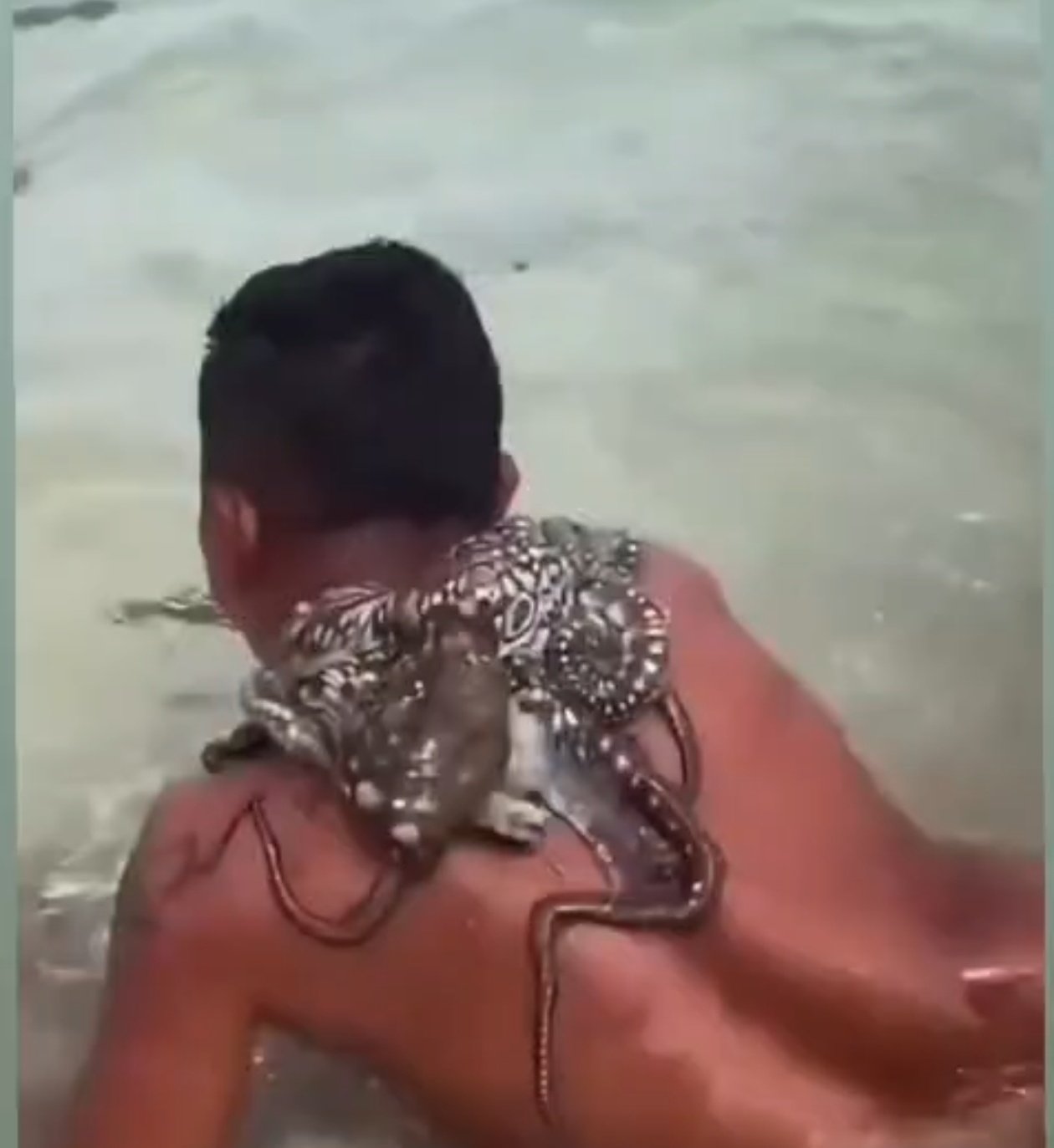
The ocean is full of fascinating creatures, and sometimes a simple visit to the water can turn into an unforgettable experience. A short video captures an unusual moment in which a man in shallow seawater comes into contact with an octopus. The marine animal is seen resting across his upper back and shoulders as he sits in the water. This unexpected encounter attracts attention because octopuses are known for their distinctive appearance, flexible bodies, and remarkable ability to move their arms in different directions.
The scene offers viewers a glimpse into the fascinating world of marine life. It also raises an important question: how should people behave when they encounter wild sea creatures? Although the moment may look entertaining, it is a reminder that ocean animals deserve respect and careful treatment.
An Unexpected Meeting With Marine Life
At the beginning of the video, a man is sitting in shallow seawater near the shore. The water appears relatively calm, and the surroundings suggest that he is close to a beach or another accessible coastal area. Suddenly, attention turns to an octopus positioned across his back.
The octopus has several long arms that extend over the man’s shoulders and back. Its body and arms create a striking visual scene, especially because the animal’s movements contrast with the man’s relatively still posture.
Encounters like this can be surprising because octopuses are usually associated with underwater habitats, rocky coastal areas, and places where they can hide among rocks or other natural structures. Seeing one so close to a person can immediately attract curiosity.
For viewers, the video creates a sense of wonder. It shows how unpredictable nature can be and how an ordinary moment near the sea can become an unusual wildlife encounter.
Understanding the Octopus
An octopus is a marine animal belonging to the cephalopod group, which also includes squid and cuttlefish. It is recognized by its eight arms, soft body, and extraordinary adaptability.
Unlike many other marine animals, an octopus does not have a rigid internal skeleton. This flexible body allows it to squeeze through surprisingly narrow openings, provided its hard beak can pass through. Its arms are equipped with suckers that help it grip surfaces, explore its surroundings, and manipulate objects.
Octopuses are also famous for their intelligence. Research has shown that many species can solve problems, learn from experience, and respond to changing environments. Their behavior can be complex, making them among the most interesting animals in the ocean.
Another remarkable characteristic is their ability to change color and skin texture. Depending on the species and circumstances, these changes can help with camouflage, communication, or responses to threats.
These abilities explain why an octopus can appear so unusual when seen up close. Its arms can move independently, and its suckers can attach to surfaces, producing movements that may surprise someone unfamiliar with the animal.
What Makes the Scene So Interesting?
One of the most noticeable aspects of the video is the way the octopus spreads its arms across the man’s upper body. The animal’s unusual shape makes the encounter visually striking.
As the footage continues, the man raises his arms and holds his hands behind his head while the octopus remains against his back. The scene draws attention to the animal’s flexibility and the way its arms interact with the surrounding surfaces.
For people watching online, this type of footage can create a mixture of curiosity, surprise, and uncertainty. Some viewers may be fascinated by the closeness of the encounter, while others may wonder whether the animal is comfortable or whether the situation is safe.
However, the video alone does not establish why the octopus is in that position or how the animal is responding internally. Its behavior should not automatically be interpreted as friendliness, aggression, or a desire to interact with a human.
Wild animals behave according to their surroundings, instincts, and individual circumstances. What appears entertaining to a person may be stressful or confusing for the animal.
The Importance of Respecting Ocean Wildlife
Although the encounter is unusual, it highlights an important principle: wild marine animals should be observed carefully and handled as little as possible.
An octopus is not a toy or a pet simply because it is close to a person. Handling can potentially injure the animal, damage its delicate skin, or expose it to unnecessary stress. Human contact may also introduce substances from the skin, clothing, or equipment into its environment.
The safest approach is to maintain a respectful distance whenever possible. If an octopus is encountered in shallow water, people should avoid pulling its arms, squeezing its body, or attempting to remove it from the water.
If the animal is attached to a person, it is important not to pull forcefully. A calm response and guidance from a qualified local marine wildlife professional may be appropriate, particularly if the animal appears injured or cannot safely separate itself.
People should also remember that different octopus species have different characteristics. Some possess venom, and certain species can be extremely dangerous. It is not always possible to identify a species accurately from a short video, so touching an unfamiliar octopus is not advisable.
Respecting wildlife helps protect both people and the animals they encounter.
Why Marine Encounters Attract Online Attention
Wildlife videos frequently attract attention because they reveal moments that many people never experience firsthand. A close encounter with an octopus is especially compelling because the animal looks very different from familiar land animals.
Its flexible arms, distinctive suckers, and unusual movement make it visually memorable. A short clip can encourage viewers to learn more about marine biology and the different species that inhabit coastal waters.
Social media also allows people to share unusual experiences with audiences around the world. A moment recorded in one coastal location can quickly become a conversation about animal behavior, ocean exploration, and human interaction with nature.
Nevertheless, viewers should remember that a short video provides only a limited view of an event. It may not show what happened before recording began, the exact location, the species involved, or what occurred after the footage ended.
Responsible viewing means enjoying the unusual moment without making unsupported assumptions about the animal or the person involved.
Protecting the Ocean and Its Creatures
Octopuses are part of complex marine ecosystems. They play important roles as predators and prey, helping maintain relationships among different ocean species.
Like many marine animals, they depend on suitable habitats and healthy coastal environments. Pollution, habitat destruction, and unsustainable fishing practices can affect marine ecosystems and the creatures that live within them.
People can help protect ocean wildlife through simple actions. Avoiding litter, reducing plastic waste, following local fishing regulations, and respecting protected marine areas all contribute to healthier coastal environments.
When visiting beaches, people should also avoid disturbing animals found among rocks, tide pools, and shallow water. Observing wildlife without touching it allows animals to continue their natural behavior while giving people the opportunity to appreciate their beauty.
Education is equally important. Learning about octopuses and other marine species helps people understand why these creatures should be treated with care rather than approached simply for entertainment.
Conclusion
The video presents a memorable and unusual encounter between a man and an octopus in shallow seawater. The animal’s long arms and distinctive appearance make the moment fascinating to watch, while the man’s position highlights how close humans can sometimes come to marine wildlife.
Beyond its visual appeal, the encounter offers an opportunity to appreciate the intelligence, flexibility, and uniqueness of octopuses. It also reminds us that wild animals should be treated with respect, even when an encounter appears harmless or entertaining.
The ocean remains one of the most remarkable environments on Earth, filled with creatures whose behavior continues to inspire curiosity. By observing wildlife responsibly, avoiding unnecessary handling, and protecting marine habitats, people can help ensure that future generations will also have the opportunity to discover these extraordinary animals.
Ultimately, the most valuable lesson from this unusual moment is simple: nature can surprise us at any time, and every encounter with wildlife is an opportunity to learn more about the world beneath the waves.