
Introduction
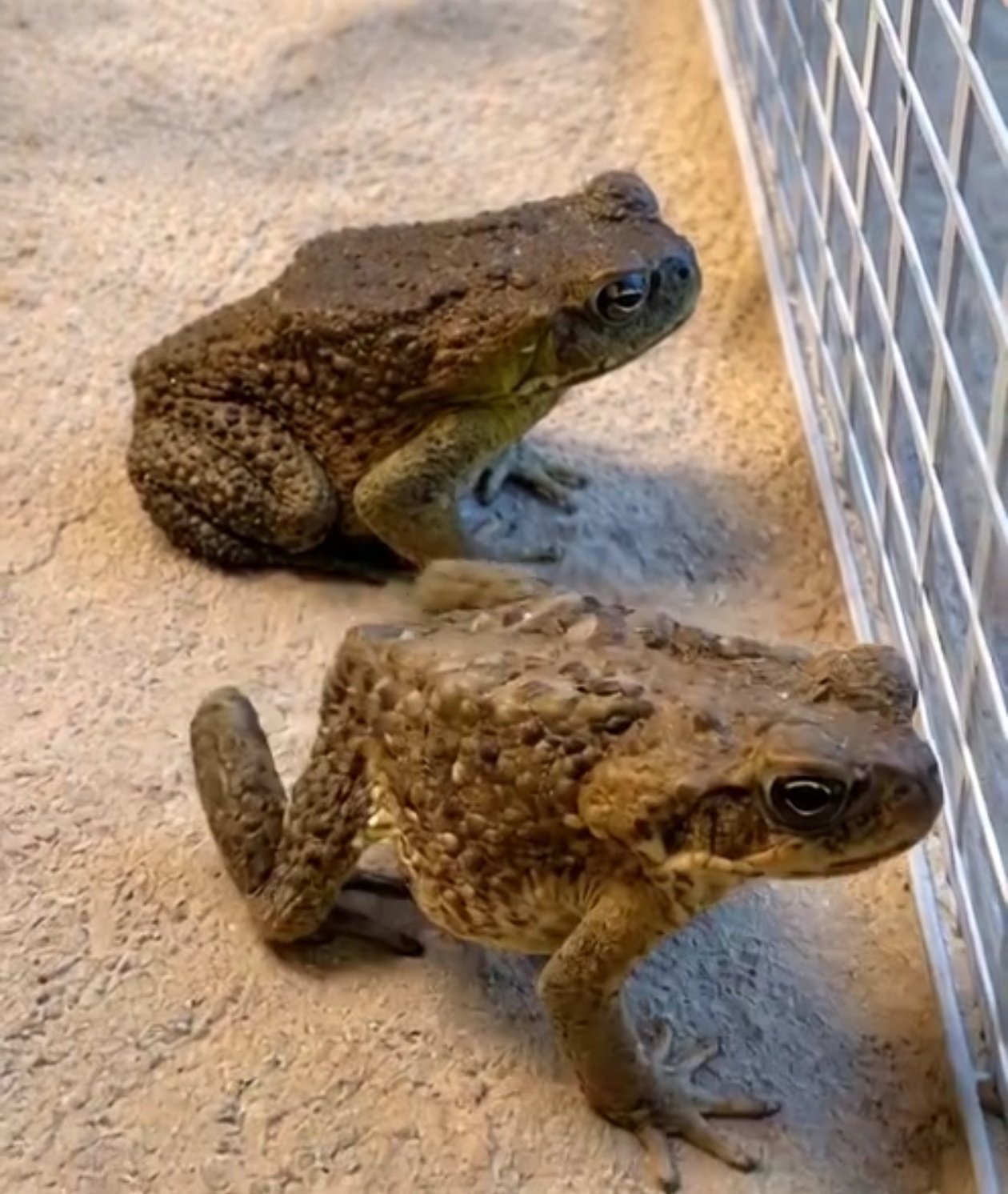
Nature is full of fascinating moments, and even the smallest animals can capture our attention through their behavior. A short video featuring two brown toads shows an interesting interaction inside an enclosed space. Both amphibians move around on a sandy surface near a wire barrier, creating a scene that invites viewers to observe their movements and learn more about their lives.
Although toads may appear slow and ordinary at first glance, they have unique adaptations that help them survive in different environments. Their powerful hind legs, textured skin, and sensitive responses to their surroundings make them interesting subjects for wildlife observation.
This video offers a simple but valuable opportunity to explore amphibian behavior, understand the differences between frogs and toads, and appreciate the importance of protecting these often-overlooked creatures.
A Close Look at the Two Toads
At the beginning of the video, two brown toads are visible on a light-colored sandy surface. They remain close to one another, with a wire barrier running along one side of their enclosure.
The animals have broad bodies, textured skin, and strong hind legs. Their earthy brown coloring helps them blend into natural environments such as soil, leaves, and forest floors.
As the footage continues, one toad begins moving forward while the other remains nearby. Their bodies shift as they reposition themselves, and their legs become more noticeable as they walk or make short movements across the ground.
The interaction is visually interesting because both animals are in close proximity. However, the brief footage does not establish whether they are competing, exploring, responding to one another, or simply moving around their surroundings.
Observing animals carefully without making assumptions is an important part of understanding wildlife behavior.
Understanding Toads and Their Physical Features
Toads belong to the larger group of amphibians, which includes frogs, salamanders, and newts. Many toads are recognized by their relatively stout bodies, shorter-looking legs, and dry or bumpy skin.
Their skin texture differs from the smooth, moist appearance commonly associated with many frog species. However, these features vary, and not every amphibian can be identified accurately from its appearance alone.
Toads have four limbs, with their hind legs providing the strength needed for walking, hopping, and escaping potential threats. Depending on the species, they may spend much of their time on land while returning to water or moist environments for breeding.
Their eyes are another important feature. Toads use their vision to detect movement and respond to changes around them. Their senses work together to help them find food, avoid predators, and navigate their habitats.
The animals in the video display several features commonly associated with toads, including their brown coloring, rounded bodies, and textured skin. Nevertheless, identifying their exact species would require more information about their appearance and geographic location.
Why Do Toads Move in Different Ways?
One of the most noticeable aspects of the video is the movement of the toads across the sandy surface. Their bodies shift as they reposition their legs and move forward.
Toads can move through walking, short hops, or a combination of both. Their movement depends on their species, body size, immediate surroundings, and the situation they are responding to.
When a toad walks, its limbs support its body while helping it move over the ground. When it hops, its powerful hind legs provide the force needed to propel it forward.
Toads may also pause frequently. Remaining still can help them avoid attracting attention from predators, conserve energy, or assess their surroundings.
In an enclosed setting, their movements may also reflect the boundaries and objects around them. A barrier can influence the direction in which an animal travels, but a short video cannot tell us exactly what the toad is responding to.
These small movements demonstrate how amphibians interact with their immediate environment, even during an ordinary moment.
What Does Their Interaction Mean?
Because the two toads are close together, viewers may wonder whether they are fighting, playing, or communicating.
There are several possible explanations for close contact between toads. Depending on the species and circumstances, they may encounter one another while exploring, searching for food, or engaging in breeding-related behavior.
During breeding season, some male frogs and toads grasp other individuals in a behavior known as amplexus. This behavior is associated with reproduction, but it cannot be confirmed simply because two amphibians are near each other.
Other interactions may involve competition, territorial responses, or incidental contact. Determining the meaning of a particular encounter usually requires observing the animals’ posture, movements, vocalizations, and behavior over a longer period.
Therefore, it would be inaccurate to assign a definite explanation to the interaction shown in this short clip. The most useful approach is to appreciate what can actually be observed while recognizing what remains uncertain.
The Role of Toads in the Environment
Toads play important roles in many ecosystems. They feed on a variety of small invertebrates, including insects and other tiny animals, depending on their species and size.
By consuming insects, toads can contribute to the natural regulation of some insect populations. They also serve as food for other wildlife, including certain birds, snakes, and mammals.
This makes them an important part of the food web. Their presence can help support the balance of a healthy ecosystem.
Toads are also sensitive to environmental changes. Because their skin is permeable and many species depend on moist habitats, pollution, habitat destruction, and changes in water availability can affect their survival.
Protecting amphibians therefore benefits more than just the animals themselves. It also helps preserve the wider ecosystems in which they live.
Why Amphibians Need Protection
Many amphibian populations face environmental pressures, although the level of risk varies considerably by species and location.
The loss of wetlands, pollution of freshwater habitats, road traffic, climate change, and infectious diseases can all threaten amphibians. Some species also face risks from the introduction of non-native animals and changes to their natural breeding grounds.
People can help by protecting local wetlands, avoiding the unnecessary disturbance of wildlife, and keeping rubbish and harmful chemicals out of natural habitats.
When encountering a toad outdoors, it is best to observe it without touching or moving it unnecessarily. Amphibian skin can absorb substances from its surroundings, and handling may expose the animal to harmful residues or cause stress.
If a toad is found in a dangerous location, local wildlife guidance can help determine the safest response.
Even small actions, such as preserving garden vegetation and avoiding pesticides where possible, can contribute to a healthier environment for amphibians.
The Educational Value of Wildlife Videos
Short animal videos are popular because they allow people to observe behaviors that might otherwise go unnoticed. A simple clip of two toads can encourage viewers to ask questions about movement, communication, habitat, and survival.
These videos can also help younger audiences develop an interest in biology and the natural world. Watching an animal move provides a starting point for learning about its anatomy and the adaptations that support its way of life.
However, viewers should remember that short recordings show only a small part of an animal’s behavior. The surrounding circumstances, the conditions in which the footage was recorded, and events before or after the clip may remain unknown.
Responsible wildlife content should encourage curiosity without exaggerating what the footage proves or encouraging people to disturb animals for entertainment.
Conclusion
The video of two brown toads moving across a sandy enclosure provides an interesting glimpse into the everyday behavior of amphibians. Their textured skin, strong hind legs, and movements offer useful examples of the physical adaptations that help toads navigate their surroundings.
Although the exact reason for their interaction cannot be determined from the short clip alone, the scene encourages viewers to learn more about these remarkable animals.
Toads are more than small creatures found near gardens, forests, and wetlands. They contribute to food webs, help regulate some insect populations, and form an important part of healthy ecosystems.
By observing them responsibly and protecting the habitats they depend on, we can help ensure that amphibians continue to thrive. Sometimes, a few seconds of wildlife footage are enough to remind us that even the smallest creatures have an important place in the natural world.