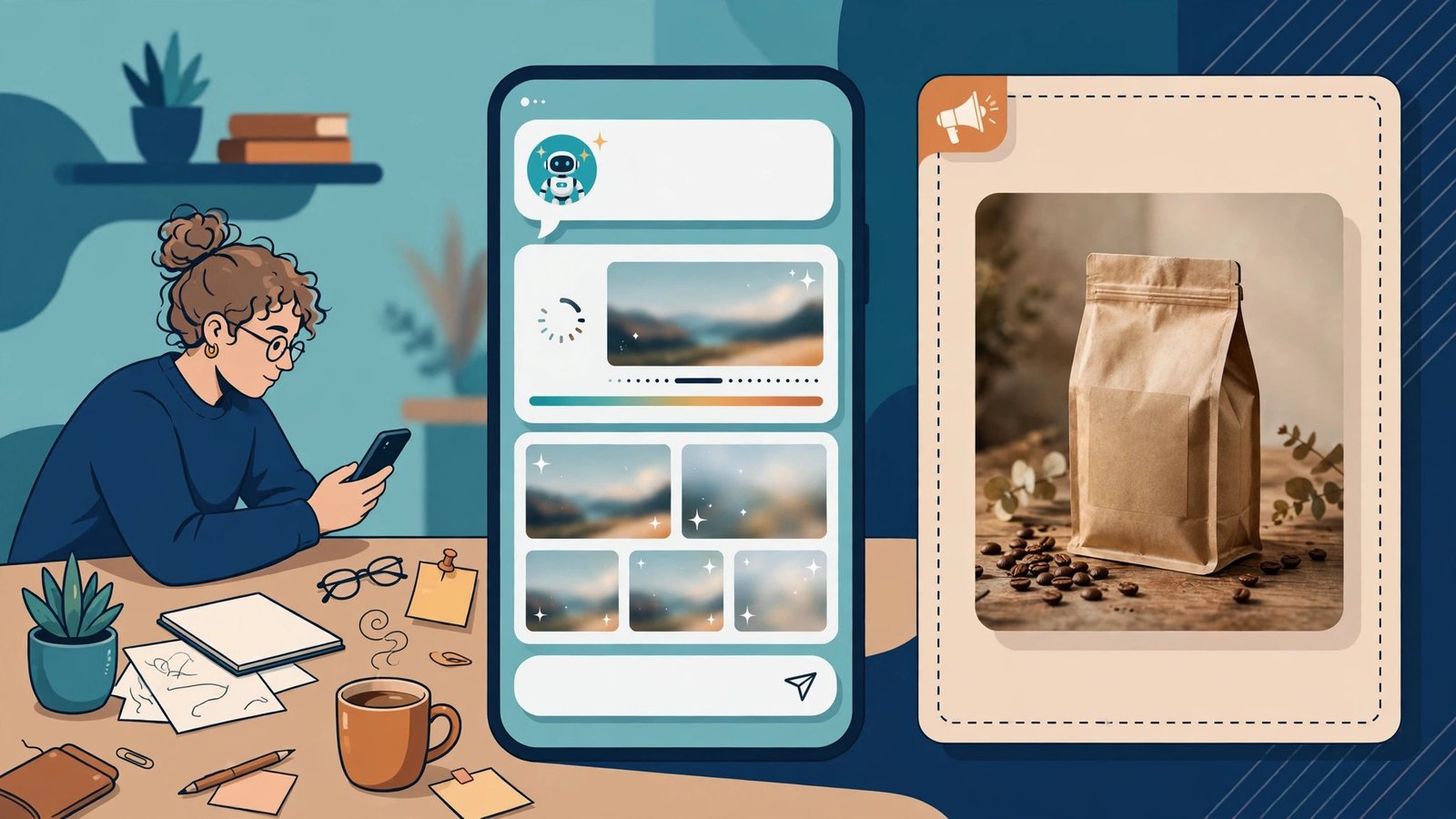
On October 5, 2026, OpenAI announced it will begin testing a visual advertising format inside ChatGPT later this month. The ads will appear during image generation for users in the United States — picture-based placements, clearly labeled and kept separate from the image ChatGPT creates and from its answers. Here’s the direct answer for small business owners: you can’t buy these ads yet (the test runs with an initial group of advertisers), but this is the clearest signal yet that advertising inside AI conversations is becoming a real channel, and the groundwork you do now — product imagery, clean product data, and a brand-safety mindset — will decide how ready you are when it opens up.
What OpenAI Actually Announced
The announcement is narrow in a way that’s worth appreciating. OpenAI is introducing one new format — image-based ads — on one surface: ChatGPT’s image generation feature. The test starts later in October 2026, runs in the United States only, and involves a limited group of advertisers. OpenAI says the ads will show product inspiration, examples of a product in use, or the experience a service delivers, and that they’ll carry clear labels distinguishing sponsored content from the image the user asked ChatGPT to make.
Three commitments matter for both users and advertisers. First, the ads sit alongside the generated image, not inside it. Second, OpenAI repeats its standing position that advertising does not influence ChatGPT’s answers — an important line, because the whole pitch of conversational discovery falls apart if users suspect answers are for sale. Third, placement guardrails assess whether a conversation is appropriate for advertising, and OpenAI says ads are kept out of emotionally vulnerable, sensitive, or otherwise unsuitable conversations, with automated review, human oversight, and ongoing monitoring.
Who Will See These Ads (and Who Won’t)
Advertising in ChatGPT currently runs on the Free and Go plans and is shown to logged-in adults; paid tiers — Plus, Pro, Business, Enterprise, and Education — carry no ads. TechCrunch reported that the visual format applies to free and low-cost plans, though OpenAI’s own announcement didn’t itemize tiers for this test. In practice: the test audience is US-based ChatGPT Free and Go users generating images.
The scale behind that audience is the real story. OpenAI says ChatGPT now reaches 1.2 billion people each week, and describes advertising as a way to serve a much larger market than subscriptions alone can reach. For context on where this sits in OpenAI’s ad build-out: the company introduced text ads earlier in 2026 and expanded them to India in August, and on the same day as the visual-ads announcement it announced a Razorpay partnership to bring ChatGPT Ads to Indian brands. The US test of visual ads is part of a deliberately international rollout.
The Part Businesses Should Study: Measurement and Brand Safety
The most mature signal in the announcement isn’t the ad format itself — it’s the measurement plumbing OpenAI is installing alongside it. OpenAI is expanding integrations with Hightouch, Tealium, and LiveRamp so advertisers can connect conversion data from their existing systems, and attribution integrations across providers including AppsFlyer, Adjust, Triple Whale, Kochava, and Branch. It’s also running geo-based experiments with Haus, Measured, and WorkMagic, and brand-suitability pilots with DoubleVerify and Integral Ad Science.
Translation for a small business owner: OpenAI is building the things a serious advertiser needs before spending — the ability to measure whether an ad drove a sale, and third-party verification that the ad didn’t run in a bad context. OpenAI says these partners don’t get access to private user conversations, which addresses the obvious privacy question. Advertisers also get a new “Negative Phrases” option to exclude placements that conflict with their own brand policies.
This matters more than any single ad creative. When a platform invests this heavily in measurement and brand safety this early, it’s preparing for real advertiser budgets, not a vanity experiment.
Why This Changes “Being Discoverable”
Here’s the strategic shift the announcement quietly confirms: product discovery is moving from keywords to conversations. For twenty years, a small business got discovered on Google by ranking for search terms. Now, a meaningful share of product questions — “what running shoes are good for flat feet,” “plan a birthday party for a 7-year-old” — go to AI assistants, and the answers don’t carry traditional ad slots.
Visual ads in image generation are an interesting beachhead because image generation is a discovery surface, not a purchase-intent one. When someone asks ChatGPT to generate an image, they’re exploring — gathering inspiration, picturing possibilities. An impression there shouldn’t be treated as evidence the person is ready to buy, and businesses should price their attention accordingly when this opens up. The upside is real, though: a visual format is genuinely well suited to products that need to be seen — furniture, fashion, home decor, food, travel experiences. If your product photographs well, this channel may eventually fit you better than a text ad ever could.
What a Small Business Should Do Right Now
You can’t buy these placements yet, and OpenAI hasn’t said when the test expands or whether a self-serve buying path is coming. But the businesses that benefit early will be the ones whose assets are ready. Here’s the practical checklist:
1. Audit your product imagery. Visual ads run on imagery that shows product inspiration, products in use, and experiences. If your product photography is weak or your Google Business Profile photos are blurry, fix that now — the same assets will power this channel eventually. Shoot scenes, not just products on white backgrounds: the coffee bag on a real kitchen table, the sofa in a lived-in room.
2. Make sure your business is legible to AI. AI assistants answer product questions using web content, structured data, reviews, and business listings. Keep your product descriptions, hours, service area, and reviews current on your own site and on your listings. Clean, factual web presence is the raw material AI answers are built from — paid or not. It’s also worth reading Google’s October 2026 guidance on fact-checking AI-generated content: if AI tools are going to summarize your business, you want the source material accurate.
3. Watch the test results, don’t buy blindly. Because image generation is an exploration surface, treat early inventory with a test budget, not a launch budget. When the format opens up, run small, measure with the attribution tools OpenAI is wiring in (AppsFlyer, Adjust, and the rest), and compare against your existing channels before committing spend. One honest measurement beats ten assumptions.
4. Think about brand safety now. The Negative Phrases option and the DoubleVerify/IAS pilots exist because AI conversation contexts are unpredictable. Decide early which topics and contexts your brand never wants to appear beside, and write that list down. It’s the kind of five-minute exercise that prevents a very bad Monday.
5. Don’t neglect the ad channels that pay today. AI-platform advertising is a “get ready” lane, not a “spend today” lane for most small businesses. Google and Meta ads are measurable, available now, and — in Google’s case — tied to an ecosystem that already rewards good websites. If you monetize a website too, keep Google AdSense’s approval requirements on your radar as the other side of this economy: someone has to own the inventory advertisers buy.
The Honest Caveats
A few things to keep in perspective. The test is small, US-only, and OpenAI hasn’t published a single performance number — no click-through rates, no cost figures, nothing you can plan a budget around. Everything in the “what to do” list above is preparation, not a buying recommendation. Also note that much of the fine detail on which tiers see the ads comes from press reporting (TechCrunch) rather than OpenAI’s own materials, so treat the Free-and-Go framing as the best available picture, not a company guarantee.
And there’s a real open question about how users react. An ad inside a creative tool is a different intrusion than a banner on a page. If the labels are clear and the separation from generated output holds, users may accept it the way they accepted sponsored results in search. If not, advertisers should expect the format to evolve before it scales. Either way, the measurement infrastructure is the tell: OpenAI is spending like a company that expects this to work.
The Bottom Line
October 2026 marks the moment ChatGPT advertising stopped being text-only. A visual format, launching in test with an initial group of US advertisers, backed by serious measurement and brand-safety partnerships, is exactly what an advertising platform looks like in its pre-scale phase. For a small business, the right move isn’t to wait for an ad account — it’s to get your product imagery, product data, and measurement thinking ready now, so when the doors open you walk in prepared instead of playing catch-up. The businesses that treat this as a 2027 opportunity and prepare in 2026 are the ones most likely to win with it.
Sources: OpenAI’s October 5, 2026 announcement as reported by gHacks and The Web Tier. Tier and rollout details reflect press reporting where OpenAI’s own materials did not specify them.
Frequently Asked Questions
What are ChatGPT visual ads?
A new image-based advertising format OpenAI announced on October 5, 2026. The ads appear alongside AI-generated images during ChatGPT’s image generation feature — product imagery showing inspiration, usage, or experiences — clearly labeled and kept separate from the image the user requested.
When do ChatGPT visual ads start?
OpenAI said testing begins later in October 2026 in the United States with an initial group of advertisers. There’s no announced date for a broader rollout or a self-serve buying path yet.
Who sees ChatGPT visual ads?
The test covers US users on ChatGPT’s ad-supported plans — Free and Go — per press reporting; Plus, Pro, Business, Enterprise, and Education tiers carry no ads. OpenAI says ads are shown to logged-in adults and kept out of emotionally vulnerable or sensitive conversations.
Can small businesses advertise in ChatGPT yet?
Not yet through this format — the October test runs with a limited group of advertisers, and OpenAI hasn’t announced self-serve access. The best moves right now are preparation: strong product imagery, accurate product data and listings, and a plan for measuring results when inventory opens.
Do ChatGPT ads change the AI’s answers?
OpenAI says no — advertising does not influence what ChatGPT says, and the ads are kept visually separate from both generated images and model responses. It’s a company claim worth watching, but it’s also the foundation of user trust in the whole format.