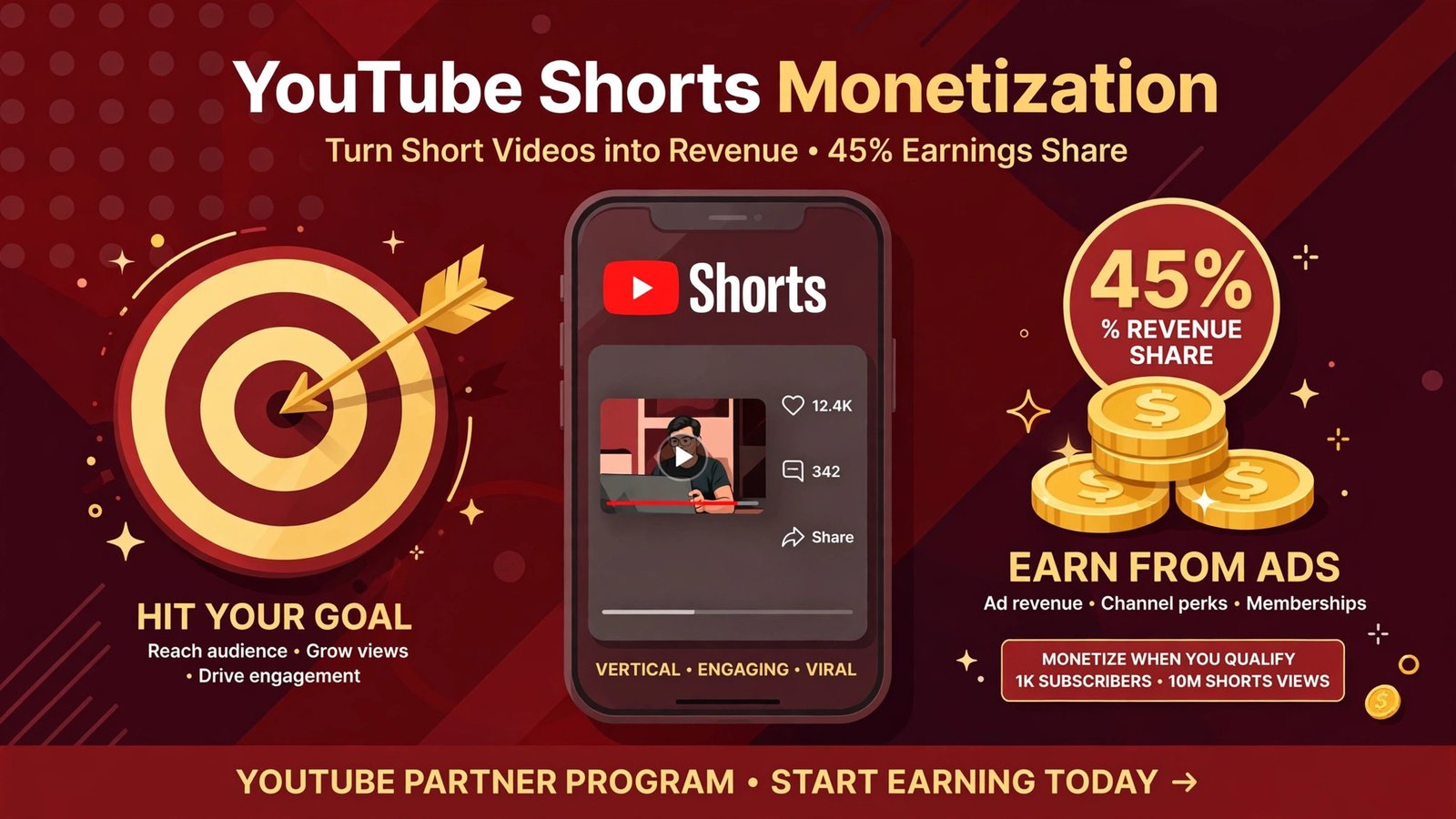
Buried inside YouTube’s 2027 monetization overhaul is a feature most creators missed: targeted Shorts ads that pay you 45% directly — on top of your normal Creator Pool earnings. If a brand wants your audience specifically, you could soon earn from their ad spend without splitting it through the pool.
Here’s how it works, who qualifies, and how to position your channel for it.
What are targeted Shorts ads?
Under YouTube’s current system, Shorts ad revenue goes into one big shared Creator Pool, then gets divided among eligible creators based on their share of views. You get 45% of your allocation — but it’s your slice of a communal pie.
Targeted Shorts ads work differently. When an advertiser deliberately targets five or fewer channels with a Shorts ad campaign, the creators of those channels get a direct 45% share of that ad placement’s net revenue — paid separately, on top of whatever they earn from the ordinary Creator Pool.
Think of it this way: the pool is like radio royalties split among every artist on air. Targeted ads are like a brand paying to sponsor your show specifically — and YouTube takes its cut, then hands you 45% of what’s left, directly.
This is part of the same February 2027 monetization changes (see also AIR Media-Tech’s full breakdown) that doubled entry thresholds and added the monthly Shorts view floor. But while everyone argued about the 10-million-view requirement, this quieter addition might matter more for working creators.
Why 45% direct is a bigger deal than it sounds
The headline number — 45% — looks identical to the standard Shorts revenue share. It’s not the percentage that matters; it’s the base it applies to.
In the Creator Pool, your 45% applies to your allocation — a fraction of a fraction. Licensed music in your Shorts can shrink the pool before distribution (one music track sends half the associated revenue to licensing; two tracks leave a third for the pool). Your view share dilutes across millions of creators.
With targeted ads, 45% applies to the net revenue of that specific ad placement on your channel. A brand spending $10,000 to reach your audience means real, attributable money — not a sliver of a communal fund. For niche channels with loyal, specific audiences, this could outperform pool earnings significantly.
It also changes the brand-deal dynamic. Right now, sponsorships happen off-platform: brands email you, negotiate, pay via PayPal. Targeted Shorts ads let advertisers buy your audience through YouTube’s own ad system — with YouTube handling the transaction and you getting a guaranteed 45% cut. Less negotiation, less chasing invoices.
The catch: you need to be eligible first
This isn’t free money for everyone. The fine print matters:
You must be in the YouTube Partner Program. Targeted ad revenue is a YPP benefit. With entry thresholds doubling in 2027 (8,000 watch hours or 20M Shorts views for new applicants), getting in is harder than ever.
The pool floor still applies separately. To earn from the Shorts Creator Pool in a given month, you need 10 million qualified Shorts views over the rolling 90 days — and there’s no partial payout. At 9.9 million views, the pool pays you exactly $0 that month. Targeted ad earnings are separate, but don’t confuse the two systems.
Advertisers have to choose you. Nobody is obligated to target your channel. Brands pick channels with clear niches, brand-safe content, and audiences that match their customers. A generic viral-clips channel is much harder to target than, say, a Shorts channel about budget cooking or DIY home repair.
No product exists yet. As of now, YouTube has announced the mechanism but hasn’t published the actual ad product. Details on how advertisers buy these placements — and how creators opt in — are still coming.
How to position your channel for targeted ads
If you want brands targeting your channel when this launches, start building for it now:
- Get specific. Advertisers target audiences, not view counts. A channel with 50,000 deeply engaged cooking viewers is more targetable than 500,000 scattered viral viewers. Niche down.
- Stay brand-safe. Swearing, controversy, and edgy humor shrink your advertiser pool. You don’t have to be boring — but know that every brand-safety flag is a brand that won’t target you.
- Publish your niche clearly. Channel name, banner, descriptions, and consistent topics tell both YouTube’s systems and human media buyers what your audience is. Make yourself easy to find in a media plan.
- Build the media kit now. When targeted Shorts ads launch, brands will move fast. Have your demographics, engagement rates, and audience profile ready — the creators who look professional get picked first.
- Keep Shorts and long-form balanced. Shorts bring reach; long-form brings watch time and deeper audience data. Channels with both give advertisers more confidence in the audience they’re buying.
What this means against TikTok and Reels
YouTube is clearly building a monetization stack TikTok can’t match: a Creator Pool plus direct targeted ad shares plus incentive programs for channels below the view threshold (Shopping bonuses, brand-deal incentives, trend-growth boosts). TikTok’s Creator Rewards and Instagram’s bonuses are simpler but offer nothing like a direct 45% cut of targeted ad spend.
The message to creators is blunt: YouTube wants to be the platform where serious creators build businesses, and it’s willing to share ad revenue more directly to keep them. The higher entry bar is the price of admission.
Frequently asked questions
What is YouTube’s targeted Shorts ads program?
A new 2027 monetization feature: when an advertiser targets five or fewer channels with a Shorts ad, eligible creators get 45% of that placement’s net revenue directly — paid on top of ordinary Creator Pool earnings.
When do targeted Shorts ads launch?
As part of YouTube’s February 1, 2027 monetization changes. The mechanism is announced, but the actual ad product hasn’t been published yet — expect details closer to launch.
Do I need 10 million Shorts views to earn from targeted ads?
The 10M/90-day floor applies to Creator Pool earnings, not targeted ads — they’re separate systems. But you do need to be in the YouTube Partner Program, which has its own thresholds.
Is 45% better than the normal Shorts revenue share?
The percentage is the same, but it applies to a much better base: the net revenue of a specific ad placement on your channel, rather than your diluted allocation from the shared pool. For niche channels brands want to reach, targeted ads could pay significantly more.
How do advertisers choose which channels to target?
Details aren’t published yet, but expect it to work like existing YouTube ad targeting: by topic, audience demographics, and channel. Clear niches and brand-safe content will be the most targetable.