
Meta has split Instagram’s DMs out of Instagram. On November 17, 2026, the company launched Direct, a standalone messaging app that holds your Instagram conversations in their own app — and, for the first time, lets people join those conversations without an Instagram account at all. Right now it’s only testing in Türkiye and Thailand, on Android and iOS, and Meta hasn’t said when — or if — it will reach the United States.
For most people that’s a curiosity. For creators, it matters more than it looks. DMs are where brand deals get negotiated, where community members ask the questions that never make it to the comments, where customers message about orders, and where collaborations start — and a share of the income in our creator platform take-home comparison gets negotiated in exactly those threads. A standalone DM app changes how fast those conversations happen, who can start them, and where they live. This piece covers what Direct actually is, what it changes for creators, what Meta hasn’t answered yet, and what to do while the US waits.
What Instagram Direct actually is
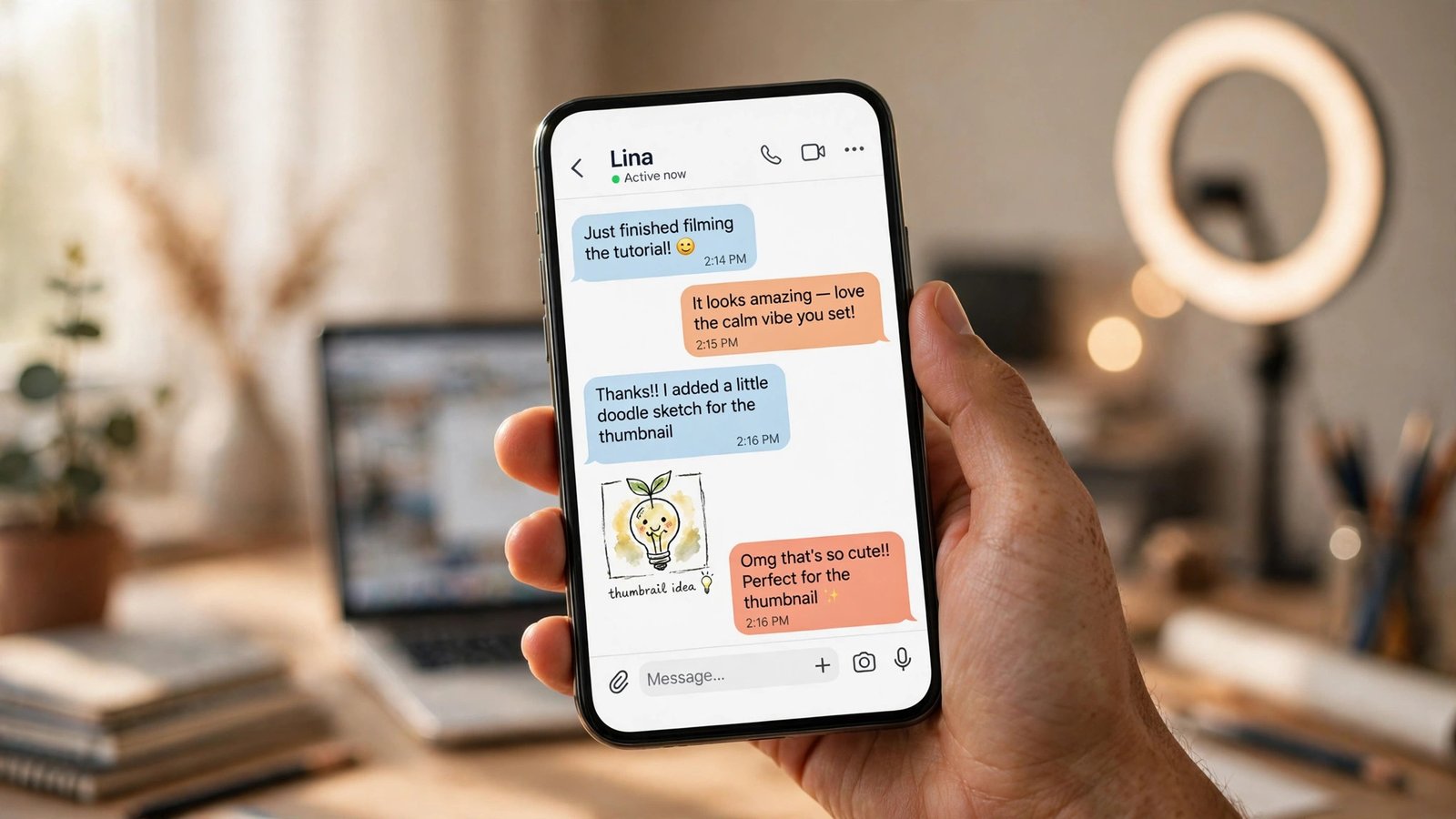
Direct is a separate app, built by Instagram, that does one thing: messaging. One-on-one chats and group chats, with the same creative tools as Instagram’s inbox — Draw, which lets you sketch directly inside a chat thread; Notes, the short status updates that sit at the top of the inbox; custom stickers; voice effects that add filters like crowd laughter or underwater sounds to voice replies; chat themes; plus the familiar reactions, voice notes, and emojis. The launch was covered in detail by TechCrunch and Engadget.
If you already have Instagram, you sign in with your usual username and password and your existing conversations sync across both apps. Messages you send in Direct show up in Instagram, and vice versa. If you don’t have Instagram, you can sign up with an email address or phone number instead — no Instagram profile required. People who join that way add contacts by entering an exact username or scanning a QR code in person, and only their contacts and people they’re already connected to can start a chat with them or add them to a group.
Two guardrails come with it. Users must be at least 13, and Meta says it will use technology to proactively identify accounts that may belong to someone under 13 and require age verification, deleting accounts whose age isn’t verified. Parents can use Meta’s supervision tools to see who their teen messages and set daily time limits.
Meta also says you can now video chat with the Muse AI inside the app — the company’s AI assistant, which keeps showing up on more of Meta’s surfaces. That’s a small detail in the launch coverage, but it hints at where Direct is headed: not just a chat app, but another place Meta’s AI lives.
The twist that matters: no Instagram account needed
The account-free sign-up is the consequential change in this test, and it’s easy to miss behind the “new app” headline. Instagram’s DMs have always been a walled garden — to message someone on Instagram, you had to be on Instagram. Direct breaks that wall in one direction: a brand manager, a customer, or a collaborator who doesn’t use Instagram can now join your Instagram conversations with just an email address.
Think about who that unlocks. A small business owner who never made an Instagram account can now DM a creator about a sponsorship without downloading the app, building a profile, and learning the feed. A customer who found your product through a friend’s screenshot can message you directly. A collaborator on another platform can reach you in the place you actually answer messages, without creating an account they don’t want.
The trade-off is discoverability. Without an Instagram account, there’s no profile for people to find — contacts have to be added by exact username or an in-person QR scan. So Direct doesn’t make you more findable; it makes you more reachable to people who already know how to find you. For creators, that distinction matters: your Instagram profile is still the front door. Direct is a side entrance for people who already have the address.
Why creators should care: DMs are where the money closes
Instagram’s head, Adam Mosseri, has said messaging is Instagram’s most popular feature. That matches how creators actually work. The feed is where you get discovered; the DMs are where deals get done. A brand that likes your Reel doesn’t close the partnership in the comments — it slides into your DMs. A follower who wants to buy your preset, your template, or your course asks about it in a DM. A subscriber with a problem messages you before they leave a bad review.
Three creator workflows live almost entirely in DMs:
Brand deals. The first message from a brand is usually a DM, and the negotiation — rates, deliverables, timelines, usage rights — happens there too. Speed matters: brands message several creators at once, and the one who replies first often gets the deal. A standalone app that opens straight to the inbox, without the feed pulling your attention, could shave minutes off every reply. Over a month of deal flow, that adds up. If you’re still building toward brand work, our guide on how to become a UGC creator covers the portfolio and outreach side; Direct would change the inbox side.
Community. Your most engaged followers are the ones who DM you. They ask follow-up questions, share their results, and tell you what they want next. Those conversations are also your best source of content ideas — the same question three times in DMs is a video waiting to happen. A dedicated messaging app makes those threads easier to find and answer, instead of burying them under the notification pile of likes and follows.
Sales and support. If you sell anything — presets, templates, merch, a course — customers message you when something doesn’t work. A fast, helpful DM reply turns a refund request into a repeat customer. A slow one turns into a chargeback or a public complaint. For creators who sell through Instagram, the inbox is the customer service desk.
Direct doesn’t change any of those jobs. It changes the room they’re done in — from a tab inside a feed app to a dedicated app of its own. Whether that’s better depends on how you work, which is the honest answer for now.
What changes for creators if Direct takes off
Assuming the test expands — and that’s still an assumption, since Meta has given no dates or candidate countries — four things would shift for US creators:
Response speed becomes the expectation. A standalone messaging app trains people to expect chat-app response times. When your DMs lived inside Instagram, a reply within a day felt fast. When they’re in a dedicated app next to WhatsApp and iMessage on someone’s home screen, the same delay feels slow. Brands and customers will start judging your responsiveness against messaging apps, not against Instagram. Creators who set up quick replies and check their inbox on a schedule will have an edge; creators who treat DMs as a weekly chore will lose deals they never knew about.
You’d manage two inboxes, not one. Chats sync between Direct and Instagram, so this isn’t a second inbox in the technical sense. But it is a second app to check, a second notification stream to manage, and a second place for messages to arrive. The creators who handle this well will be the ones who pick one app as their home base and let the other one be a mirror — not the ones who try to watch both at once.
People who aren’t on Instagram can reach you. This is the real expansion. Today, a potential customer or collaborator who doesn’t use Instagram effectively can’t DM you. With Direct, they can. That widens the funnel at the top — more first messages from more kinds of people — but it also widens the spam surface. Meta’s rule that only contacts and existing connections can start a chat helps, but only for people who join without an Instagram account. For creators with public Instagram profiles, the existing DM request system still governs who can reach you.
Notifications split from the feed. Right now, a DM notification sits in the same pile as likes, follows, and comments. A dedicated app gives DMs their own notification channel, their own badge, and their own sound. That’s good for response speed and bad for focus — your phone will now buzz for DMs even when you’re trying not to open Instagram. Creators who struggle with screen time should think about that before installing it on day one.
The Messenger lesson: Meta has done this before
None of this is new for Meta. The company has split messaging out of its main apps before, twice, with opposite results.
In 2014, Facebook forced users to download Messenger as a separate app to keep chatting. People hated it at the time — the forced split was one of the most complained-about product changes in Facebook’s history. But it worked: Messenger became one of the biggest messaging apps in the world, and Facebook’s feed got faster and cleaner without the chat weight. The lesson was that messaging is strong enough to stand alone, even when users resist the move.
Then in 2017, Instagram tried the same thing with its own standalone Direct app, tested in six countries. It never gained wide use and Meta shut it down in 2019. The lesson there was the opposite: Instagram’s DMs weren’t strong enough, on their own, to justify a separate app — people were happy enough messaging inside Instagram, and the extra app was a friction nobody asked for.
So which precedent wins this time? The honest answer is that the 2026 version is a different product in a different Meta. The 2017 app was a straight copy of the DM tab. The 2026 app adds the account-free sign-up, which the old one never had, and it arrives in a company that is pushing its AI assistant into every surface — Muse now has voice, animated avatars, and Spaces, and Direct adds video chat with it. Mosseri has also argued against splitting messages out elsewhere, calling the use of several apps “excessive” when Threads was discussed, which suggests this decision wasn’t taken lightly inside Meta. The test in Türkiye and Thailand will tell them whether the account-free twist changes the 2017 outcome. Turkey, notably, was in the 2017 test too — the only country in both.
For creators, the practical takeaway from the history is simple: don’t rebuild your workflow around Direct until it proves it will last. The 2017 app died after two years. Treat Direct as an experiment to watch, not a platform to invest in, until Meta commits to a wider rollout.
What Meta hasn’t said yet
The launch announcement leaves the questions creators actually need answered wide open, and several outlets flagged the same gaps:
- No US rollout date. Meta hasn’t said when or if Direct will reach other countries. For US creators, everything in this article is preparation, not action.
- No word on end-to-end encryption. Meta has not confirmed whether Direct chats use end-to-end encryption. Instagram DMs have optional encrypted chats; whether Direct carries that over is unconfirmed.
- No business accounts. There’s no detail on how business or creator accounts work in Direct, whether the Messenger API for Instagram covers it, or whether business tools like saved replies and away messages carry over.
- No advertising. Meta hasn’t said whether ads will appear in Direct, or whether creators will be able to run ads that open a Direct conversation the way click-to-message ads work on other Meta surfaces.
- No test duration. Meta hasn’t said how long the Türkiye and Thailand test will run or what would determine a broader rollout.
Those gaps are the story for now. A messaging app for creators is only as useful as its business tooling, and Meta hasn’t shown any of it yet. If Direct launches in the US without creator accounts, saved replies, or API access, it will be a consumer chat app that creators happen to use — not a creator tool. Watch the test for those details, not just the download numbers.
The same week’s other creator news
Direct wasn’t the only Instagram change for creators that week. On the same day, Instagram announced a tool that lets creators find and block copies of their Reels across Instagram and Facebook, and flag AI videos that reuse their original audio with new visuals. Eligible creators get a notification in their activity feed; once enrolled, the tool covers every new video, and older ones can be added by hand. Creators can block the copy, add an “original by” label linking back to their video, leave it up and track how it performs, or release their claim. Instagram says it is also looking at ways to limit the reach of accounts that keep reposting other people’s work.
That tool matters more to most creators today than Direct does, because it’s aimed at a problem every creator already has: reposted content siphoning views. Direct is a bet on where messaging goes; the Reels protection tool is a fix for something broken right now. If you only have time to act on one of them, enroll in the Reels protection when it reaches you.
What to do now
You’re in the US, Direct isn’t available to you yet, and there’s nothing to install. Here’s the preparation that actually helps:
- Audit your DM workflow. How fast do you reply to brand inquiries right now? If it’s more than a day, that’s the gap to close before any new app raises expectations. Set up saved replies for the five questions you get most often — rates, availability, product links, collab terms, and refunds.
- Put your contact info where brands can find it. If a brand manager without Instagram wants to reach you, your email should be in your bio and on your link page. Direct’s account-free sign-up only helps if people can find you in the first place.
- Watch the test, don’t join it. If you have any way to see how Direct behaves in Türkiye or Thailand — creator friends there, coverage of the rollout — pay attention to whether business features appear. The moment Meta adds creator accounts or saved replies to Direct, the calculus changes.
- Enroll in Reels protection when it reaches you. It’s the creator tool from that week that works today.
- Don’t install a VPN workaround. Using a VPN to bypass a regional test violates Meta’s terms, and a test app is not worth risking your account over.
Direct is a small test with a big “if” attached. If Meta expands it, and if it ships creator tooling, it could become the place where your most valuable conversations happen — faster, more focused, and open to people who never joined Instagram. If it follows the 2017 app into the graveyard, you’ll have lost nothing by waiting. The creators who win either way are the ones whose DMs are already fast, organized, and easy to find.
Frequently Asked Questions
What is Instagram Direct?
Direct is a standalone messaging app from Instagram, launched by Meta on November 17, 2026. It holds your Instagram direct messages in their own app, with features like Draw, Notes, custom stickers, voice effects, and chat themes. It is currently testing in Türkiye and Thailand on Android and iOS.
Do I need an Instagram account to use Direct?
No. You can sign up with an email address or phone number. If you already have Instagram, you can sign in with your usual credentials and your existing conversations sync across both apps. People without an Instagram account add contacts by exact username or QR code scan.
When will Instagram Direct be available in the US?
Meta hasn’t said. The app is only testing in Türkiye and Thailand, and Meta has given no dates or candidate countries for a wider rollout. There is no confirmed US launch date as of November 20, 2026.
Is Direct replacing Instagram DMs?
No. Instagram DMs still work inside the Instagram app, and chats sync between the two apps. Direct is a separate app for the same conversations, not a replacement — at least for now.
Can businesses and creators use Direct?
Meta hasn’t confirmed how business or creator accounts work in Direct, whether the Messenger API for Instagram covers it, or whether business tools like saved replies carry over. Until those details appear, Direct is a consumer chat app that creators can use, not a dedicated creator tool.
Is Instagram Direct the same as the Direct app from 2017?
Same name, different product. Meta tested a standalone Direct app in six countries in 2017 and shut it down in 2019 because it never gained wide use. The 2026 version adds account-free sign-up and Muse AI video chat, and arrives in a very different Meta. Whether it lasts longer than the 2017 version is what the current test is meant to find out.