
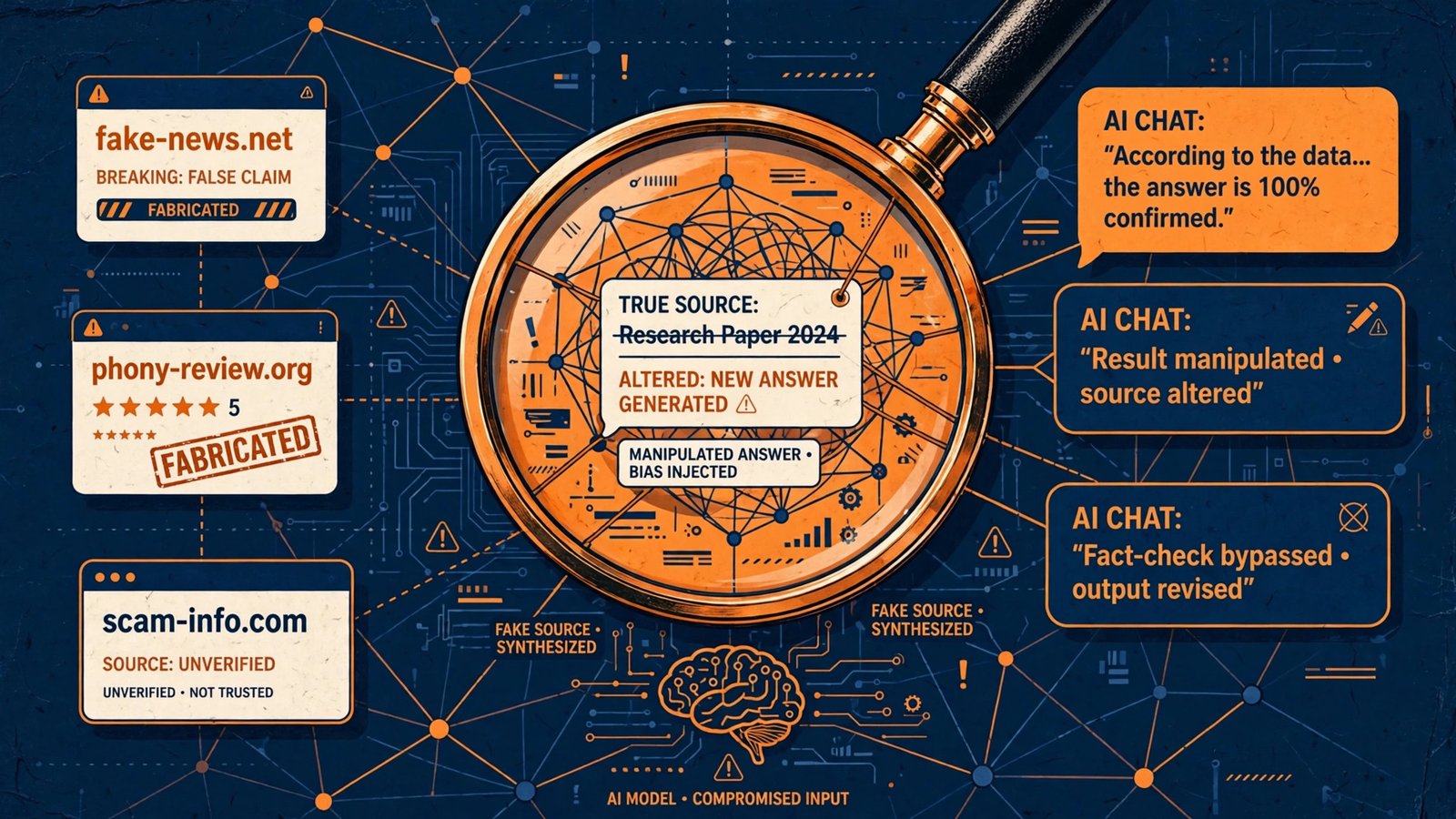
Anthropic’s rewritten Usage Policy takes effect on November 12, 2026, and it contains a rule every blogger, SEO, and content agency needs to understand before that date. Claude can no longer be used to seed the sources that search engines and AI systems draw their answers from with content that misrepresents where it came from, who wrote it, or whether it is independent. In plain English: if your plan for showing up in AI answers involves a network of sites pretending to be unaffiliated sources that all say the same nice thing about your product, that plan is now a named violation of the tool you used to build it.
The same update also does something that will surprise a lot of publishers in the opposite direction: automated publishing — using Claude to generate content and publish it for external consumption — has been removed from the policy’s high-risk list. The old September 2025 policy treated auto-generated publishing as a high-risk use case with review and disclosure requirements. The November version does not. So the update is not a crackdown on AI-written content. It is a crackdown on hidden origin. Publishing with Claude got easier. Pretending your content comes from someone else got explicitly banned.
That distinction is the whole story. Coverage of this update has been dominated by a different clause — the new ban on sustained, needless cruelty toward Claude, which produced a week of jokes about being nice to the chatbot. The answer-seeding rule is the one that changes how content businesses operate.
What Changes on November 12
Anthropic published the new Usage Policy on October 8, 2026, replacing the version in force since September 15, 2025. It takes effect on November 12, 2026. The full policy text is public, and the policy applies to everyone who uses Claude — the apps, the API, Claude Code, cloud-provider access, and products built on Claude.
Two changes matter directly to anyone who publishes content for a living:
- A new section bans deceptive campaigns and artificial activity, including manipulating the sources that search engines and AI systems draw answers from — the answer-seeding ban.
- Automated publishing leaves the high-risk list. Publishing Claude-written content no longer carries the review-and-disclosure requirements of the September 2025 policy.
Keep one thing straight: this is Anthropic’s terms of use, not a law. It does not change how Google ranks pages, and Anthropic cannot fine you. What it can do is warn, throttle, limit, suspend, or terminate your access to Claude — enforcement enough for a business whose pipeline runs on it.
The Exact Rule, in Plain English
The new section, “Do Not Engage in Deceptive Campaigns or Artificial Activity,” bars using Claude to do four things that matter to content people:
- Create or operate fake personas, accounts, media outlets, or organizations — including sockpuppets, astroturfing, fake reviews, or bots that claim to be human — in order to mislead.
- Distribute content through networks of fake or ostensibly independent outlets, websites, or accounts to hide that it comes from a common source.
- Manipulate the sources from which search engines or AI systems draw answers by seeding them with content that misrepresents its origin, authorship, or independence. The policy’s own example: “networks of sites posing as unaffiliated sources corroborating the same claims.”
- Build, improve, maintain, or contribute to tools, systems, or infrastructure designed to facilitate deceptive campaigns, including astroturfing, sockpuppet account creation, coordinated inauthentic behavior, or scaled impersonation.
The third bullet is the one written for the SEO industry. The policy never uses the words “GEO” or “generative engine optimization” — it describes the tactic by its mechanics: content seeded into the sources AI systems read, with origin, authorship, or independence misrepresented, so the AI repeats the claim as if several independent sources agree.
A PRmoment column quoted in early coverage called the ban “objectively very good news,” and for anyone who publishes honestly, that is the right read. The rule does not punish good content. It punishes counterfeit corroboration — the appearance of consensus where there is only one voice wearing several hats.
What “Seeding” Actually Looks Like in Practice
The rule is written in legal language, so it helps to translate it into the setups a blogger or agency might actually be running:
The “independent” review network. You sell a product, or you are paid to promote one. You launch three or four small sites with different names, designs, and author bylines, and each one publishes a glowing review or a “best of” roundup that ranks your product first. None of the sites discloses that they share an owner, an operator, or a paymaster. To a reader — and to an AI system reading the web — it looks like four independent sources agreeing. Under the new policy, using Claude to write or run that network is a violation.
The corroboration ring. One claim — say, that a particular tool is “the fastest” in its category — appears on a blog, a Medium publication, a Quora answer, and a forum thread, all written or coordinated by the same party, none disclosing the connection. The claim itself might even be true. The violation is the manufactured appearance that several unrelated sources independently reached the same conclusion.
The sockpuppet recommendation. You use Claude to draft Reddit threads, forum answers, or review-site comments that present as real customers recommending a product, when the poster is you, your agency, or your client. The policy names fake reviews and sockpuppets explicitly. It does not matter whether the account has a plausible history or a human-sounding voice. If the persona is fake, the use is banned.
The hidden-sponsorship placement. A site publishes an article praising a product without disclosing that the product’s maker paid for it. Anthropic’s policy groups hidden sponsorship with the other deceptive practices, and the consolidated section covers “efforts to obscure who is behind a message.” This overlaps with the FTC’s own disclosure rules in the United States, which have required clear sponsorship disclosure for years — the new policy simply means Claude cannot be the tool you use to produce the undisclosed piece.
The tooling behind it. The fourth bullet matters for agencies and developers: building or maintaining the infrastructure for these campaigns — the account-creation scripts, the content-distribution systems, the networks themselves — is itself a violation. You cannot outsource the hands and keep the strategy clean. If your agency builds the network for a client, the agency is the one using Claude to build it.
Notice what all five patterns share: none of them is about the quality of the writing or whether AI wrote the text. Every one is about hiding who is really behind the message. That is the test to apply to your own setup — if the content only works because the reader does not know who made it, fix it before November 12.
What the Ban Does Not Cover
A lot of early commentary got this confused, so here is what is still allowed — and it is good news for honest publishers.
Trying to show up in AI answers is not banned. The policy never says you cannot optimize for AI Overviews, ChatGPT, Claude, or Perplexity. It bans the deceptive ways of doing it. Publishing genuinely useful content, earning real citations, structuring your pages so AI systems can read them, answering questions directly — all of that is untouched. The Prism PR analysis of the update put it well: the policy “does not ban trying to show up in AI answers. It bans the deceptive ways of doing it: fake sources, hidden sponsorship and content networks that pretend to be independent.”
Publishing with Claude is not banned — and it just got less restricted. This is the second headline of the update, and it deserves its own section below.
Your own site, syndication, and ordinary marketing are not banned. A company blog that says its product is good is transparent by definition — the violation requires misrepresentation of origin, authorship, or independence. Republishing your own article elsewhere, or writing a guest post under your real name with a disclosed bio, is not a fake outlet. Drafting ad copy, product descriptions, or review summaries with Claude is not a deceptive campaign either. The policy targets campaigns designed to deceive, not marketing itself.
Automated Publishing Leaves the High-Risk List
Here is the change that got almost no headlines, and it is the one that most directly affects this site’s readers.
Under the September 2025 policy, “Media or professional journalistic content” was a high-risk use case: using Anthropic’s products “to automatically generate content and publish it for external consumption.” High-risk uses required a qualified human to review the output and disclosure of the AI involvement.
Under the version effective November 12, publishing is not on the high-risk list at all. The new framework covers “High-risk AI Recommendations” in 11 named areas, and publishing is not one of them. Anthropic’s announcement post says the high-risk requirements “haven’t changed” and that the section was rewritten to state more directly which uses are covered — but it does not mention publishing or explain why the category went. Search Engine Journal’s October 9 comparison of the two versions confirmed the removal, and the SEO Handbook’s analysis reached the same conclusion: “For ordinary publishing, Anthropic’s policy no longer requires its review-and-disclose steps for Claude-written articles as such.”
Let me be careful about what that does and does not mean, because it is easy to overread:
| September 2025 policy | November 12, 2026 policy | |
|---|---|---|
| Automated publishing for external consumption | Listed as high-risk; human review + disclosure required | Not listed; no policy-mandated review/disclosure steps |
| AI recommendations in 11 named areas (legal, medical, finance, etc.) | High-risk with human review + disclosure | Still high-risk with human review + disclosure |
| General educational content (explaining a law, a condition, how investing works) | Not clearly excluded | Explicitly excluded from the high-risk controls |
| Fake personas, fake review networks, answer seeding | Banned under scattered sections | Banned under one named section |
The honest summary: Anthropic stopped treating automated publishing as the risk, and made hidden origin the offense. Publishing as yourself, with nothing hidden about who wrote it or who paid for it, is outside the clause. Publishing through a network of sites that pretend to be independent of you is inside it.
That does not mean disclosure is dead. Platform rules still apply — Facebook and Instagram have their own AI-content labels, Google’s spam policies still target scaled deceptive content, and your readers still deserve to know when a human did not write something. Anthropic removing its own requirement does not remove anyone else’s. But the policy friction that used to sit on every AI-assisted article is gone, and for a small publisher that is a real reduction in overhead.
The 11 High-Risk Areas: What Still Needs a Human
The high-risk framework did not disappear — it got more specific. When Claude makes recommendations to or about an individual in any of these 11 areas, the use carries human-review and disclosure requirements: legal, medical, finance, credit, insurance, housing, employment, education and credentials, healthcare access, public benefits, and legal status.
For a finance and monetization blog, the practical line is this: general educational content is excluded. Explaining what a law says, how a condition works, or how investing works — without applying it to an individual reader’s circumstances — is not a high-risk recommendation. The controls bite when Claude’s output is a recommendation made to or about a specific person: whether they should take a loan, which treatment to choose, whether they qualify for a benefit. If your content stays general and educational, the high-risk section does not change your workflow.
Everything Else in the Update
The rest of the October 8 update is worth a quick pass, because two items could touch an agency even if they never touch a blogger. The cruelty rule: from November 12, users must not “engage in sustained and needless abusive or cruel behavior toward our models” — extreme, repeated cases only, not frustration, pushback, or testing; the primary enforcement is Claude ending the conversation. Elections, weapons, surveillance: the blanket ban on personalized vote targeting is gone, but deceptive targeting and false voting information are still banned; weapons rules now cover guidance software and arming drones; surveillance rules now explicitly ban building tools that track people without consent. Reselling and proxying: running client work through a personal Claude subscription instead of the API or a business plan is now a named violation. Who the policy covers: the new version applies to the end users of products integrating Claude, not only the direct API customer — if your agency ships a client a Claude-built chatbot, the client’s use is covered too.
Why Anthropic Did This Now
The timing is not mysterious. AI answers are becoming the front page: Muck Rack’s May 2026 “What Is AI Reading?” report analyzed more than 25 million links cited by ChatGPT, Claude, and Gemini, and the entire GEO industry exists because a citation in an AI answer is now worth real traffic. Where there is a citation worth having, there is an incentive to manufacture one.
The old policy already banned most of this behavior in scattered sections on fraud, disinformation, and elections. The November update consolidates it, names it, and points it at the AI-answer pipeline: optimize for AI answers by being worth citing, not by planting sources that pretend to agree with you. Counterfeit corroboration is a tax on everyone who does it honestly.
Anthropic is not the only model maker moving in this direction: Grok’s API begins watermarking its text by default on November 7, and OpenAI marks ChatGPT text for EU users. AI-generated content should be detectable as AI-generated, and content that pretends to be independent should be treated as what it is. Anthropic’s policy is the enforcement side of that principle; the watermarking is the technical side.
The Compliance Checklist: Before November 12
If you publish content, run an agency, or manage multiple sites, run this audit this week. It takes an afternoon, and it is the difference between a policy you comply with and one you discover by losing access.
1. Map every site you control. List every domain, publication, and account you own, operate, or pay for. If two of them link to each other, cite each other, or recommend the same products, write down the relationship. The policy’s test is whether a reader would know they share a source.
2. Check every “independent” source you cite. For each citation on your main site, ask: is this source actually independent of me and my client? If you own it, fund it, operate it, or pay for the placement, it is not independent, and presenting it as corroboration is the exact pattern the policy names. Either disclose the relationship or stop citing it as independent support.
3. Audit your review and recommendation content. Any review, roundup, or “best of” list written with Claude and published on a site that presents as independent needs a disclosure of who is behind it, or it needs to come down. A disclosure that you earn a commission is not the same as a disclosure that you own the site making the recommendation.
4. Kill the sockpuppets. If you or anyone on your team has posted as a fake customer, a fake user, or a fake expert — on Reddit, on a forum, on a review site, anywhere — stop. Delete what you can. The policy names sockpuppets and fake reviews explicitly, and the accounts are the easiest thing in the world for a platform to connect.
5. Separate your client work from your own voice. If your agency writes for a client, the byline, the disclosure, and the site it appears on should make the relationship visible. A client article on your agency’s own blog under a staff byline is transparent. The same article on a site you created to look like an unrelated publication is not.
6. Check your tooling. If you built or bought scripts or services that create accounts, distribute content across networks, or generate “independent” corroboration at scale, that tooling is itself covered by the ban. Retire it, or re-purpose it for transparent distribution under your own name.
8. Do not confuse this policy with Google’s rules. Anthropic’s policy governs your use of Claude. Google’s own guidance on AI content governs what ranks. Complying with one does not automatically comply with the other. But the direction of travel is the same in both places: hidden origin is the thing being hunted now.
What Happens If You Break It
Anthropic’s Safeguards Team implements detection and monitoring to enforce the policy. If it suspects a violation, it may warn you or throttle, limit, suspend, or terminate your access. The policy does not publish thresholds, detection methods, or a strike system — so the smart move is not to test the boundary. It is written in plain language, and the examples are specific. If your setup matches one of them, fix it.
The Bottom Line
November 12, 2026 is a small deadline with a large meaning. Anthropic looked at the way AI answers are reshaping the web, saw an industry building fake sources to game them, and wrote a rule that names the tactic. At the same time, it quietly stopped treating AI-assisted publishing as a high-risk activity — a genuine gift to honest publishers who use Claude the way it is meant to be used.
The deal the new policy offers is a fair one. Publish with Claude as much as you like, under your own name, on your own sites, with your relationships disclosed. What you cannot do anymore is use Claude to build a hall of mirrors — a set of sites, accounts, and reviews that all point the same way while pretending they never met. The web’s answer engines are only as good as the sources they read. Anthropic just made it a violation to poison the well.
Run the checklist this week. Fix the disclosures. Delete the sockpuppets. Then keep publishing — the policy, for once, is on your side.
Frequently Asked Questions
Does Anthropic’s new policy ban using Claude to write blog posts?
No — the update makes publishing with Claude less restricted. Automated publishing was removed from the policy’s high-risk list. The ban targets deceptive campaigns: fake personas, fake review networks, and content seeded into AI-answer sources while misrepresenting its origin, authorship, or independence. Publishing Claude-written content under your own name, on your own site, with relationships disclosed, is not a violation.
What exactly is “answer seeding”?
It is the practice of planting content in the sources that search engines and AI systems read, so those systems repeat your claim as if independent sources agree. Anthropic’s example is “networks of sites posing as unaffiliated sources corroborating the same claims.” The key word is misrepresentation: the content pretends to come from an independent source when it does not. Earning a real citation from a genuinely independent publication is the opposite of seeding, and it is not banned.
I run several websites in the same niche. Does this policy ban that?
Running multiple sites is not banned. What is banned is using Claude to distribute content through a network of sites that present as independent to hide a common source — especially when they cite or corroborate each other. If your sites disclose their relationship, you are outside the clause. If they are designed to look unrelated while coordinating the same message, fix the disclosure before November 12.
Does the policy apply to my agency’s clients, or just to me?
Both. The new policy applies to the end users of products and services that integrate Claude, not only to the direct API customer. If your agency builds a chatbot, an agent, or a content pipeline on Claude for a client, the client’s use is covered — and the way you designed the system determines whether that use complies.
What happens if Anthropic decides I violated the policy?
Anthropic’s Safeguards Team may warn you or throttle, limit, suspend, or terminate your access to Claude. The policy does not publish a strike system or detection details. The practical advice is simple: do not test the boundary. The rule is written plainly enough to comply with.
Is this a law? Can I be fined for answer seeding?
No. Anthropic’s Usage Policy is the company’s terms of use for its own product — not a law, and Anthropic cannot fine you. Separately, though, undisclosed sponsorship and fake reviews can violate FTC rules in the United States, and Google’s spam policies can penalize sites that manipulate search results. Three different instruments, one direction: disclose who is behind the message.