The short answer
UGC — user-generated content — means brands pay you to create authentic-looking photos and videos they use in their own ads and social feeds. You don’t post to your own audience. You don’t need followers. Brands buy your content, not your reach.
In 2026, beginners typically charge $50–$250 per video, intermediates $250–$400, and experienced creators $500+. Here’s the full starter playbook: portfolio, rates, platforms, and landing your first brand deal.
What UGC actually is (and isn’t)
Traditional influencing: brand pays you because you have 100K followers who’ll see the post. UGC: brand pays you because you can make a video that looks like a real customer testimonial, which they’ll run as an ad on their own account.
That distinction is everything. Your follower count is irrelevant. What brands buy is your ability to film a convincing 30-second product video with good lighting and a natural delivery. If you can do that, you’re hireable — even with 12 followers.
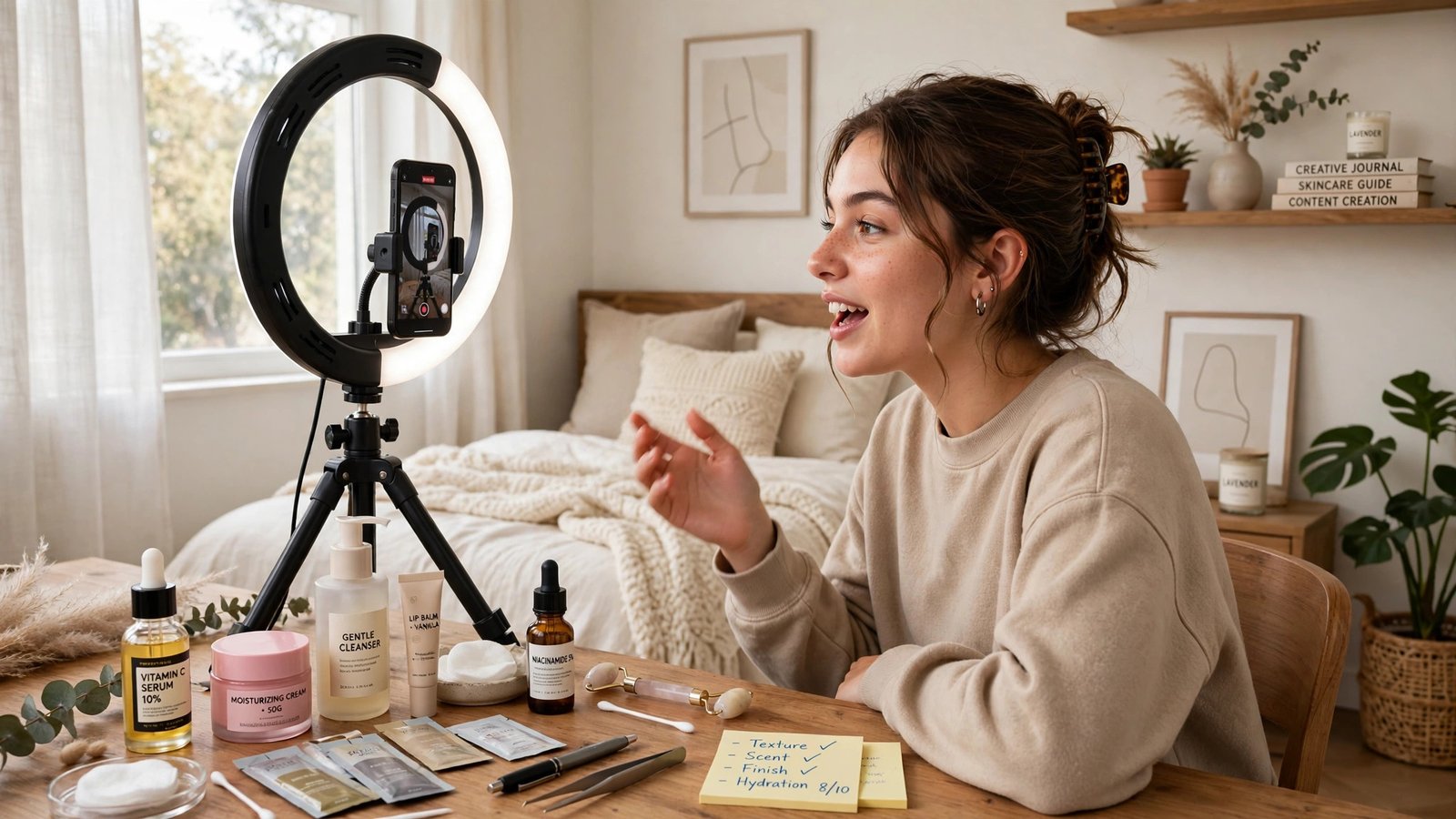
The work itself: unboxings, testimonials, “get ready with me” style demos, before/afters, problem-solution clips. Thirty to sixty seconds, shot on a phone, edited in CapCut. Brands then run these as paid ads, post them organically, or both.
Step 1: Pick 1–3 niches
Don’t be a generalist. Brands in specific categories hire constantly, and a portfolio full of skincare videos books skincare brands. The strongest UGC niches in 2026: beauty and skincare, fitness and wellness, tech gadgets, food and beverages, fashion, and home products. High-repeat-purchase categories are gold — those brands always need fresh creative.
Pick niches you genuinely use. You’ll film with products you already own, and authentic familiarity shows on camera.
Step 2: Build a portfolio from scratch
You need 8–12 sample videos before you pitch anyone. Film them with products already in your home — your moisturizer, your headphones, your coffee maker. Nobody knows or cares these weren’t paid gigs; they’re proof you can create.
Each sample should show range: one talking-head testimonial, one aesthetic product demo, one unboxing, one problem-solution. Edit in CapCut (free), keep them 30–60 seconds, and host them simply — a basic portfolio site, or even a dedicated TikTok/Instagram account. Post samples with hashtags like #UGCcreator and #UGCexamples: brands actively search those tags, so your portfolio doubles as a discovery channel.
Also set up a dedicated email (yourname.ugc@gmail.com). It costs nothing and looks professional next to a personal address.
Step 3: Gear — you already own it
Your smartphone, natural window light (or a basic ring light), and a cheap tripod. That’s the full kit, well under $200 if you’re starting from zero. Brands want content that looks like a real customer filmed it — overproduced studio work actually performs worse for UGC. Your “limitation” is the aesthetic.
Step 4: Set rates that don’t starve you
This is where most beginners fail: they undercharge from fear, then burn out. Realistic 2026 ranges:
- Beginner (no paid brand work yet): $50–$150 per video
- Early portfolio (a few deals done): $150–$400 per video
- Experienced (consistent quality, proven results): $500+ per video
Bundles are standard: a 3-video package might run $400–$600 once you’re established. And the base creation fee is only half the pricing — charge separately for extras:
- Raw/unedited footage: +$50–$100
- 30-day paid ad usage rights: +$200–$500
- Extended usage (90 days): +$400–$800
- Full buyout: +$800–$1,500
- Whitelisting (brand runs ads from your account): +30–50% monthly
Usage rights are the clause beginners forget and regret. A brand running your video as a paid ad for six months should pay for that privilege — put it in writing before you film. Review your rates every few months as your portfolio grows.
Step 5: Find brands two ways
Path A — platforms (passive). Sign up for UGC marketplaces where brands post briefs: Billo (beginner-friendly, steady opportunities), Insense (higher-quality brands, more vetting), Collabstr (marketplace — you set your rates), JoinBrands (brands search and book you directly), and Trend.io (curated, higher production bar). JoinBrands’ own guide to becoming a UGC creator recommends starting with both platforms and direct pitching from day one. Join 2–3, complete your profiles fully, and apply to briefs matching your niche. Expect 5–15% response rates at first — that’s normal.
Path B — pitch directly (active). Find brands in your niche on Instagram and TikTok, check whether they run ads (if yes, they need UGC), and email or DM the hiring contact. Keep it short: who you are, your niche, one line of proof, your portfolio link, your rate. Pitch 10–15 brands; follow up once after five days. Direct pitching typically lands the first deal in 1–2 weeks for consistent senders.
Do both from day one. Platforms compound quietly in the background while pitching brings the fast wins.
Step 6: Deliver like a professional
The creators who get repeat work aren’t necessarily the most talented — they’re the most reliable. Hit your deadlines. Communicate before problems become surprises. Deliver exactly what the brief asked for, plus one small extra (an alternate hook, a bonus photo). Ask for a testimonial after every successful project.
Put everything in writing: deliverables, revision count (2 is standard), usage scope, platforms, and payment terms. A simple one-page agreement beats a handshake every time — and brands respect creators who send one.
The honest economics
Beginners doing consistent work report roughly $1,000–$3,000/month within the first few months — a few videos a week at starter rates. Intermediates land in the $4,000–$7,000 range. Top creators with retainers (5–10 videos a month for steady brands) clear $8,000–$15,000+. Retainers are the real goal: predictable income beats chasing one-off gigs forever.
The ceiling is real but so is the floor — this is client work, not passive income. You eat what you film. The creators who thrive treat it as a business from day one: track income and expenses, and once you pass around $30K a year, talk to an accountant about structuring (LLC, quarterly taxes — the unglamorous stuff that keeps you out of trouble).
If short-form video is your lane, it’s also worth understanding platform monetization itself — like TikTok’s Creator Rewards rates — since many UGC creators eventually build their own audiences too. And if you want to expand into AI-assisted video production, see how to make faceless YouTube videos with AI.
Frequently Asked Questions
Do I need followers to become a UGC creator?
No. Brands pay for your content, which they post on their own channels. Skill, lighting, and reliability matter — follower count doesn’t.
How much do beginner UGC creators charge?
Typically $50–$150 per video with no paid experience, rising to $150–$400 once you have a few brand deals. Charge separately for usage rights, raw footage, and whitelisting.
What equipment do I need for UGC?
A smartphone, natural window light or a basic ring light, and a cheap tripod — under $200 total. Overproduced content actually performs worse for UGC; brands want authentic-looking video.
Which platforms find UGC jobs?
Billo, Insense, Collabstr, JoinBrands, and Trend.io are the main marketplaces. Join 2–3, complete your profile, and combine platform applications with direct brand pitching.
What’s the difference between UGC and influencing?
Influencers are paid for their audience’s attention; UGC creators are paid for content the brand uses on its own channels. UGC needs zero followers.
Should I charge extra for ad usage rights?
Yes — always. A brand running your video as a paid ad should pay a usage fee on top of the creation rate (commonly $200–$500 for 30 days). Put usage terms in writing before filming.