AI-Generated UGC Is a Real Side Hustle Now — If You Price It Right
Small brands need more video ads than ever, and most can’t afford to hire creators for every hook, variation, and language. That’s created a genuine opening: offering AI-generated UGC-style ad creative as a service. Tools like Creatify, Arcads, and HeyGen can turn a product page into a casual, phone-style ad in minutes — and the entry costs are low enough that one client can cover your subscription.
This isn’t “get rich with AI” fluff. It’s a service business with real costs, real competition, and real legal disclosure rules. Here’s how it works, what it actually costs in 2026, and where the honest line sits.
What “AI UGC ads” actually means
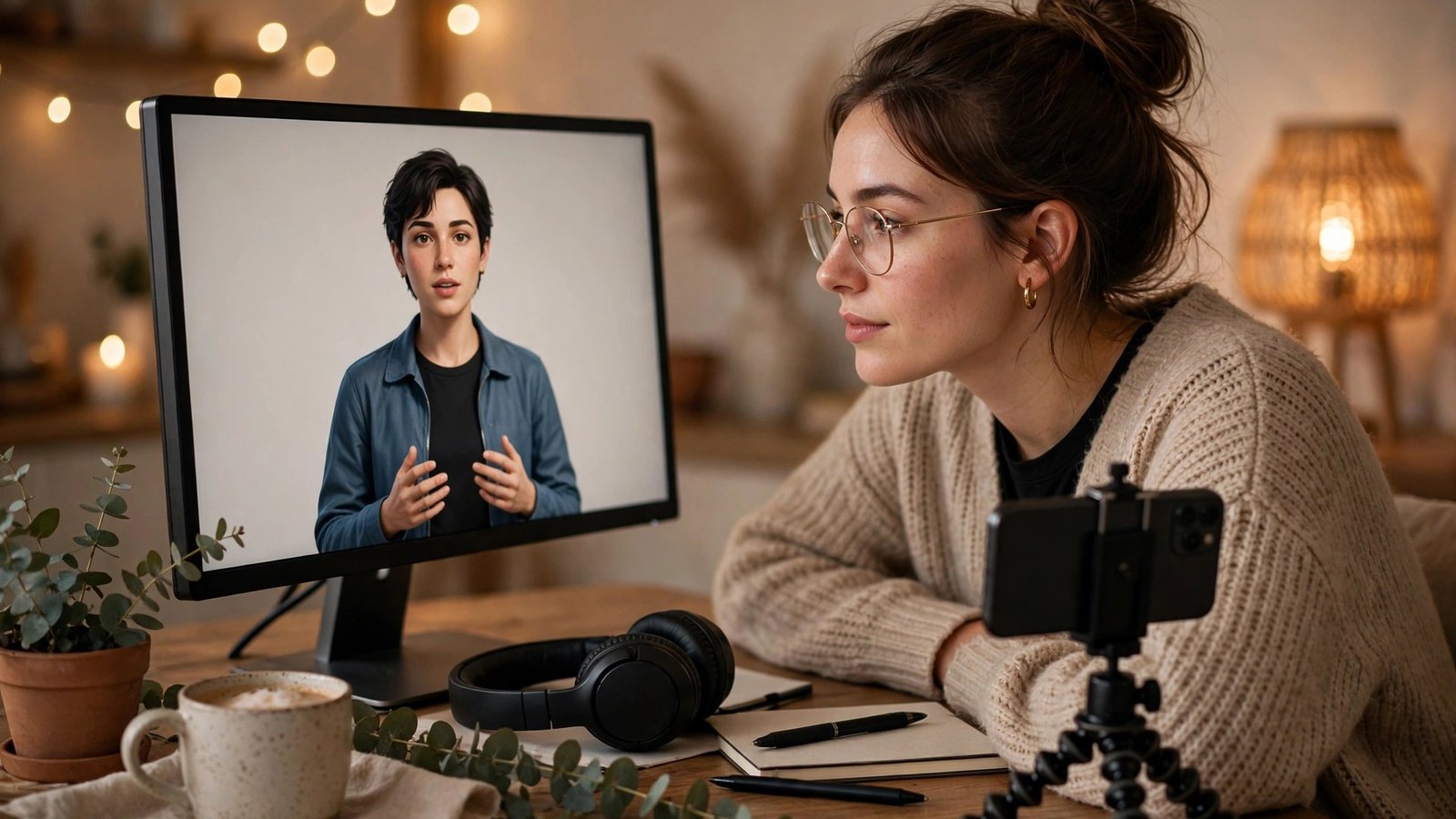
UGC ads are ads designed to look like a regular person’s recommendation — a creator filming in their kitchen, talking about a product like they just bought it. They convert because they don’t feel like ads.
AI UGC tools replicate that format without a human shoot:
- AI actors — synthetic on-camera personas that read your script in a natural, casual style. Creatify ships 300 on its Starter plan and 1,500 on Pro; Arcads advertises 1,000+; MakeUGC offers 1,000+.
- URL-to-video — paste a product page and the tool pulls images, copy, and pricing into ad drafts. Creatify built its whole product around this workflow.
- Multilingual versions — Creatify supports 75+ languages, HeyGen 175+, MakeUGC 50+. One script becomes five localized ads with no reshoots.
The honest framing: these tools are best at volume — hook variations, length variations, language versions. For a brand’s hero ad, most buyers still want a real human. You’ll see that trade-off repeated below, because it’s the key to pricing your service honestly.
The real 2026 costs, tool by tool
I compared current pricing pages this week. A few things changed since last year: Arcads no longer publishes prices on its website, and Creatify’s credit model means “videos per month” varies by model and length.
Creatify — free plan with 10 watermarked credits a month, Starter at $39/month (100 credits, 300 AI actors, no watermarks), Pro from $99/month (300 credits, 1,500 actors, up to 10-minute videos). Strongest for turning a product URL into finished ads, and the free tier is the best no-risk way to test the format.
Arcads — 3-day trial, then paid plans (named Starter with 8,000 credits and Creator with 16,000) whose prices aren’t public. Comparison guides note per-model video lengths: about 8 seconds on Veo 3.1, 15 seconds on Kling 3.0. Important licensing note from its terms: non-exclusive, non-transferable video rights — fine for client deliverables, but read the current terms before promising a brand exclusivity.
MakeUGC — $1 to start, then $89–$149/month at list price (comparison sites have seen $59 and $79 discounted starts). Batch generation is its strength, and its terms assign the copyright to you — clean for client work.
HeyGen — free plan, paid from $29/month, with 500+ avatars and 175+ languages. Better fit for polished avatar explainers and localized content than for raw phone-style UGC.
Budget alternates — Topview does product-to-UGC video from about $18/month; Tagshop AI starts around $29/month; Captions offers AI actors plus editing from about $24.99/month.
The practical math: a $39/month Creatify Starter is your entry point. If each client engagement uses even a few dozen credits, two or three small clients cover your tools with room to spare. Don’t buy the Pro tier until you have the client volume to justify it — Starter is enough to land your first brands.
What you’d actually sell (and who buys it)
The buyers are DTC brands, Etsy sellers, Amazon sellers, and local businesses that know short-form ads work but have no video team. What you sell isn’t “AI videos” — it’s outcomes:
- Creative volume for ad testing. Meta and TikTok advertisers live or die on creative refresh. Offering 10–20 hook variations per product per month is a real, billable service that real agencies charge for. (It also helps to know what creators actually earn on each platform in 2026 — it shapes what advertisers will pay you.)
- Multilingual ad versions. A brand selling in the US and Latin America needs the same ad in English and Spanish. You can produce both in an afternoon; a human-crew reshoot would cost thousands.
- Product-page-to-ad packages. Send an Etsy seller or Shopify store owner a package: “send me your product links, get five ad concepts back in 72 hours.” Creatify’s URL-to-video workflow is built for exactly this.
- Organic-style content batches. Reels and TikToks for brands that post daily. AI actors plus trending formats equals a content calendar a solo founder can’t build themselves.
Where the honest line sits: don’t sell AI actors as real testimonials. The FTC’s Consumer Reviews and Testimonials Rule prohibits AI-generated endorsements that misrepresent the reviewer’s identity, experience, or existence — and fabricated five-star reviews from people who never touched the product are exactly what that rule targets. Your deliverables should be labeled as creator-style ads, not fake reviews.
The disclosure rules you cannot skip
This is the part most AI-side-hustle content conveniently leaves out. If you’re making AI-generated ads for brands, disclosure isn’t optional — and there are two layers.
Layer 1: the commercial relationship. Any material connection — payment, free product, affiliate deal — must be disclosed clearly. This is the FTC’s long-standing Endorsement Guides rule, and it applies whether the on-screen endorser is a human, an AI avatar, or a cloned voice. A buried #ad in a hashtag pile doesn’t meet the “clear and conspicuous” standard.
Layer 2: the AI involvement. Practitioner guidance in 2026 converges on a double disclosure: if AI substantially generated or modified the endorsement, that fact must be disclosed too. “#ad” doesn’t cover the AI part; “AI-generated” doesn’t cover the sponsorship part. For video, both disclosures should appear early and on-screen, not just in a caption.
Platform requirements stack on top: Meta requires AI-generated content labels, TikTok’s community guidelines mandate AI content disclosure, and YouTube requires creators to flag AI-altered or AI-generated realistic content. Use the platform tools AND your own on-screen disclosure — one doesn’t replace the other.
State rules are getting specific. New York’s synthetic-performer law (GBL §396-b) requires conspicuous disclosure in ads reaching New York consumers when the human on screen is AI-generated and not a recognizable person — with penalties of $1,000 for a first violation and $5,000 for subsequent ones. California, Texas, and Tennessee have their own AI-content laws in force. Your contract with each brand should put disclosure responsibility in writing.
Practical takeaway for your service: build disclosure into your delivery template. Every ad you hand a client should ship with on-screen disclosure baked in, plus a one-page note telling them which platform toggle to flip. Brands will pay for a vendor who handles compliance instead of creating liability.
For the details, two sources worth bookmarking: the FTC AI disclosure rules guide for 2026 and the breakdown of FTC, NY, and Article 50 labels.
Getting your first clients without a portfolio
You have no samples yet, so make some — spec work is normal in creative services:
- Pick 3 products you actually know. Make 3–5 AI ad variations for each. This is your portfolio, and spec work for real products beats made-up demos because it shows you can work from a real product page.
- Pitch where the budgets already are. DTC brands on TikTok and Instagram that post ads but have tired creative. Etsy and Shopify sellers in niches where UGC-style ads dominate (beauty, gadgets, pet products). Comment on their ads with a specific note about what you’d test — then follow up by email.
- Price per package, not per hour. A starter package — “10 ad variations for one product, delivered in a week, disclosure included” — is easier to buy than an hourly rate. Raise prices as demand fills your calendar.
- Lean into the honesty angle. Tell prospects exactly what you’re selling: volume testing and localization at a fraction of shoot costs, with real creators reserved for hero content. Brands have been burned by vendors overpromising on AI; being the honest one is your differentiator.
The honest verdict
AI UGC ad creation works as a side hustle in 2026 because the economics are real: ~$40/month in tooling, no camera, no studio, and genuine demand from brands that need creative volume. The tools compared here are current as of this month, and the free tiers mean you can build a portfolio before spending a dollar.
The two things that separate a sustainable service from a sketchy one: disclosure discipline and honest positioning. Keep both, and this is a legitimate creative service. Skip either, and you’re one unhappy client away from trouble. Pair it with how real UGC creators actually work — the best AI-ad freelancers know the human craft well enough to direct the AI version of it.
Frequently Asked Questions
How much does it cost to start an AI UGC ad side hustle in 2026?
About $39/month for a tool like Creatify’s Starter plan, plus your time. Free tiers (Creatify’s 10 watermarked credits/month, HeyGen’s free plan, MakeUGC’s $1 start) let you build a spec portfolio before paying anything. Add the Pro tier only when client volume justifies it.
Can I really sell AI-generated ads to brands, or do they want real humans?
Both. Brands buy AI-generated creative for volume — hook variations, ad testing, multilingual versions — because it’s fast and cheap. They still hire real humans for hero ads and genuine testimonials. Position yourself for the volume-testing lane and be upfront about it.
Do I need to disclose that an ad was made with AI?
Yes, twice over: disclose the commercial relationship (it’s an ad) and the AI involvement (it was AI-generated). FTC guidance requires both, clear and conspicuous. Platforms add their own requirements — Meta’s AI labels, TikTok’s AI disclosure, YouTube’s altered-content flag — and several states have specific synthetic-content laws.
Who owns the AI ad videos I create for clients?
It depends on the tool’s terms. MakeUGC assigns copyright to you; Creatify’s FAQ says you own your creatives; Arcads grants a non-exclusive, non-transferable license. Put ownership and usage rights in your client contract regardless of the tool’s default terms.
Can AI actors do fake product reviews for my clients?
No — not honestly. Fabricated reviews from personas who never used the product violate the FTC’s rules against misrepresenting a reviewer’s identity, experience, or existence. Sell creator-style ads and ad concepts, never fake testimonials.
How many ad variations can I make per month on a Starter plan?
It depends on the credit model: Creatify Starter includes 100 credits a month, and cost per video varies by model, length, and resolution. As a rough guide, expect a handful of finished ads per week at Starter level — enough for one or two small clients. Track your credits-per-video before quoting package prices.