The Short Answer on Stock Photo Royalties in 2026
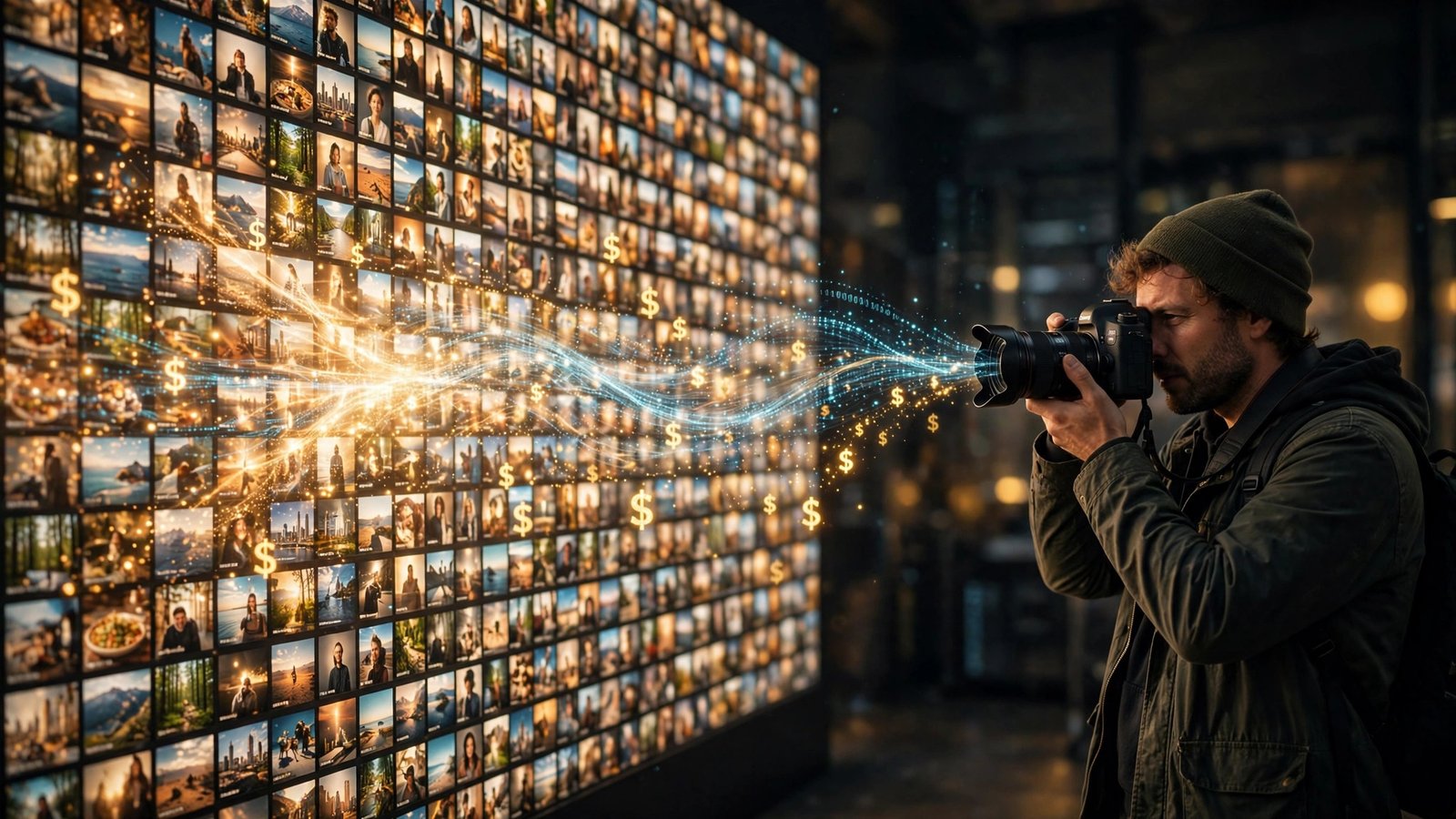
Stock photography still pays in 2026, but the money looks different than it did five years ago. Per-download royalties keep shrinking on the big platforms — Shutterstock’s lowest tier pays about $0.10 a download — while a new income stream has grown up alongside them: AI licensing. Both Adobe Stock and Shutterstock now pay contributors when their portfolios are used to train AI models, on top of every download. If you’re starting as a contributor today, you need to understand both revenue streams, because the download checks alone will disappoint you.
The two biggest platforms tell the whole story. Adobe Stock pays a flat 33% royalty on photos and adds an annual Firefly AI training bonus on top. Shutterstock pays a tiered 15%–40% that resets every January and runs a pooled Contributor Fund that compensates you when your images become AI training data. Which one pays more depends on your volume, your portfolio size, and how much you care about that training-data check.
Two 2026 Storylines Changed the Game
The Getty-Shutterstock merger is dead
The stock industry’s biggest headline of 2026: the proposed Getty–Shutterstock merger was called off on July 7, 2026, after more than a year of limbo. That matters for contributors because Shutterstock isn’t getting absorbed into a competitor’s platform — it’s staying independent and leaning hard into its own AI-powered creative platform and expanded data-licensing business. For anyone holding a Shutterstock portfolio, the company you’re betting on is now clearly an AI-services business with a stock library attached, not the other way around.
AI licensing went from experiment to paycheck
In 2023, AI training compensation was a press-release concept. In 2026 it’s a line item in contributor accounts — Adobe paid its fourth annual Firefly bonus on September 17, 2026, and Shutterstock keeps distributing Contributor Fund payouts. You upload photos once, and they keep earning from AI deals long after downloads taper off.
Adobe Stock in 2026: The Flat-Rate Option
Adobe Stock is the simpler deal to understand. Contributors earn a flat 33% royalty on photos, vectors, and illustrations, and 35% on video — the rate applies to the net price attributed to your content, so the exact dollar amount varies with the buyer’s plan and any discounts. Adobe also publishes minimum royalty floors for contributors with larger lifetime licensing volumes: $0.33, $0.36, or $0.38 per licensed standard asset depending on your lifetime total. That floor is the part most new contributors should pay attention to, because it means even subscription-plan downloads — the bulk of sales — can’t pay you less than roughly a third of a dollar each.
The Firefly training bonus
Adobe’s AI model, Firefly, was trained on Adobe Stock images, openly licensed content, and public-domain material — and Adobe pays contributors whose work helped train it. The 2026 bonus landed in contributor balances on September 17, 2026, and covers eligible photos, videos, vectors, illustrations, and generative AI content considered for training between June 3, 2025 and June 2, 2026, weighted by how many licenses those assets generated in the same period. This is the fourth year Adobe has run the program.
A few practical details, straight from Adobe’s contributor FAQ: the bonus is discretionary and varies per contributor, there’s no opt-out from Firefly training while you’re under Adobe’s existing contributor terms, and contributors who received the 2026 bonus got a temporary $1 minimum payout threshold from September 17 through December 17, 2026 (the normal minimum is $25). If you’re an American contributor, the bonus is subject to US withholding where applicable.
Adobe accepts AI-generated images — with rules
Here’s the biggest policy difference between the two giants: Adobe Stock accepts AI-generated images, but you must label them as generative AI when submitting, own the rights to sell the output, and avoid flooding the marketplace — Adobe’s current guidance treats more than three similar iterations as spam. That makes Adobe the natural home if any part of your workflow uses generative AI.
Shutterstock in 2026: The Volume Play
Shutterstock’s pitch is scale: the largest buyer base, the most downloads, and the thinnest per-download pay. Its contributor royalty is tiered at 15% to 40% based on your earnings level — and the tier resets to Level 1 every January 1, no matter how well you did the year before. At the bottom tier, subscription downloads can pay as little as $0.10 each. Serious contributors accept the thin per-download rate because the download volume is unmatched, then treat the AI-licensing stream as the real upside.
The Contributor Fund and data licensing
Shutterstock sells curated datasets to AI companies and shares the revenue with contributors through a pooled Contributor Fund. The mechanics, from Shutterstock’s own contributor support pages: contributors receive a share of the entire contract value of each data-license deal, proportionate to the volume of their content and metadata included in the purchased datasets, at a 20% average corporate royalty rate of the revenue Shutterstock receives for data licenses. Earnings pool in the fund and are distributed periodically as the fund accumulates significant revenue — you’ll see them posted in your Earnings Summary under the “Contributor Fund” column, not as individual downloads.
One important note: inclusion in datasets isn’t reflected in your download history, so the fund column can look like money appearing from nowhere. It’s not — it’s your existing portfolio earning a second life as training data.
Shutterstock’s AI policy is stricter
As of the latest 2026 updates, Shutterstock does not accept contributor-submitted AI-generated images. If your pipeline is camera-first, that’s irrelevant; if you generate images with AI, Adobe is your only option of the two.
The Math: What 100 Downloads Actually Pay
Your exact monthly income depends on your portfolio, but the per-download math is public:
| Platform | Royalty structure | ~100 subscription downloads |
|---|---|---|
| Adobe Stock | Flat 33% (~$0.33+ each) | Roughly $33+ |
| Shutterstock (Level 1) | 15% tier (~$0.10 each) | Roughly $10 |
The same 100 downloads pay about three times more on Adobe at the entry level. Shutterstock only closes that gap if your tier climbs through the year (remember: it resets every January) or if your sheer volume dwarfs what Adobe’s traffic delivers. Enhanced and extended licenses on either platform pay significantly more per sale ($15–$60+ on Shutterstock’s enhanced licenses, similar ranges on Adobe’s extended licenses), but those are rare compared to subscription downloads.
Now add the AI stream: those same portfolios also collect Firefly bonuses or Contributor Fund distributions periodically, on top of every download. A portfolio that’s “dead” on the download side — aging images that barely sell anymore — can still earn from data licensing. That’s the closest stock photography gets to true passive income in 2026, and it’s the part new contributors should be optimizing for: volume of usable, well-tagged content, not just pretty images.
How to Start as a Contributor in Late 2026
If you’re opening contributor accounts today, here’s the honest playbook:
Start with both, but prioritize Adobe. Shutterstock’s review process is generally friendlier to beginners, so it gets you live and learning fast. But Adobe’s flat rate, lower $25 payout minimum, and AI acceptance make it the better long-term home. Serious contributors run both — they serve different buyer bases, and you get paid by two AI-licensing programs instead of one.
Shoot the gaps, not the clichés. Nobody needs more random flower photos or generic handshakes. The money is in specific, commercial content: real professions at work, current technology used naturally, diverse everyday life that ad buyers actually need.
Metadata is the job. A perfect photo with bad keywords earns nothing — if the algorithm can’t read your asset, buyers can’t find it. Tag every image with the exact phrases a corporate buyer would type.
Set realistic expectations. Contributors publicly report everything from a few dollars a month on small portfolios to hundreds on large, well-targeted libraries, and most of that arrives after a year or more of consistent uploading. The AI-licensing checks make the math better than 2020, not magical.
If royalty-style income is your goal more broadly, remember it’s not limited to photos — music publishing royalties work on the same principle, with your catalog paying you long after the initial release. The same compounding logic applies to digital products you create once and sell for years.
Frequently Asked Questions
How much do stock photo contributors actually earn per download in 2026?
On Adobe Stock, expect roughly $0.33 or more per standard subscription download. On Shutterstock, entry-level contributors can earn as little as $0.10 per subscription download; the rate climbs with your tier (15%–40%) but resets every January.
What is the Adobe Firefly Contributor bonus?
An annual payment Adobe makes to eligible Stock contributors whose photos, videos, vectors, illustrations, or generative AI content were considered for training Adobe Firefly models. The 2026 bonus was paid on September 17, 2026, based on content considered between June 3, 2025 and June 2, 2026 plus the licenses those assets generated. Amounts are discretionary and vary per contributor.
Does Shutterstock pay contributors for AI training?
Yes. Shutterstock’s Contributor Fund pays contributors when their content and metadata are included in datasets licensed to AI companies, at a 20% average corporate royalty rate of what Shutterstock receives for the data licenses. Payouts are pooled and distributed periodically, and appear in your Earnings Summary under the “Contributor Fund” column.
Can I submit AI-generated images to stock sites in 2026?
Adobe Stock accepts AI-generated images with mandatory labeling, as long as you own the rights and follow the spam guidelines (no more than three similar iterations). Shutterstock does not accept contributor-submitted AI-generated images as of the latest 2026 updates. Check each platform’s current contributor terms before uploading, since these policies do change.
What happened to the Getty-Shutterstock merger?
It was called off on July 7, 2026. Shutterstock remains an independent company and is pushing its own AI-powered creative platform and expanded data-licensing business instead of merging with Getty Images.
Which stock site is better for a new contributor: Adobe Stock or Shutterstock?
Submit to both. Shutterstock’s review process is friendlier to beginners and its buyer volume is unmatched; Adobe pays a flat 33% with minimum per-download floors, has a lower payout threshold, accepts AI-generated work, and pays the annual Firefly training bonus. Over time, most contributors find Adobe’s steady rate more satisfying per download and Shutterstock’s volume better for AI-licensing scale.