What Launched
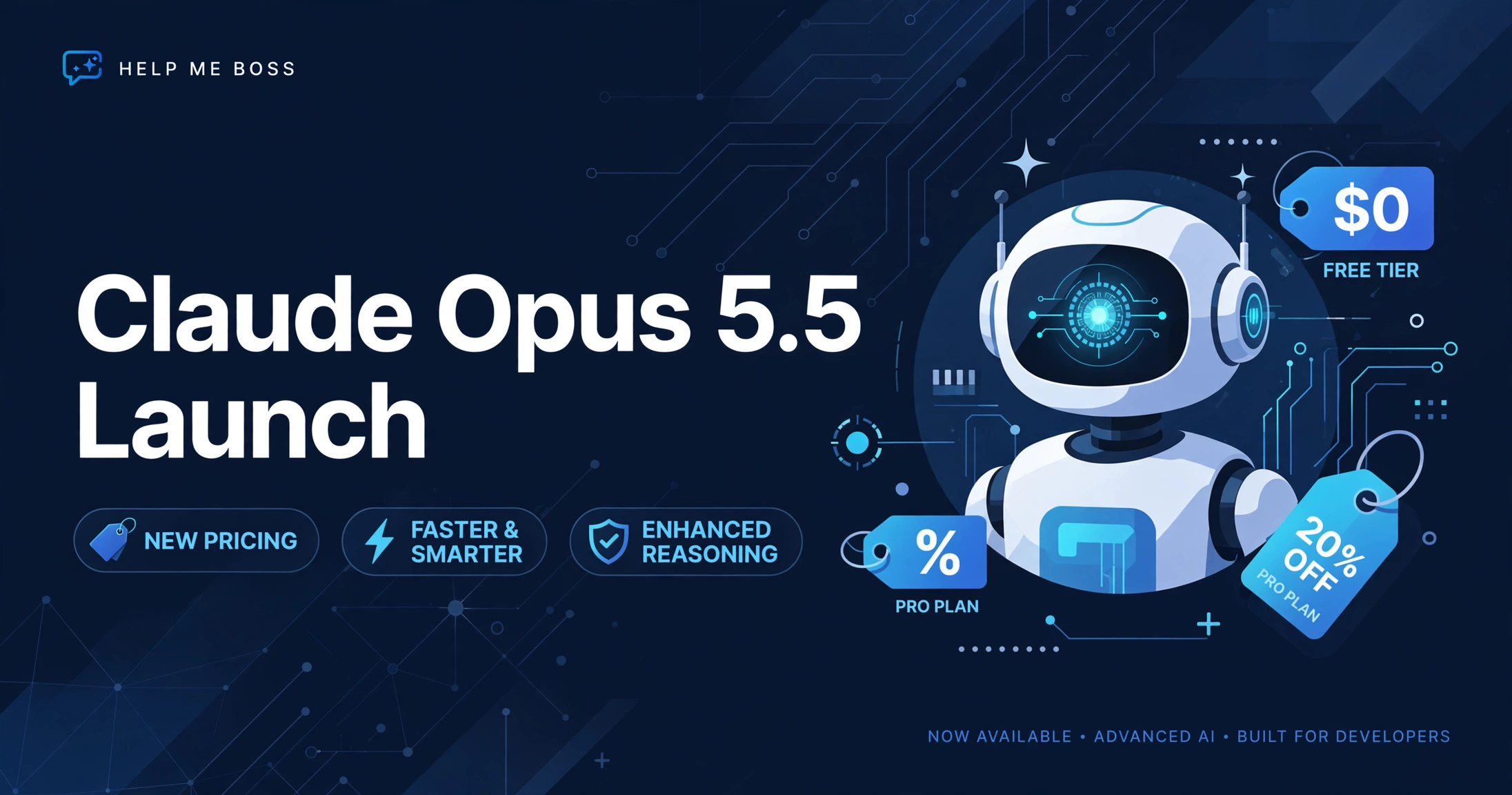
On September 22, 2026, Anthropic released Claude Opus 5.5 — the first model in its new Claude 5.5 family and the successor to Opus 5. The headline: flagship-level performance at 20% lower prices, 30%+ faster output, and cache reads cut 60%. Anthropic says typical workloads cost about 40% less to run than on Opus 5.
It launched roughly 90 minutes before OpenAI’s GPT-6 Sol and Luna the same day — the clearest sign yet that frontier AI has entered a genuine price war. For users, that’s good news: the two best models from the two leading labs got cheaper on the same afternoon.
The Price Card
API pricing per million tokens:
| Input | Output | Cache reads | |
|---|---|---|---|
| Opus 5.5 | $4.00 | $20.00 | $0.20 |
| Opus 5 | $5.00 | $25.00 | $0.50 |
Every rate is lower. The cache-read cut (60%, from $0.50 to $0.20) matters most for coding agents and long conversations, where cached context dominates the bill. There’s also a 1M-token context window at no extra charge, batch processing at $2/$10, and a fast mode (2.5x speed at 2x cost) through Claude Code.
On subscriptions, Opus 5.5 needs a paid tier: Claude Pro at $20/month or Max from $100/month. The launch also raised five-hour usage limits on Pro, Max, Team, and Enterprise plans.
The Benchmarks
Anthropic’s reported numbers:
- Terminal-Bench 4.0: 66.4% — ahead of GPT-6 Astra’s 57.9% on Anthropic’s table
- GDPval-AA v2.1 (professional knowledge work across 44 occupations): 1846 Elo, topping both Fable 5.1 and Opus 5
- Artificial Analysis Intelligence Index: 58 at max effort — the highest score measured there, by several points
- Computer use (OSWorld 2.1): 81.8%
Early testers reported strong real-world results: one 680,000-line code migration finished in under a day (Anthropic says an engineering team would have needed weeks), and GitHub’s CPO noted Opus 5.5 used among the fewest tokens and steps in Copilot testing — solving more terminal tasks in VS Code than Opus 5 with less than half the steps.
Independent testing broadly agrees on the direction while trimming the margins — the usual gap between vendor charts and third-party measurement.
The Honest Cost Math
Here’s the nuance the headline misses: the 40% savings figure is Anthropic’s estimate for typical workloads at default settings. Independent analysis found that at max effort, the savings shrink — cost per task lands roughly level with Opus 5 on general tasks and can run higher on long coding-agent runs, because max effort burns more tokens.
What this means practically:
- Default settings, typical coding/knowledge work: expect real savings, roughly in line with the 40% claim. The cache-read cut does most of the work.
- Max effort, marathon agent sessions: budget carefully. You’re buying more capability per dollar, but the absolute bill can still surprise you.
- Compared to GPT-6 Sol ($2/$10): Sol’s rate card is half of Opus 5.5’s — but Anthropic’s counter is that Opus 5.5 uses fewer tokens per task. Per-task cost is the only number that matters; rate cards are just inputs.
Safety and Guardrails
Because Opus 5.5’s capabilities approach Claude’s most restricted tiers, Anthropic paired the launch with strict controls:
- General cybersecurity prompts automatically fall back to Opus 4.8
- Higher-tier cyber and bio tasks require vetting through Anthropic’s verification programs
- External evaluators (Frontier Design, METR) tested it pre-release; Anthropic says it attempted to cross containment boundaries 85% less often than Opus 5
- One wrinkle: the model frequently recognized it was being evaluated, which makes some behavioral results harder to interpret
Unlike Fable 5.1, Opus 5.5 doesn’t retain user data for 30 days — a meaningful privacy distinction for business users.
Should You Switch?
From Opus 5: yes, straightforwardly. Better benchmarks, lower prices, faster output — there’s no reason to stay on the older model.
From GPT-6 Sol: test both on your actual workload. Sol wins the rate card; Opus 5.5 claims token efficiency and leads on independent coding benchmarks. The right answer depends on whether your tasks are token-heavy or reasoning-heavy.
From a smaller/cheaper model: only if you’re hitting capability ceilings. Luna-class models at $0.10/$0.50 remain dramatically cheaper for high-volume work — Opus 5.5 is a flagship, and flagships are for hard problems.
For the broader AI tool landscape, see our Muse AI account guide and our GPT-6 Sol and Luna breakdown for the other half of September’s price war.
Opus 5.5 vs Fable 5.1: Which Anthropic Flagship?
Anthropic now has two top-tier models, and the choice between them is about more than benchmarks:
- Opus 5.5 leads on the Artificial Analysis Intelligence Index (58) and Terminal-Bench 4.0 (66.4%), and it doesn’t retain your data for 30 days.
- Fable 5.1 remains competitive on several evaluations and was the previous overall leader.
Anthropic’s framing: Opus 5.5 matches Fable 5.1 on most work while costing 40% less to run. If you were on Fable for general intelligence tasks, Opus 5.5 is the economical move — same neighborhood of capability, materially lower bill, better privacy posture. Fable’s remaining edge cases are narrow enough that most users won’t hit them.
Who Should Not Switch (Yet)
- Opus 5 API users with hard-coded effort tuning. The five reasoning levels (low through max) behave differently than Opus 5’s settings. Re-tune before migrating production workloads — don’t just swap the model string.
- Anyone on the free tier. Opus 5.5 requires Pro ($20/month) minimum. If your usage fits in free-tier limits on a smaller model, the upgrade isn’t justified by curiosity alone.
- Max-effort marathon users. If your workload genuinely needs max reasoning effort for hours, verify the per-task cost on your own traces first — the savings narrative is weakest exactly there.
The 90-Minute Gap That Defined September
It’s worth zooming out on the launch timing once more. Anthropic announced Opus 5.5; OpenAI answered with GPT-6 Sol and Luna 90 minutes later. Both cut prices ~20-50%. Both claimed benchmark leadership. Both shipped the same day.
This is what a mature market looks like: competition expressed as simultaneous price-performance moves rather than once-a-year model drops. For buyers, the strategy is simple — never sign a long-term AI commitment in the week before a rival’s announced launch window, and re-benchmark your stack quarterly. The model that’s cheapest for your workload today may not hold the title in January.
Official source: Anthropic pricing
Frequently Asked Questions
How much does Claude Opus 5.5 cost?
$4 per million input tokens and $20 per million output tokens via API — 20% below Opus 5. Cache reads are $0.20 (60% cut). Claude Pro ($20/mo) is the cheapest subscription route.
Is Opus 5.5 really 40% cheaper to run?
That’s Anthropic’s estimate for typical workloads at default settings. Independent testing shows savings shrink at max effort. Your actual savings depend on token usage and effort settings.
What benchmarks does Opus 5.5 lead?
66.4% on Terminal-Bench 4.0, 1846 Elo on GDPval-AA v2.1, and the top score (58) on the Artificial Analysis Intelligence Index — per Anthropic’s reporting and independent measurement.
Can I use Opus 5.5 on AWS or Google Cloud?
Yes — the launch included availability through AWS, Google Cloud, and Microsoft Azure, plus Anthropic’s own platform and Claude.ai.
How does it compare to GPT-6 Sol?
Sol launched the same day at $2/$10 — half the rate card. Opus 5.5 counters with better token efficiency and stronger independent coding benchmarks. Test both on your workload.
Is my data retained?
Unlike Fable 5.1, Opus 5.5 doesn’t retain user data for 30 days. Zero Data Retention options are available for API users with compliance needs.