
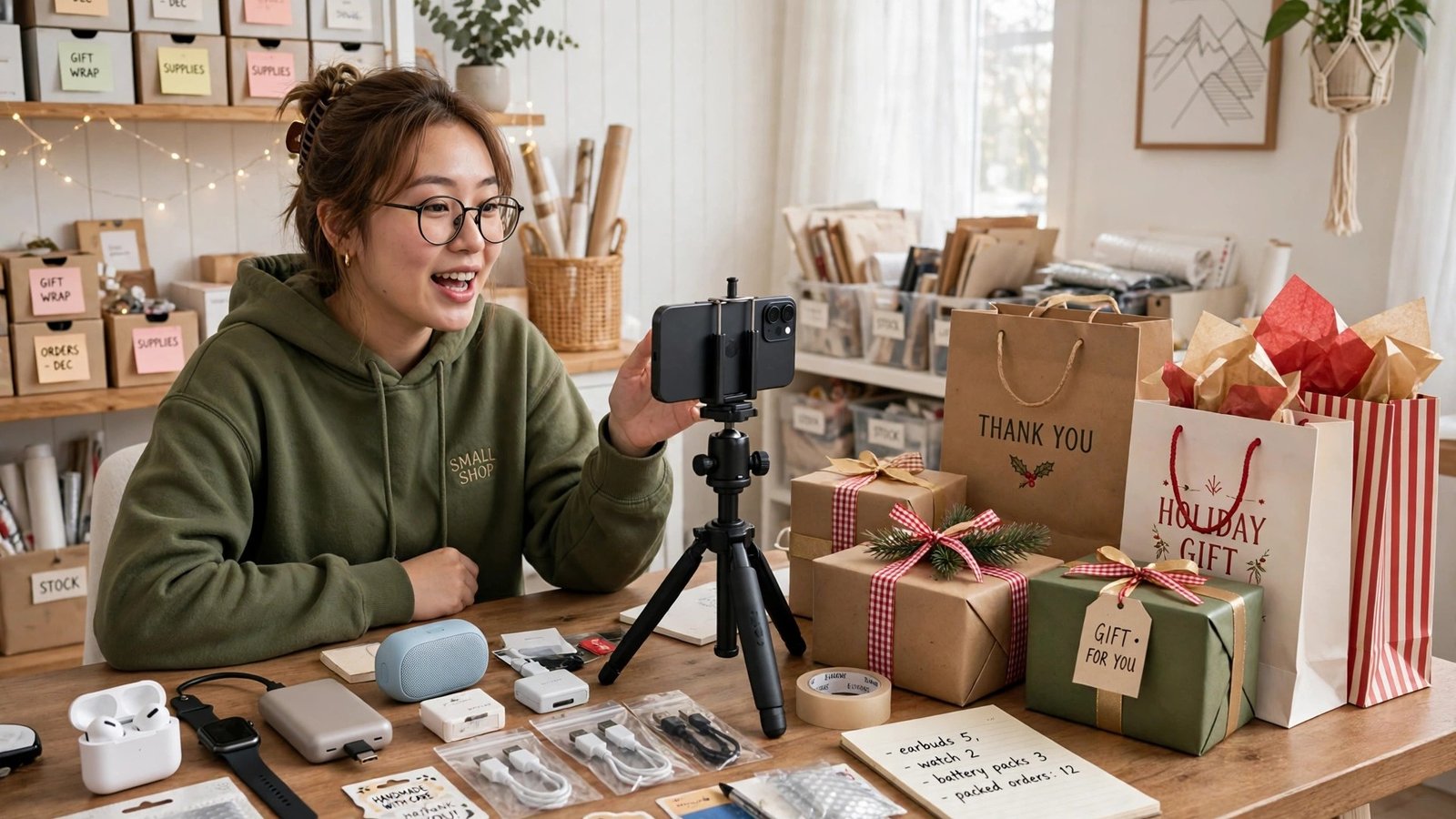
Best Buy is coming to TikTok Shop, and if you sell anything on the platform — or you’ve been thinking about starting — you should pay attention. Not because you’ll ever compete with Best Buy. You won’t, and that’s fine. The point is that the biggest electronics retailer in the country just decided that TikTok Shop is a real sales channel, not an experiment, and it did so weeks before Black Friday. When a company with that much data on its side makes a move like this, the smart play for a small seller is to watch what it builds, then steal the parts that fit a 50-product shop.
That’s what this article is. Not a news recap — you can get that anywhere — but a translation: which Best Buy mechanics actually transfer to a side hustle, what each one costs you in time and money, and what to do about it in the next few weeks, before the holiday rush eats your calendar.
What Best Buy actually announced
On September 22, 2026, Best Buy confirmed it would open an official TikTok Shop storefront, live in late October, carrying nearly 10,000 products from brands including Oura, Bose, Dyson, and Microsoft (Best Buy’s announcement). The categories span headphones, cameras, small appliances, laptops, and accessories. Shoppers can buy through shoppable creator videos, the Best Buy shop page, the TikTok Shop tab, and in-app product pages — all without leaving TikTok. Orders are fulfilled by Best Buy, and eligible purchases can be returned in store or by mail.
Jonathan Greer, Best Buy’s vice president of e-commerce, put it this way: “Social media isn’t just influencing what people buy anymore. It’s shaping how they discover products, with creators playing an increasingly important role in what people notice, consider and want to try. Launching on TikTok Shop lets us meet customers at that exact moment of discovery and make it easy to shop.”
Read that quote twice, because it contains the whole strategy. Best Buy isn’t treating TikTok as an ad channel that sends people somewhere else. It’s treating the moment of discovery — the video itself — as the store. The checkout lives inside the video’s world. That’s the shift, and it’s the one that matters for you.
The timing is no accident. Best Buy’s launch lands just ahead of TikTok Shop’s Black Friday and Cyber Monday campaign, which runs November 11 through November 30 this year — a day earlier and longer than last year’s event. It also follows Sephora’s TikTok Shop pilot, the Drop Shop, which debuted September 19 with exclusive monthly product drops, creator-led content, and TikTok Live unveil events (Retail Dive’s coverage). Ulta Beauty joined TikTok Shop in July with a fragrance campaign. The big retailers are arriving in a wave, and each one is bringing its own version of the same playbook: creators first, drops and events second, a real storefront third.
Here’s the demand signal behind all of it. Live shopping sales on TikTok Shop in the US more than doubled in the first half of 2026 compared with a year earlier, according to TikTok Shop figures reported by Retail Brew. TikTok Shop’s beauty and personal care category alone generated $2.08 billion in sales in the first half of 2026, making it the platform’s largest category. And last year’s four-day Black Friday weekend on TikTok Shop passed $500 million in US sales, per trade newsletter Shopifreaks’ summary of Modern Retail’s reporting. You don’t need to believe any single number to see the direction: the platform’s holiday season is getting bigger, more crowded, and more professional every year. The question isn’t whether to show up. It’s how to show up in a way that doesn’t get you buried.
The uncomfortable truth about copying Best Buy
Let’s be honest about what doesn’t transfer. Best Buy has nearly 10,000 products, a national fulfillment network, physical stores that double as return centers, and a creator program it launched in 2025 with years of relationships behind it. You have a phone, a spare room, and maybe a few hundred dollars of inventory. Copying the scale is impossible. Copying the mechanics is not.
The mechanics are the interesting part, because Best Buy didn’t invent them. It assembled them: creator videos as the primary listing format, a curated shop page that feels like a store rather than a feed, a returns policy designed to remove buying friction, and a launch timed to the exact weeks when shoppers are already looking. Every one of those has a small-shop version.
The translation table: Best Buy mechanic, small-shop version
Here’s the core of this article — the table I wish someone had handed me before my first holiday season selling online.
| Best Buy mechanic | Small-shop version | What it costs you |
|---|---|---|
| Shoppable creator videos as the storefront | 3–5 short videos per hero product, each showing the product in use, with the product linked in-video | 1–2 hours per video if you film simply; $0 if you shoot on your phone |
| Best Buy Creator program (affiliate creators) | Open collaboration at 10–15% commission so any eligible creator can pick up your product | Commission only on sales made — no upfront cost beyond free samples |
| Curated shop page with 10,000 products | A tight shop of 10–20 products with one clear hero, one bundle, and one gift set | A weekend of listing cleanup; $0 in platform fees to list |
| Best Buy fulfillment + in-store/mail returns | Your own 30-day return window, stated plainly on every listing, plus fast replies to return requests | Budget 5–10% of revenue for returns; the policy itself costs nothing to write |
| Exclusive monthly drops (Sephora’s version) | One limited holiday bundle or gift set, available only through TikTok Shop, with a hard end date | The cost of bundling existing inventory; $0 extra if you reuse stock |
| Holiday-season launch timing | Your holiday listings, videos, and gift sets live by early November, before the Nov 11 campaign starts | A few evenings of prep in late October — this is the cheapest advantage in the table |
None of these require a warehouse. All of them require you to stop treating your TikTok Shop like a shelf and start treating it like a stage.
Creator-video-first listings: the mechanic that matters most
Best Buy’s storefront is built around shoppable creator videos, not static listings. That’s a deliberate choice, and it’s the one I’d copy first if I could only copy one thing.
Here’s why. On TikTok, the video is the discovery. A shopper doesn’t search for your product the way they would on Amazon; they stumble on a video, feel something, and buy in the same session. A listing with no video attached is a shop window in a town nobody walks through. A listing with three good videos is three chances to be discovered, each one carrying its own checkout link.
For a small seller, the practical version looks like this. Pick your best product — the one with the clearest benefit you can show in under 30 seconds. Film three videos: one showing the problem it solves, one showing it in real use (not a slideshow, actual hands on the product), and one answering the question customers always ask. Post them across a week, link the product in each, and watch which one moves. Then make two more like the winner.
The cost is time, mostly. If you film simply — natural light, your phone, no editing suite — each video takes an hour or two including a couple of retakes. That’s the honest number.
One more thing Best Buy gets right: it doesn’t rely only on its own videos. Its Creator program lets outside creators sell its products for a commission. Your version of that is TikTok Shop’s open collaboration, where any eligible creator (generally those with around 5,000 or more followers) can pick up your product at the commission rate you set. Typical open-collaboration rates run 10–15%. You pay nothing unless a sale happens. That makes it the cheapest distribution you can buy, and it’s the closest thing a small shop has to Best Buy’s creator army.
The catch is samples. Creators often want the product in hand before they’ll film. If you send five free samples of a $25 product, that’s $125 in product cost plus shipping — call it $150–$175 all in. That’s real money for a side hustle. So be selective. Send samples to creators whose audience actually matches your buyer, not just anyone with a follower count. One creator who sells 40 units beats ten who post once and disappear. And if you’re curious how affiliate commissions work from the creator side, our breakdown of TikTok Shop affiliate commission rates walks through the ranges by category.
Returns policy as a conversion tool, not a cost center
This is the mechanic most small sellers get backwards. Best Buy made a point of announcing that eligible TikTok Shop purchases can be returned in store or by mail. That’s not a footnote; it’s a selling point. Returns remove the risk of buying, and on a platform where people buy on impulse from a 20-second video, risk removal is the difference between a scroll-past and a sale.
Your version doesn’t need stores. It needs clarity and speed. TikTok Shop’s default US return window is 30 calendar days from delivery, and sellers can choose windows of 14, 30, 45, or 90 days for eligible products. During the holiday season, TikTok Shop applies an extended return window to most items, temporarily overriding seller-configured windows. In other words, the platform is already nudging you toward generous holiday returns — lean into it instead of fighting it.
Put the policy in plain words on every listing: “30-day returns, no questions asked, and we’ll reply within a day.” Then actually reply within a day. Sellers normally have two to four business days to respond to a return request depending on price, and silence lets TikTok Shop approve the request automatically.
Budget for it honestly. For most small categories, plan on 5–10% of orders coming back in some form, higher for apparel and beauty. That’s not a reason to tighten your policy — it’s the cost of the conversion lift a clear policy gives you. If your return rate climbs above that range, the problem is usually the product or the listing photos, not the policy. Fix the listing, not the generosity.
The holiday timing play: why early November beats Black Friday itself
Best Buy announced in September and launched in late October. Sephora piloted in September. TikTok Shop’s own campaign starts November 11. Notice the pattern: nobody serious waits until Black Friday week to show up. The shoppers who buy during the November 11–30 window have been building wish lists since September — TikTok reported that #holidayshopping content rose 263% from August to September, with #fallwishlist up 450% month over month.
For a small seller, the practical read is simple. Your holiday listings, your gift sets, your best videos, and your return policy should all be live by the first week of November at the latest. The sellers who scramble during Black Friday week are competing for attention against Best Buy, Sephora, Ulta, Old Navy, and every brand with a holiday ad budget. The sellers who were already there when the wish lists were being made get discovered before the noise peaks.
That’s also why the limited holiday bundle matters. Sephora’s Drop Shop works because a monthly drop gives people a reason to come back and a deadline to buy. Your version is one gift set — your best product plus a complementary item, packaged as a ready-made gift, available only on TikTok Shop, with a stated end date. It doesn’t need new inventory. It needs a name, a price, and a video that shows someone opening it. Gift sets, bundles, advent calendars, and discovery sets are exactly the formats TikTok Shop’s own category managers say perform best in Q4, and a bundle also lifts your average order value, which is the quietest way to survive fee pressure.
The worked math: what this actually costs a 50-product shop
Let’s stop talking in generalities and run real numbers. I’m going to use a hypothetical small shop selling a $35 product — say a kitchen gadget or a beauty accessory — and I’ll label every assumption as an estimate where it is one. Fee figures below reflect the range reported by seller guides in 2026: TikTok Shop’s standard referral fee is most commonly cited at 6% for most categories, though some 2026 guides report an increase to 8% for many categories effective August 2026, with category-specific rates varying. Check your own rate in Seller Center — that’s the number that governs your payouts. Affiliate commissions are set by you, typically 10–15% for open collaboration.
Scenario A: creator-video-first, no paid ads
- Selling price: $35
- Product cost: $12
- Referral fee at 6% (estimate range 6–8%): $2.10
- Creator commission at 12% on affiliate-attributed sales: $4.20
- Shipping you absorb (estimate): $4.00
- Your profit per affiliate sale: $35 − $12 − $2.10 − $4.20 − $4.00 = $12.70
- Your profit per organic sale (no creator commission): $16.90
Now the time cost. Say you make 12 videos across your top 3 products at 1.5 hours each: 18 hours. If those videos drive 100 sales in November, 60 of them through creators and 40 organic, your profit is (60 × $12.70) + (40 × $16.90) = $762 + $676 = $1,438 for roughly 18 hours of filming plus listing work. That’s about $80 an hour before you count packing time — and the videos keep working after November, which the hourly math doesn’t capture.
Scenario B: the same shop, but you skip video and rely on listings alone
Without video, discovery collapses. Let’s be generous and say you still make 25 sales in November, all organic: 25 × $16.90 = $422.50. Same inventory, same fees, same product — roughly $1,000 less profit, because nobody found you.
Scenario C: you add samples to recruit creators
Five samples at $12 product cost plus $5 shipping each: $85 out of pocket. If those five creators drive even 20 extra affiliate sales, that’s 20 × $12.70 = $254 in profit against the $85 sample cost — a net gain of $169, and you’ve bought yourself five new video assets you didn’t have to film. If two of the five never post, you’re still ahead on the three who did. The sample budget only becomes a problem when you spray it at creators who were never going to sell your product anyway.
The point of the math isn’t the exact dollar figures — your product cost, category fee, and commission rate will differ, and you should rerun these numbers with your own. The point is the shape of it: video is the cheapest growth lever you have, creator commission is a performance cost you only pay when you win, and the most expensive thing in this whole strategy is invisibility. If you want the full fee picture before you price anything, our TikTok Shop fees breakdown for Q4 2026 walks through referral fees, peak-season shipping, and the math line by line.
One honest caveat: none of these scenarios include your time packing orders or answering messages, and holiday volume will eat evenings. Price that in before you promise 24-hour shipping you can’t sustain. A shop that ships in three days and answers messages beats a shop that promises next-day delivery and misses it.
Your pre-Black Friday checklist
Here’s the whole strategy as a checklist you can work through in the next two weeks:
- Pick your hero. One product, one clear benefit, one video-ready demo. Everything else supports it.
- Film three videos for the hero — problem, real use, most-asked question — and link the product in each.
- Open collaboration at 10–15%. Set the rate, approve creators whose audience fits, and send no more than five samples to start.
- Build one holiday gift set from existing inventory, TikTok Shop only, with a hard end date.
- Write your returns policy in plain words on every listing and commit to replying to return requests within a day.
- Clean your shop page. Ten to twenty products, one hero, one bundle, one gift set. Hide or delist the dead weight.
- Be live by early November. The November 11 campaign rewards sellers who are already there, not sellers who arrive during it.
- Check your fee rate in Seller Center before you price holiday promotions — reported rates vary by category, and your settlement statement is the truth.
- Plan your packing capacity. Decide your real ship time and state it. Overpromising during a volume spike is how shops lose their ratings.
What Best Buy’s move means for you, really
Strip away the press-release language and Best Buy’s announcement is a bet: that the place people discover products is becoming the place they buy them, and that creators are the new sales floor. Sephora made the same bet a month earlier with a pilot. Ulta made it in July. The retailers with the most to lose are moving first, and they’re moving before the holidays, not after.
You don’t need their budget to benefit from their bet. You need their mechanics, shrunk to your size: video-first listings, a creator commission that costs you nothing unless it works, a returns policy that sells instead of scares, one gift set with a deadline, and a launch date in early November rather than Black Friday week.
Frequently Asked Questions
Do I need a big catalog to succeed on TikTok Shop this holiday season?
No. Best Buy launched with nearly 10,000 products, but small shops win by being narrow, not broad. A tight shop of 10–20 products with one clear hero, one bundle, and one gift set is easier to merchandise, easier to film for, and easier for creators to understand than a sprawling catalog. Depth on a few winners beats breadth across dozens of slow sellers.
What does it cost to sell on TikTok Shop in 2026?
The main platform cost is a referral fee, most commonly cited at 6% for many categories, though some 2026 guides report 8% for many categories after an August 2026 increase — verify your category’s rate in Seller Center. On top of that, you set your own creator commission (typically 10–15% for open collaboration), and you pay your own product, shipping, and returns costs. There is no listing fee for opening a shop, which is why the video and sample costs in this article are the real budget items.
How do I get creators to promote my products?
Set an open collaboration rate of 10–15% in TikTok Shop’s affiliate program so eligible creators can pick up your products. Then reach out to a small number of creators whose audience matches your buyer, and offer a free sample. Start with five samples, track which creators actually post and sell, and double down on the ones who do. You only pay commission on sales, so the program costs nothing until it works.
Should I copy Sephora’s Drop Shop idea as a small seller?
Copy the mechanic, not the scale. Sephora runs monthly exclusive drops; your version is one limited holiday gift set made from inventory you already hold, sold only on TikTok Shop, with a stated end date. The deadline and the exclusivity are what drive urgency — you don’t need a new product to create them.
What return policy should I set for the holidays?
A clear 30-day window, stated in plain words on every listing, is a strong default — and note that TikTok Shop applies an extended holiday return window to most items during the season anyway. Reply to return requests within a day, well inside the platform’s two-to-four-business-day response window. Budget 5–10% of revenue for returns, and treat a rising return rate as a signal to fix the listing or the product, not to tighten the policy.
Is it too late to start selling on TikTok Shop before Black Friday 2026?
Not if you start this week. TikTok Shop’s Black Friday and Cyber Monday campaign runs November 11–30, and the sellers who benefit most are the ones whose listings, videos, and gift sets are already live when shoppers start building wish lists in early November. A focused two-week sprint — hero product, three videos, one gift set, one returns policy — is enough to be ready. Waiting until Black Friday week itself is the version that’s too late.