
The short answer: Blue is free, Obsidian suits food spending, Palladium only pays if you travel — and your old card is dead
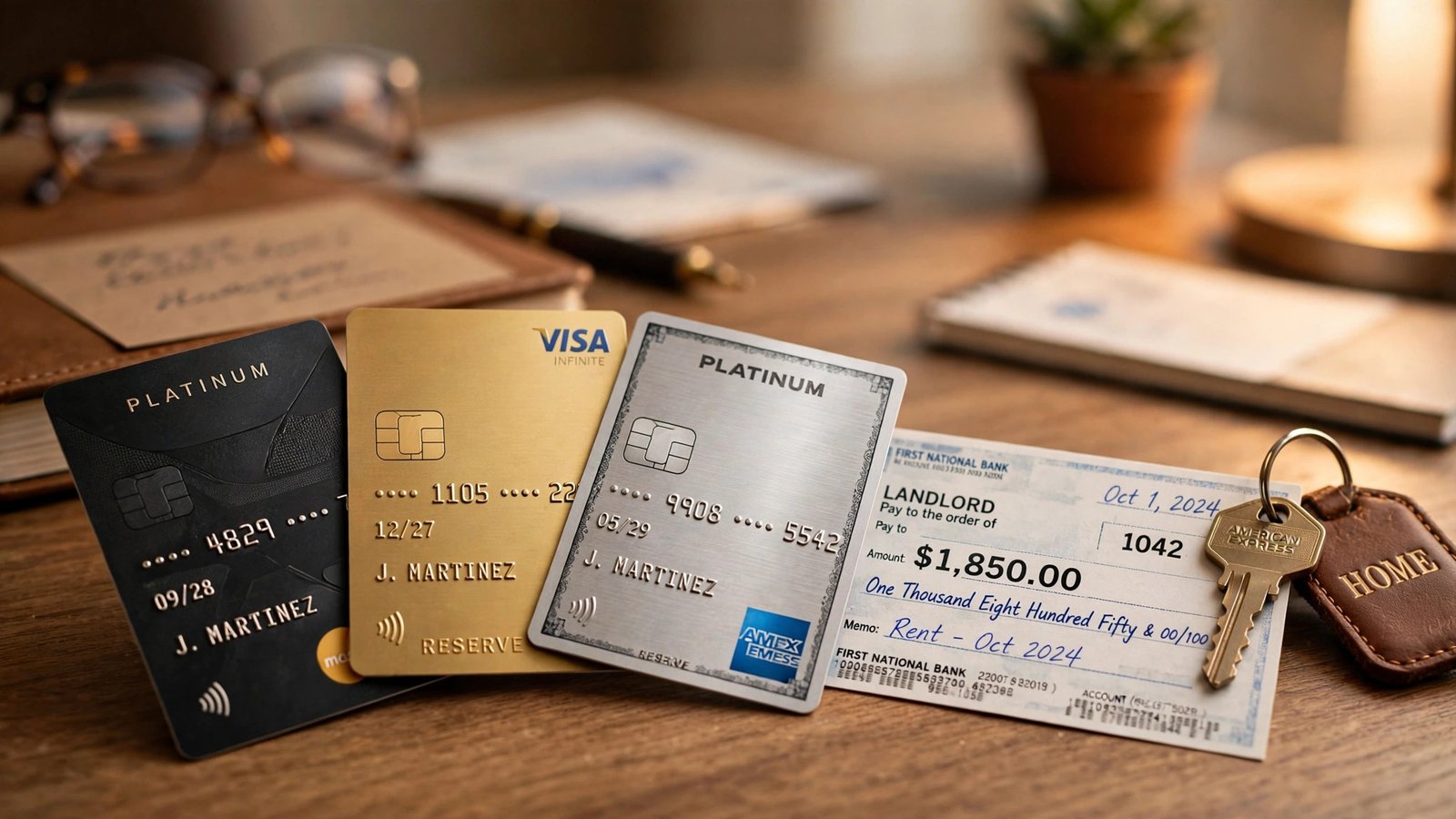
Bilt Card 2.0, launched in February 2026, replaced the original Wells Fargo Bilt Mastercard with three cards issued by Column N.A. and serviced by Cardless: Blue ($0 annual fee), Obsidian ($95), and Palladium ($495). All three let you pay rent — and, for the first time from a major US rewards card, your mortgage — through the Bilt app and earn transferable Bilt points on that housing payment, with no transaction fee on your own rent or mortgage.
The catch is that housing points are no longer automatic. Under the old card, you earned 1 point per dollar on rent by making five transactions a month. Under Bilt 2.0, you choose between two reward tracks, and how much you earn on a $2,000 rent payment depends on how much you spend on everything else. Get the track and the tier right, and rent becomes one of the most valuable bills you pay. Get them wrong, and you can hold a $495 card that earns less on housing than a free one used well.
This guide compares the three cards side by side, works through the housing math for a renter and a homeowner, explains what happened to the old Wells Fargo card, and ends with a decision framework so you can pick a tier once instead of guessing twice.
One honesty note up front: Bilt’s own comparison tables and third-party guides disagree on a few secondary details, such as the exact hotel-credit figure on Palladium. Where that happens, this article uses the most recent comparison (October 2026) and flags the figure to verify in your card terms at application. Annual fees, housing tiers, and the Bilt Cash mechanics below are consistent across the sources checked for this article.
What happened to the old Bilt card
If you held the original Wells Fargo Bilt Mastercard and did nothing, you felt this change whether you followed the news or not. The Wells Fargo-issued card stopped working for Bilt rent payments after February 7, 2026, when the transition to Bilt 2.0 took effect. Cardholders who chose one of the three new cards before the deadline kept the same card number and avoided a hard credit inquiry; those who did not choose were converted by Wells Fargo to a Wells Fargo Autograph card that earns no Bilt points.
Your existing Bilt points balance and membership status carried over to the new cards — points were not wiped out by the switch. But the earning rules that built that balance did not carry over. That is the part many longtime holders missed: the card in your wallet may look familiar, but the machine behind it changed completely. If you are still thinking in old-card terms — five transactions a month, flat 1 point per dollar on rent — you are operating a system that no longer exists.
The three cards, side by side
| Feature | Blue | Obsidian | Palladium |
|---|---|---|---|
| Annual fee | $0 | $95 | $495 |
| Authorized user fee | $0 | $50/year | $95/year |
| Everyday earning | 1 point per $1 | 1 point per $1; 3 points per $1 on dining OR groceries (your pick for the year; groceries capped at $25,000/year); 2 points per $1 on travel | 2 points per $1 on everything |
| Housing earning | Up to 1.25 points per $1 on rent or mortgage | Up to 1.25 points per $1 on rent or mortgage | Up to 1.25 points per $1 on rent or mortgage |
| Hotel credit (Bilt Travel) | None | $100/year (two $50 credits) | $400/year (two $200 credits, per the latest comparison) |
| Lounge access | No | No | Priority Pass Select, cardholder + 2 guests |
| Foreign transaction fee | None | None | None |
| Welcome offer | $100 Bilt Cash | $200 Bilt Cash, no minimum spend | $300 Bilt Cash on approval, plus 50,000 points and Gold status after $4,000 in non-housing spend within 90 days |
A few things jump out of that table. First, housing earning is the same across all three tiers — you do not buy a higher housing rate by paying a higher annual fee. What the fee buys is better everyday earning, travel perks, and a bigger welcome offer. Second, Obsidian forces a real choice: dining or groceries, picked for the calendar year, not both. If your spending is split evenly between restaurants and the supermarket, Obsidian’s headline 3x rate applies to only half your food budget. Third, Palladium’s 2 points per dollar on everything is genuinely strong for a card whose main job is housing — but $495 is a lot to pay for a base rate when free 2% cash-back cards exist, so Palladium has to be justified by its travel perks, not just its earn rate.
Bilt points transfer 1:1 to airline and hotel partners, and early-2026 valuations put a point around 2.2 cents for high-value travel. That is a travel value, not cash — redeem for statement credit or gift cards and every dollar figure below shrinks.
How housing rewards actually work: two tracks, one decision
This is the part to read twice, because it decides most of your return. Bilt 2.0 asks you to pick one of two ways to earn on rent or mortgage.
Track 1: Housing-only rewards (tiered points)
You earn points directly on your housing payment, at a rate set by how much you spend on non-housing purchases that month relative to your housing payment:
| Non-housing spend vs. housing payment | Points on housing | Points on a $2,000 payment |
|---|---|---|
| Below 25% | Flat 250 points | 250 |
| 25–49% | 0.5 points per $1 | 1,000 |
| 50–74% | 0.75 points per $1 | 1,500 |
| 75–99% | 1 point per $1 | 2,000 |
| 100% or more | 1.25 points per $1 | 2,500 |
There is a guaranteed floor of 250 points a month even with minimal other spending, and the old 100,000-point annual housing cap is gone. The logic is blunt: Bilt rewards you for making its card your everyday card, not just your rent card. Spend as much on the card as your rent costs, and you earn the full 1.25 points per dollar on housing. Spend a quarter of your rent, and you earn half a point per dollar.
For a $2,000 rent payment at the top tier, that is 2,500 points a month, or 30,000 points a year — roughly $660 a year in travel value at 2.2 cents a point, before counting a single point from everyday spending itself. At the 25–49% tier, the same rent earns 12,000 points a year, roughly $264. The gap between tiers is the whole ballgame: about $400 a year on a $2,000 rent payment, decided by whether you route enough everyday spending through the card.
Track 2: Flexible Bilt Cash
Instead of tiered points, you earn 4% back in Bilt Cash on everyday purchases, then redeem that Bilt Cash to unlock points on your housing payment. The conversion is $3 of Bilt Cash for 100 Bilt points, up to 1 point per dollar of your monthly housing payment.
Run the $2,000 rent example through this track: to unlock the full 2,000 points, you need $60 in Bilt Cash. At 4%, that requires $1,500 in non-housing spending that month. Spend $750, and you earn $30 in Bilt Cash, unlocking 1,000 points. Spend $375, and you unlock 500 points.
Bilt Cash has two rules that trip people up. First, it expires on December 31 of the year you earn it, with only $100 rolling over to the next year. Untracked Bilt Cash left sitting in December is money evaporating. Second, the Bilt Cash has to be in your account before the housing payment — there is no retroactive unlocking after the rent is paid. If your spending lands after your rent date, that month’s housing points are smaller, no matter how much you spent overall.
Bilt Cash is also redeemable for other things — rideshares, restaurants, and local spending through Bilt’s partners — which tempts people to spend it instead of banking it for housing. That is fine if you value those redemptions, but every dollar of Bilt Cash spent on dinner is a dollar not unlocking housing points. Decide at the start of the month what your Bilt Cash is for, and do not let it drift.
Which track should you pick?
Pick Housing-only if your non-housing spending is steady and you want simplicity: no second currency to track, no expiry cliff, just a tier that rises with your card use. Pick Bilt Cash if your spending is lumpy — big months and quiet months — and you want the flexibility to bank cash in a big month and use it for a housing payment later, or if you value the non-housing redemptions enough to trade some housing points for them.
Most people who pay rent through Bilt and use the card as their main everyday card will do slightly better, and with far less admin, on Housing-only. The Bilt Cash track shines for people who spend heavily in bursts — a holiday month, a home project — and want that burst to keep paying toward housing points after the spending stops, as long as they use the cash before December 31.
The mortgage change: why homeowners suddenly care
Before February 2026, Bilt was a renters’ card. Homeowners watched renters earn points on the largest bill in their budget while their own mortgage earned nothing. Bilt 2.0 changed that: mortgage payments made through the Bilt app earn under the same two-track system as rent, with the same tiers, the same Bilt Cash conversion, and the same no-fee rule on your own mortgage.
That matters because of scale. The average US mortgage payment dwarfs the average rent payment, and roughly 65 million American households carry a mortgage. A homeowner with a $2,800 mortgage payment at the top 1.25x tier earns 3,500 points a month — 42,000 points a year, roughly $924 in travel value at 2.2 cents a point — from a bill they were paying anyway. Even at the 1x tier, the same mortgage earns 33,600 points a year.
The practical question for homeowners is whether the payment mechanics fit your servicer and cash flow. Bilt sends the payment to your lender through the app, so you need the Bilt Cash or tier standing in place before the payment date. Test one cycle before moving autopay over, and keep old autopay as backup until the first Bilt-routed payment clears — a missed mortgage payment costs far more than any points are worth.
One more homeowner caution: a 3% fee applies if you use a Bilt card to pay someone else’s rent or mortgage, such as a family member’s. Your own housing payment carries no transaction fee on any of the three cards. Do not confuse the two — the 3% figure that appears in some Bilt explainers is the someone-else’s-bill fee, not the cost of paying your own rent.
Which tier pays? Three worked profiles
Profile 1: The light spender — Blue wins
You pay $1,600 in rent, spend about $500 a month on a card, and rarely travel. On Housing-only at the 25–49% tier, you earn 800 points a month on rent (0.5 points per dollar), or 9,600 points a year — roughly $211 in travel value — plus 6,000 points a year from everyday spending at 1 point per dollar. Total: about 15,600 points, roughly $343 in travel value, for $0 in annual fees. Obsidian would add a 3x food category, but if only $200 of your $500 is food spending, the extra points are worth roughly $50 a year — less than the $95 fee. Blue is the right call, and the decision is not close.
Profile 2: The food-focused household — Obsidian wins
You pay $2,200 in rent, spend $1,800 a month on the card, and $700 of that is groceries. You pick groceries as your Obsidian category. On Housing-only, your $1,800 in non-housing spending is about 82% of your rent, putting you in the 1x tier: 2,200 points a month on rent, 26,400 a year. Everyday spending adds 700 × 3 points (groceries) plus 1,100 × 1 point (everything else) each month, or 3,200 points a month — 38,400 a year. Combined with the $100 hotel credit used on one trip, Obsidian returns roughly $1,400 in travel value against a $95 fee. The same household on Blue would earn roughly $1,100. Obsidian pays for itself several times over, but only because the grocery category matches where the money actually goes. Pick dining instead, with $700 in groceries and $150 in restaurants, and the math flips.
Profile 3: The frequent traveler — Palladium earns its fee, barely
You pay $2,500 in rent, spend $3,000 a month on the card, and take four or five trips a year. At the 100%+ tier, housing earns 3,125 points a month (37,500 a year). Everyday spending at 2 points per dollar adds 72,000 points a year. The hotel credits ($400 a year in the latest comparison) and Priority Pass lounge access for you and two guests cover much of the $495 fee if you actually use them — lounge visits for a family of three on several trips can be worth hundreds alone. Total value can exceed $2,000 a year in travel terms. But notice how much of that value depends on behavior, not the card: skip the hotel credits, travel solo without lounge use, or redeem points for cash instead of travel, and Palladium’s fee eats the advantage. Palladium is a travel card that happens to do housing, not a housing card that happens to travel. Buy it for the travel, or do not buy it.
Five mistakes new Bilt 2.0 holders keep making
Mistake 1: Assuming the old rules still apply. Five transactions a month no longer unlocks anything. Your housing rate now depends on spending relative to rent, or on Bilt Cash banked before the payment date. Relearn the system before you judge it.
Mistake 2: Letting Bilt Cash expire. December is the danger month. Check your Bilt Cash balance in November, not January. Only $100 rolls over; the rest disappears on December 31.
Mistake 3: Paying interest to earn points. Reported variable APRs on Bilt 2.0 cards run into the high 20s to mid 30s percent range depending on creditworthiness, and an introductory APR offer applies only for a limited period. Carrying a balance for even one month wipes out months of housing points. If you cannot pay the card in full every month, Bilt is the wrong card, full stop.
Mistake 4: Choosing Obsidian’s category on vibes. Look at last year’s actual card statement, not your idea of your spending. Dining or groceries is a calendar-year choice. A wrong pick costs you the 3x rate on your biggest food category for twelve months.
Mistake 5: Chasing the Palladium welcome offer with spending you would not otherwise do. The 50,000-point bonus requires $4,000 in non-housing spending within 90 days. That is a reasonable target for a household already spending $1,400 a month on a card, and a trap for anyone who would manufacture spending to hit it. Points earned by buying things you do not need are not rewards; they are a discount on waste.
A decision checklist before you apply
- [ ] Confirm your old card’s status. If you held the Wells Fargo Bilt card and never picked a 2.0 card, assume you are no longer earning Bilt points on housing and need a new application or selection.
- [ ] Add up last month’s real non-housing spending and divide it by your rent or mortgage. That ratio picks your housing tier — and tells you whether you will actually reach 1x or 1.25x.
- [ ] Pick your track on purpose. Housing-only for steady spending and simplicity; Bilt Cash if your spending is lumpy or you want the flexible redemptions.
- [ ] Match Obsidian’s category to your statement, not your aspirations. Groceries or dining, whichever took more dollars last year.
- [ ] Price Palladium on perks you will use. Hotel credits and lounge visits you will actually take, not the ones that sound good in a comparison table.
- [ ] Set a December reminder for Bilt Cash. Check the balance in November and use or bank it before the December 31 expiry, remembering only $100 rolls over.
- [ ] Plan to pay in full, every month. No points system survives interest charges, and Bilt’s rates are no exception.
For a related look at how card-category bonuses stack up across issuers each quarter, see our Q4 2026 rotating 5% categories guide. And if you are weighing Bilt’s travel value against a high-yield savings account for the same cash, our SoFi and Axos high-yield savings promo comparison shows what the safe, boring side of the ledger pays right now.
The bottom line
Bilt Card 2.0 is a better card than the original for people who use it as their main card, and a worse one for people who used the original as a rent-only side card. That sentence is the whole review. Blue gives most renters nearly everything that matters for free. Obsidian is the best value in the lineup for households whose food spending matches its category. Palladium is a legitimate premium travel card whose fee is justified only by travel perks you will genuinely use. And none of the three helps you if you carry a balance, let Bilt Cash expire, or assume the February 2026 shutdown of the Wells Fargo card somehow left your old earning rules intact.
Pick the tier that matches last month’s spending, pick a track and stick with it for a quarter, set the December Bilt Cash reminder, and let the largest bill you already pay start paying you back.
Not professional financial advice. Card terms, welcome offers, hotel credits, and APRs change; confirm the current terms on Bilt’s site and in your card agreement before applying. Points values cited here reflect travel redemptions and will be lower for cash or gift-card redemptions.
Frequently Asked Questions
What is Bilt Card 2.0?
Bilt Card 2.0 is the February 2026 replacement for the original Wells Fargo Bilt Mastercard: three cards (Blue $0, Obsidian $95, Palladium $495 a year) issued by Column N.A. and serviced by Cardless, all earning transferable Bilt points on rent and mortgage payments made through the Bilt app.
Can I still use my old Wells Fargo Bilt card for rent points?
No. The Wells Fargo-issued Bilt Mastercard stopped working for Bilt rent payments after February 7, 2026. Non-choosers were converted to a Wells Fargo Autograph card earning no Bilt points. You need one of the three Bilt 2.0 cards to keep earning on housing payments, though your existing points balance carried over.
Is there a fee to pay rent with Bilt 2.0?
Paying your own rent or mortgage through Bilt carries no transaction fee on any of the three cards. A 3% fee applies only when you use a Bilt card to pay someone else’s rent or mortgage.
How many points do you earn on rent with Bilt 2.0?
On the Housing-only track, up to 1.25 points per dollar of housing, tiered by your non-housing spending relative to your housing payment — 0.5x at 25–49%, 1x at 75–99%, 1.25x at 100%+, with a 250-point monthly floor. On the Bilt Cash track, you earn 4% Bilt Cash on everyday spending and redeem $3 of Bilt Cash for 100 points, up to 1 point per dollar of housing.
Does Bilt Cash expire?
Yes. Bilt Cash earned in a calendar year expires on December 31 of that year, except up to $100 that rolls over. It must also be in your account before the housing payment it is meant to unlock — there is no retroactive credit.
Which Bilt card is best?
Blue for light spenders and anyone who wants housing points with no annual fee; Obsidian for households whose dining or grocery spending matches its 3x category; Palladium for frequent travelers who will actually use its hotel credits and Priority Pass lounge access. Housing earning itself is the same across all three tiers.
Sources and further reading
- Bilt Card 2.0 comparison: Blue vs Obsidian vs Palladium: https://www.pointscrowd.com/blog/bilt-card-2-0-blue-obsidian-palladium-compared/
- How Bilt 2.0 rent rewards and Bilt Cash work: https://fundyou.org/blog/bilt-2-rent-rewards-credit-card-guide/
- Earning points on a mortgage with Bilt: https://familypointsguide.com/the-bilt-card-finally-lets-you-earn-points-on-your-mortgage/
- Bilt’s official Bilt Card 2.0 program overview: https://support.biltrewards.com/hc/en-us/articles/42897766682381-Bilt-Card-2-0-Program-Overview